
https://triblive.com/news/politics-election/democratic-senators-demand-details-on-trumps-drugmaker-deals/
Democratic senators demand details on Trump’s drugmaker deals

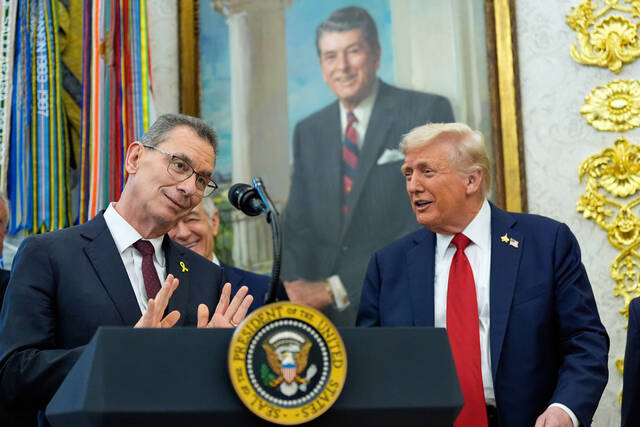
WASHINGTON — Democratic senators are demanding more details on the drug pricing deals that Pfizer Inc., Eli Lilly & Co. and others have struck with the Trump administration in an effort to understand whether they’re actually saving the government any money.
In letters sent to chief executives of Pfizer, Lilly, Novo Nordisk A/S and AstraZeneca Plc, the senators asked for more information on how the companies’ deals apply to Medicaid, the health insurance program for low-income and disabled people. Specifically, they want to know whether the deals give Medicaid access to prices that are lower than the substantial discounts the program already receives.
“It is difficult to discern, however, what patients in Medicaid and taxpayers stand to gain from your agreement with the Trump Administration,” Sens. Elizabeth Warren of Massachusetts, Ron Wyden of Oregon and six others wrote in letters seen by Bloomberg.
The senators gave each company a list of medications for which they are requesting more information on pricing, which includes best-selling medicines such as Lilly’s weight-loss drug Zepbound and Novo’s Wegovy. The companies have until Jan. 30, 2026, to respond, according to the letter.
Drug pricing has been the key tenet of President Donald Trump’s health care agenda. Over the summer, Trump sent letters to 17 major drugmakers in which he called on them to offer U.S. patients “most favored nation” prices, meaning the lowest level paid by similarly wealthy countries, for newly launched drugs, and to Medicaid patients for existing medicines. He also asked them to facilitate direct purchases of drugs by consumers.
Since then, companies — including Lilly, Novo, Pfizer and Astra — have announced deals with Trump in which they’ve agreed to cut prices for some drugs and sell directly to the public. In exchange, they were offered exemptions from tariffs on imported pharmaceuticals that the president has repeatedly threatened to impose.
However, details of the deals with Trump weren’t made available, making it hard to judge how much money overall they will actually save for federal and state governments.
That’s a key issue, since Trump’s budget bill slashed $900 billion in U.S. funding for state Medicaid programs over the next decade to help offset tax cuts for others. The lost funding has created a challenge for local governments, who must account for the loss. One proposed element has been the promised lower cost of medicines, the details of which remain unclear.
The other senators signing the letter were Michael Bennet of Colorado, Dick Durbin of Illinois, John Hickenlooper of Colorado, Amy Klobuchar of Minnesota, Jeff Merkley of Oregon and Chris Murphy of Connecticut.
Copyright ©2026— Trib Total Media, LLC (TribLIVE.com)