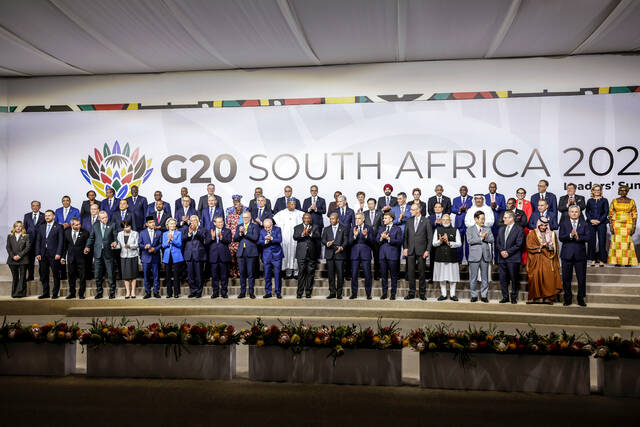
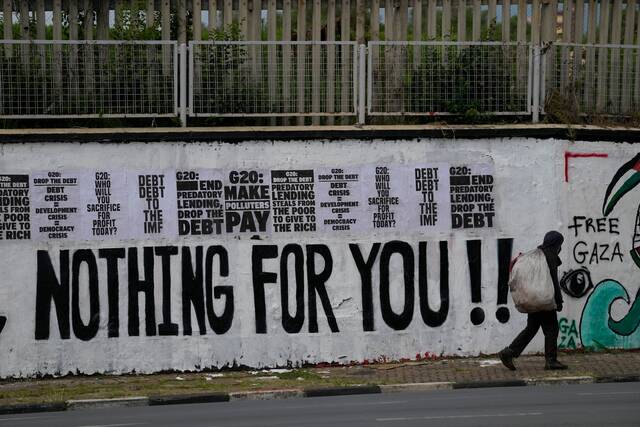
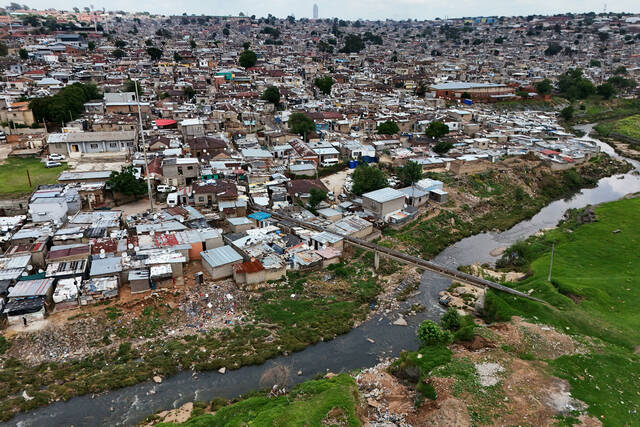

JOHANNESBURG — Poorer nations attending the Group of 20 summit in South Africa have used the meeting to push leaders on climate action and high levels of debt, issues directly affecting the developing world.
They have also sought to position themselves as economic partners with much to offer in sectors including mining, technology and artificial intelligence, among others.
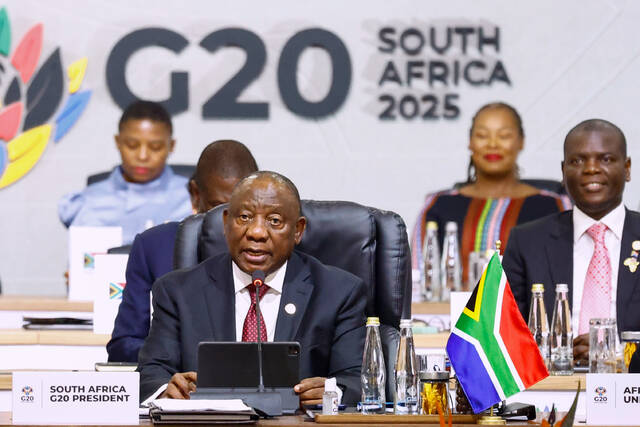
Many lauded South Africa, which hands over the rotating G20 presidency to the U.S., for promoting an inclusive agenda prioritizing the needs of poorer nations by focusing on global inequality. The United States boycotted the Johannesburg meeting meant to bring rich and developing nations together over President Donald Trump’s claims that South Africa is violently persecuting its Afrikaner white minority.
In addition to the G20 countries, the African Union and the European Union, many developing nations were invited as guests, like Zimbabwe, Namibia, Jamaica and Malaysia.
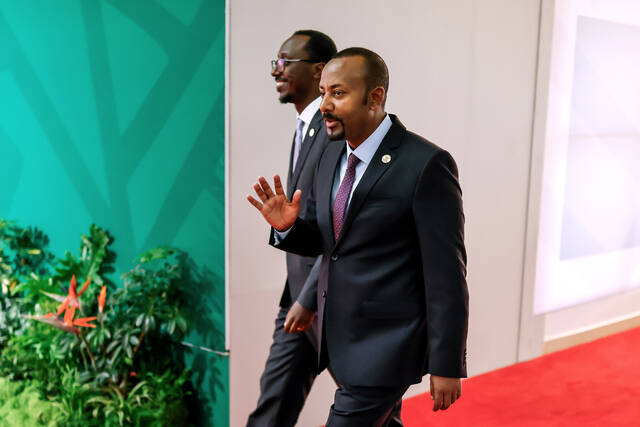
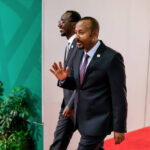
“We are not here to speak of despair, we are here to speak of possibilities and shared responsibilities,” Ethiopian Prime Minister Abiy Ahmed told delegates.
He said that debt relief must translate into investments that benefit people. “In Ethiopia, we have learnt that inclusivity is not charity, it is efficiency.”
Namibian President Netumbo Nandi-Ndaitwah called for fair financing terms for developing nations. She said her country had recently paid back its $750 million bond on time.
“However, we are considered by decision makers as a risky country. We need fair international financial institutions,” she said.
Jamaica’s Prime Minister Andrew Michael Holness reflected on climate-fueled natural disasters and their impact on developing nations, like that of Hurricane Melissa that had devastated his country.
“One external shock can undo years of progress,” he said.
World Trade Organization Director General Ngozi Okonjo-Iweala on Sunday urged African leaders to think carefully about future trade with other countries when adopting policies.
“How we position ourselves depends on us and our policymakers. So if we continue to export, and see that 60% of our exports are commodities and raw materials, then things will not change,” she said. “We can go from raw materials all the way to finished product by creating subregional and regional value chains.”
Nabil Ahmed, director of economic and racial justice at think tank Oxfam, said it was the first time that a G20 agenda had inequality as one of its central pillars.
“The world recognizes that we have a climate emergency. It’s now time that we recognize that we have an inequality emergency as well,” he said.
“One thing that South Africa managed to do as the first host of a G20 meeting on African soil, was to prioritize the interests of African nations and the interests of global south nations,” he said.