
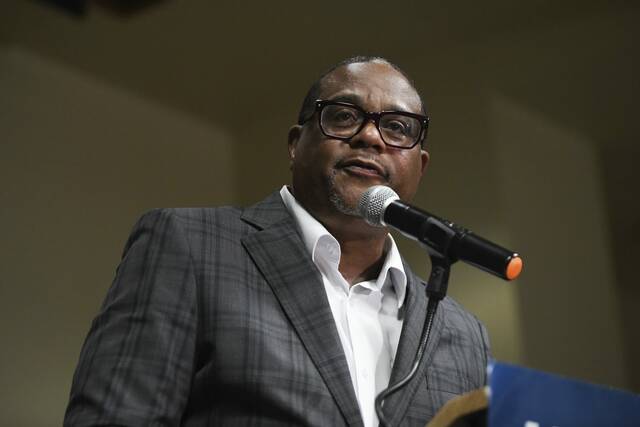
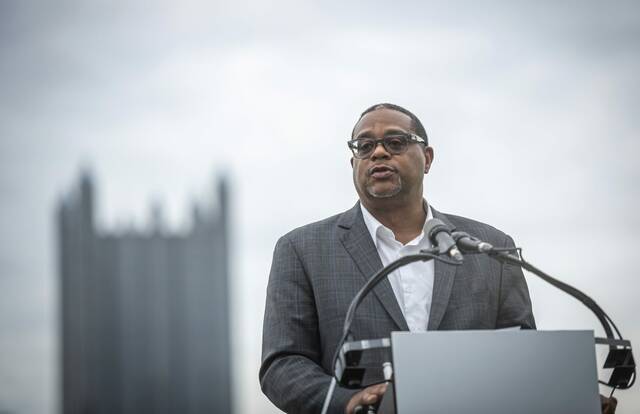
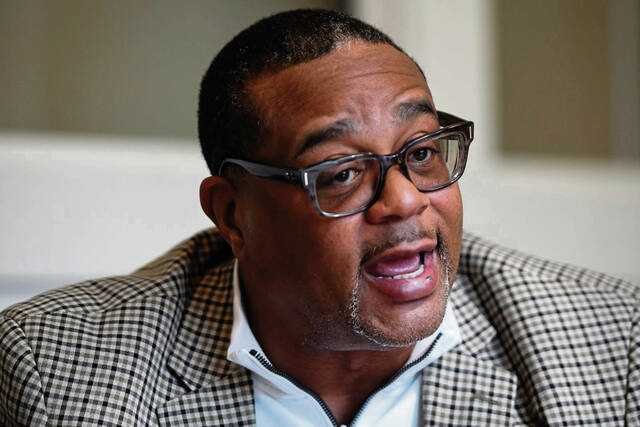
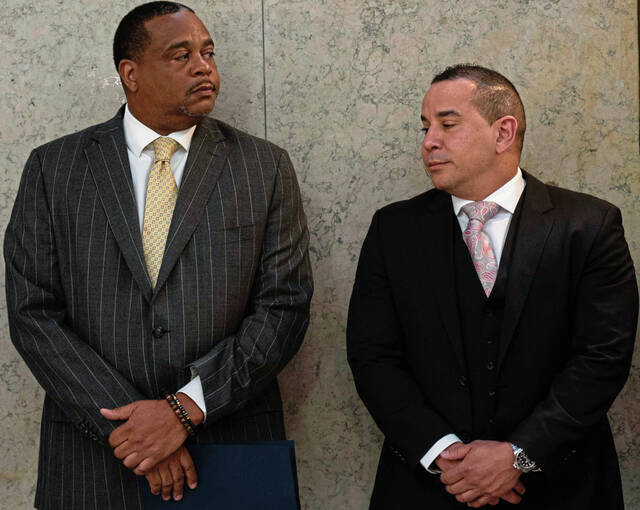
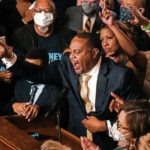
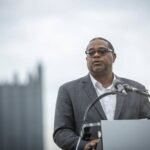
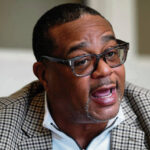
Ed Gainey swept into office four years ago as Pittsburgh’s first Black mayor, vowing to be a changemaker who would reimagine policing, make the city affordable for everyone and uplift minority voices.
He strode into City Hall with bold ambitions. He was immediately confronted with challenges.
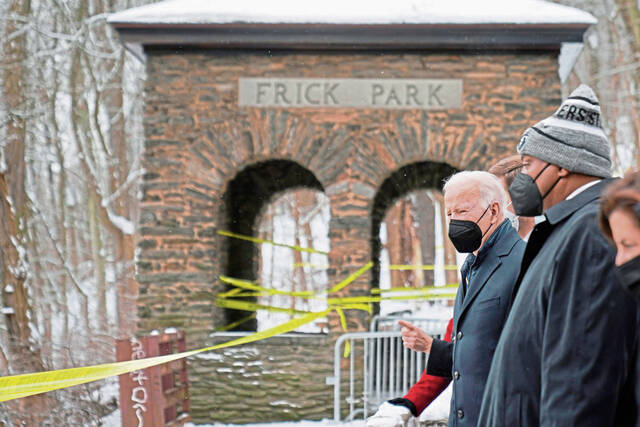
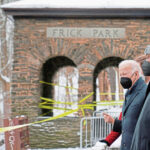
Gainey had been in office only a few weeks when the Fern Hollow Bridge collapsed in Frick Park, sending cars and a bus tumbling into a ravine and forcing the city to reexamine its aging infrastructure.
He steered the city through the waning days of the covid pandemic, which spurred a widespread shift to remote work that has lingering effects today on the city’s budget.
And he inherited challenges passed down from prior administrations, like a woeful vehicle fleet desperately in need of upgrades, and a dwindling police bureau that had seen recruitment put on hold during the pandemic.
On his 100th day in office, Gainey told TribLive he adopted a mantra for his administration: “Fall in love with adversity, stay away from controversy.”
Over the next four years, the mayor would have mixed results as he worked to overcome his fair share of adversity — from the impacts of a global pandemic to an affordable housing crisis, a bridge collapse to a budget crunch.
Despite his motto, Gainey’s administration also stumbled into its share of controversies, including improper use of a city credit card and a backroom deal to allow the new police chief to referee college basketball on the side.
Pittsburghers ultimately voted him out after just one term.
Political experts and local leaders said Gainey’s defeat in the Democratic primary signaled city residents were unimpressed by his four years in office.
“You’re asking for change,” Allegheny County Democratic Committee Chairman Sam Hens-Greco told TribLive after the mayor’s primary defeat. “If you’re comfortable with the status quo, if you like what’s going on, you’re going to keep the incumbent.”
That wasn’t the case. Challenger Corey O’Connor vanquished Gainey in the Democratic primary, underscoring voters’ unease with the incumbent’s job performance.
Gainey, who will depart Monday when Mayor-elect Corey O’Connor is sworn in, refused repeated requests by TribLive to be interviewed for this story. His spokeswoman said no one in his administration would be available for interviews.
Lived experience
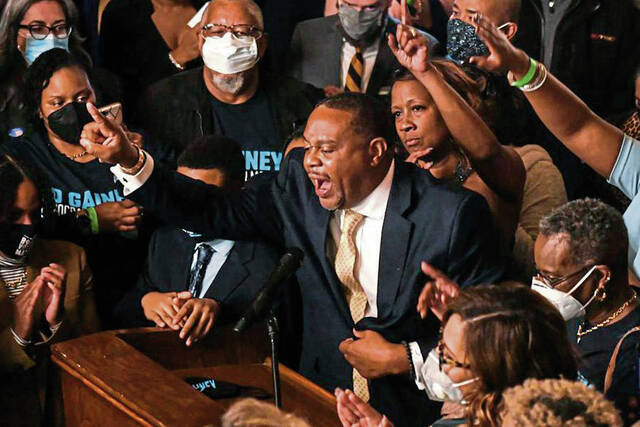
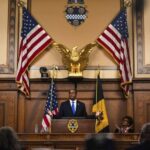
Gainey’s inaugural address — livestreamed and delivered to a limited in-person audience because of the pandemic — shared a lofty, hopeful message with Pittsburghers who had ousted then-incumbent Mayor Bill Peduto in favor of the former state representative from Lincoln-Lemington.
“My promise to you is that we will work to make Pittsburgh the Pittsburgh you voted for — a city where economic opportunity is abundant for everyone, a city where affordability isn’t a luxury, and a city that is prepared to lead into the future,” Gainey said during his swearing-in ceremony.
Gainey led from a unique perspective compared to the city’s modern mayors. The son of a single mother, he lived in the Hill District, Oakland and an East Liberty high rise before graduating from Peabody High School.
While in East Liberty, Gainey “watched as that housing complex transitioned from a safe place to live to one taken over by the drug culture,” according to his campaign website. “Ed watched as friends went to jail and childhood friends were lost to violence and drugs.”
On Jan. 22, 2016, his sister, Janese Talton-Jackson, was fatally shot in Homewood by a man who followed her out of a bar.
While Gainey rarely discussed his sister’s death publicly, he often railed against gun violence, especially decrying the deaths of children.
“I think he brought his lived experience to his position,” Councilwoman Theresa Kail-Smith, D-West End, said. “And I think he spoke for a lot of people and the way they view Pittsburgh.”
‘Structural challenges’
Gainey often highlighted obstacles he faced while in office, pointing to the pandemic, the Fern Hollow Bridge calamity — even the fact it snowed a few days after he was sworn in.
Councilman Bob Charland, D-South Side, a vocal Gainey critic, pointed out the problems faced by mayor were hardly unusual.
“In a lot of ways, Mayor Gainey was handed structural challenges,” Charland said. “But every mayor is. That’s what the job is.”
Other mayors in Pittsburgh’s recent history had to contend with state oversight of the city budget, massive protests in the wake of police brutality across the nation and the same aging infrastructure and old vehicles Gainey inherited.
Charland pointed out Gainey had one distinct advantage over his predecessors: a massive influx of federal covid-19 relief money. The city received over $335 million in federal relief money, though about $98.7 million was spent in 2021 before Gainey took office.
That money is now nearly depleted. And the city is facing serious financial problems many officials say Gainey has refused to sincerely address.
Councilman Anthony Coghill, D-Beechview, derided Gainey’s final budget as “sloppy.”
Controller Rachel Heisler said it was “simply not an honest document.”
City Council overhauled his 2026 budget, tacking on a 20% property tax increase to address what council members saw as a gaping hole in his spending plan.
Gainey opted to allow the amended budget take effect without his signature or a veto fight.
‘Strongest legacy’
Throughout his time in office, Gainey’s primary passion was affordable housing.
He secured a costly, controversial bond for the Urban Redevelopment Authority to support its housing programs, signed orders fighting housing discrimination and activated the city’s land bank, which had essentially lain dormant for the first few years after its inception.
Even Charland credited Gainey for land bank wins, saying he believed galvanizing the program — which puts blighted, vacant properties into the hands of new owners who can use the properties for affordable housing, community gardens and other purposes — will be the mayor’s “strongest legacy.”
But Gainey’s hallmark legislative package — a sweeping zoning reform that would’ve required all large developments to earmark a percentage of their units as affordable housing for low-income residents — was rejected and completely overhauled by council.
Council voted to amend the bill so drastically that Gainey’s top advisor said the mayor would veto it if it arrived on his desk. Revisions forced the bill to be sent back to the Planning Commission, leaving the legislation in limbo.
Randall Taylor, a housing advocate and community organizer for the Hill District Consensus Group, said he felt Gainey brought new, diverse voices into city government and made progress in addressing the city’s affordable housing crisis.
“I think we all had the feeling and the perception that it wasn’t the usual players that were at the table,” Taylor said. “The Gainey administration certainly was open to different voices.”
The mayor was a vocal advocate for the LGBTQ+ community, hiring the city’s first transgender press secretary, who later resigned after signing a petition in support of a controversial ballot referendum.
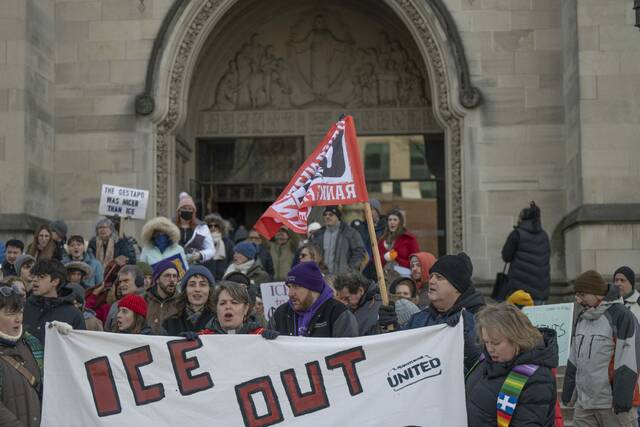
Gainey staunchly supported Pittsburgh’s immigrant community, refusing to cooperate with federal immigration enforcement as deportations and immigration raids ramped up under President Donald Trump.
“Mayor Gainey’s been an excellent friend to the immigrant community,” said Jaime Martinez, executive director of Frontline DIGNITY, a nonprofit that advocates for immigrants. “When something happened, the administration was there to help.”
He credited Gainey for helping to pull together various organizations and resources that could support the immigrant community, ensuring people had legal and mental health assistance and financial support to pay for rent and food after loved ones were picked up by federal immigration enforcement.
“Mayor Gainey stood for dignity and community,” Martinez said. “I’m very appreciative of that.”
Gainey could not convince major nonprofits to provide payments in lieu of taxes to the city, despite repeated promises to make them “pay their fair share” and legal challenges that aimed to compel them to pay up.
But he notched wins in drastically scaling back the number of homeless camps Downtown and launching a new bridge maintenance division.
After campaigning on promises to reform policing, Gainey saw homicides decline during his tenure, following a national trend of fewer killings in the years after a pandemic-era spike.
For Councilwoman Barb Warwick, D-Greenfield, that will be a key part of the Gainey administration’s lasting legacy.
She credited Gainey for expanding the city’s Office of Community Health and Safety, an initiative launched under his predecessor that deploys social workers to assist on some public safety calls and to support people experiencing homelessness.
“They reimagined policing in the way people across the country wanted to see it reimagined following George Floyd, this care-based response of social work that’s embedded in our public safety,” Warwick said. “They did that. They went from just a handful of social workers to a full bureau.”
Also under Gainey, the city saw its police force dwindle to its smallest staffing levels in two decades, reflecting a struggle to recruit and retain officers.
Five different people have served as police chief or acting chief in the past five years, a revolving door of leadership that many said stoked instability in the force.
Trailblazer
Gainey will leave his successor to follow through on some of the things he seemed most excited about during his tenure. The Gainey administration helped attract the 2026 NFL Draft, but it won’t come until more than four months after Gainey leaves Grant Street.
“We played a big role in making a successful argument to the NFL to bring the draft,” said Jake Pawlak, Gainey’s top advisor and director of the Office of Management and Budget.
Gainey also helped launch a $600 million Downtown revitalization plan championed by Gov. Josh Shapiro, another effort that won’t be completed until after a new mayor is at the helm.
Gainey brought a diverse mix of people to City Hall and hired more minority contractors for city jobs than prior administrations.
“From my perspective, Mayor Gainey’s real legacy is going to be, for the first time in decades, really focusing on the needs of our underserved communities in a real and meaningful way,” Warwick said. “And my only fear is that four years is not enough to solidify those types of changes in our ethos of how we do business.”
Lori Criswell, executive administrative assistant to the mayor’s chief of staff, praised Gainey during a December ceremony unveiling a portrait that will hang in City Hall alongside images of all the city’s mayors.
“Your legacy of equity and inclusion, affordable housing, community focused public safety, economic opportunity, city services and the 2026 NFL Draft, just to name a few, will be talked about by many for many, many years to come,” she told Gainey.
The final months of Gainey’s administration were marked by a divisive primary election and significant pushback from City Council, which went from largely rubber-stamping his proposals to rejecting his 2026 budget and hallmark zoning package.
But even his detractors acknowledge he’ll have a place in the city’s history books as Pittsburgh’s first Black mayor.
Black residents were divided leading up to May’s primary about whether Gainey had done enough to earn their votes. Some felt he hadn’t. Others were convinced by his efforts to create affordable housing and tamp down violent crime.
Gainey alienated longtime Juneteenth event organizer William “B” Marshall in a yearslong feud that saw debates over permits and a dueling city-sponsored Juneteenth event. Their rivalry spurred multiple lawsuits.
“For some reason, Mayor Gainey has been against our efforts to enhance the Black community with economic opportunities and things of that nature,” Marshall told TribLive ahead of the primary, pointing to problems he had had receiving city support for Juneteenth and other Black-focused events.
Taylor, the housing advocate, said Gainey “certainly wanted what was best for the Black community.”
“But you also have to keep in mind this is 2025. We had a Black president. There are people, like me, that are looking for the right people, not necessarily any gender or color,” Taylor said.
Still, he said, seeing Pittsburgh — a majority-white city with a history of segregated neighborhoods — elect a Black mayor “was not meaningless to us.”
“I think it was good for the city,” Taylor said.
Gainey often pointed out that as Pittsburgh’s first Black mayor, he brought more minorities to the city’s highest offices. He hired Black women as his spokespeople and deputy chief of staff and installed the city’s first biracial police chief and first Black woman EMS chief.
“When I decided to run for mayor, I didn’t decide to run for mayor to make history,” Gainey said during his swearing-in. “I decided to run for mayor to make change.”