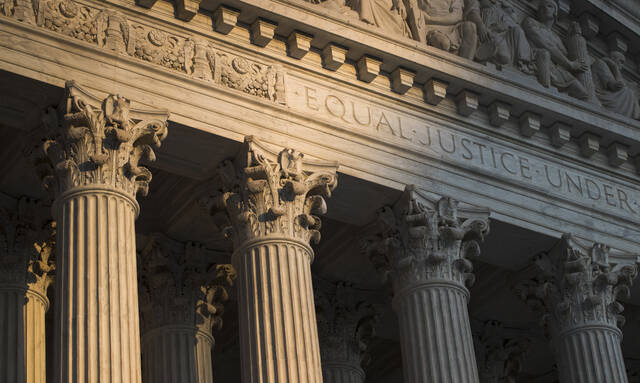
WASHINGTON — The Supreme Court agreed Friday to decide whether state laws that seek to regulate Facebook, TikTok, X and other social media platforms violate the Constitution.
The justices will review laws enacted by Republican-dominated legislatures and signed by Republican governors in Florida and Texas. While the details vary, both laws aim to prevent the social media companies from censoring users based on their viewpoints.
The court’s announcement, three days before the start of its new term, comes as the justices continue to grapple with how laws written at the dawn of the digital age, or earlier, apply to the online world.
The justices had already agreed to decide whether public officials can block critics from commenting on their social media accounts, an issue that previously came up in a case involving then-President Donald Trump. The court dismissed the Trump case when his presidential term ended in January 2021.
Separately, the high court also could consider a lower-court order limiting executive branch officials’ communications with social media companies about controversial online posts.
The new case follows conflicting rulings by two appeals courts, one of which upheld the Texas law, while the other struck down Florida’s statute. By a 5-4 vote, the justices kept the Texas law on hold while litigation over it continues.
But the alignment was unusual. Chief Justice John Roberts and Justices Stephen Breyer, Sonia Sotomayor, Brett Kavanaugh and Amy Coney Barrett voted to grant the emergency request from two technology industry groups that challenged the law in federal court.
Justices Clarence Thomas, Samuel Alito, Elena Kagan and Neil Gorsuch would have allowed the law to remain in effect. In dissent, Alito wrote, “Social media platforms have transformed the way people communicate with each other and obtain news.”
Proponents of the laws, including Republican elected officials in several states that have similar measures, have sought to portray social media companies as generally liberal in outlook and hostile to ideas outside of that viewpoint, especially from the political right.
The tech sector warned that the laws would prevent platforms from removing extremism and hate speech.
Without offering any explanation, the justices had put off consideration of the case even though both sides agreed the high court should step in.
The justices had other social media issues before them last year, including a plea the court did not embrace to soften legal protections tech companies have for posts by their users.