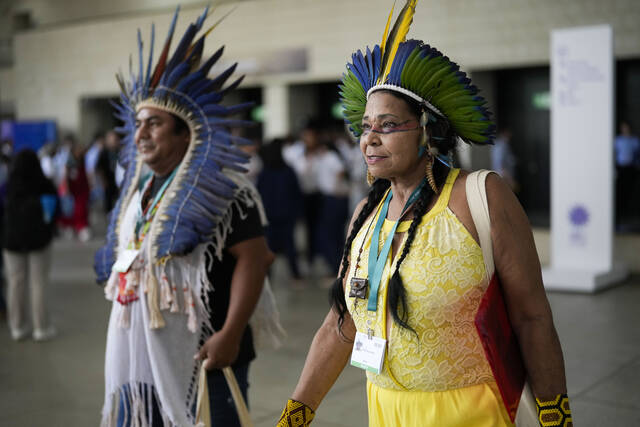
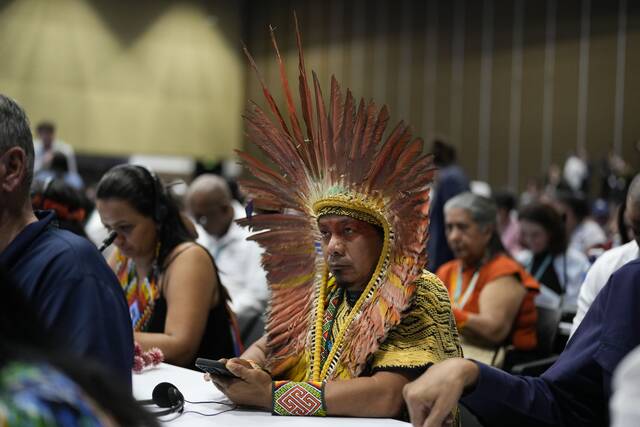





CALI, Colombia — After two weeks of negotiations, delegates on Saturday agreed at the United Nations conference on biodiversity to establish a subsidiary body that will include Indigenous peoples in future decisions on nature conservation, an important development that builds on a growing movement to recognize the role of Indigenous peoples in protecting land and helping combat climate change.
The delegates also agreed to oblige major corporations to share the financial benefits of research when using natural genetic resources.
Indigenous delegations erupted into cheers and tears after the historic decision to create the subidiary body was annouced. It recognizes and protects the traditional knowledge systems of Indigenous peoples and local communities for the benefit of global and national biodiversity management, said Sushil Raj, Executive Director of the Rights and Communities Global Program at the Wildlife Conservation Society.
“It strengthens representation, coordination, inclusive decision making, and creates a space for dialogue with parties to the COP,” Raj told The Associated Press, referring to the formal name of the gathering, Conference of Parties.
Negotiators had struggled to find common ground on some key issues in the final week but came to a consensus after talks went late into Friday.
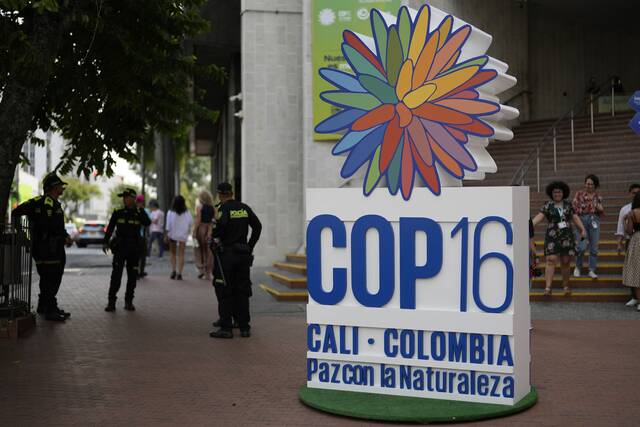
The COP16 summit, hosted in Cali, Colombia, was a follow-up to the historic 2022 accord in Montreal, which included 23 measures to save Earth’s plant and animal life, including putting 30% of the planet and 30% of degraded ecosystems under protection by 2030.
A measure to recognize the importance of the role of people of African descent in the protection of nature was also adopted in Cali.
The Indigenous body will be formed by two co-chairs elected by COP: one nominated by U.N. parties of the regional group, and the other nominated by representatives of Indigenous peoples and local communities, the AP saw in the final document.
At least one of the co-chairs will be selected from a developing country, taking into account gender balance, the document said.
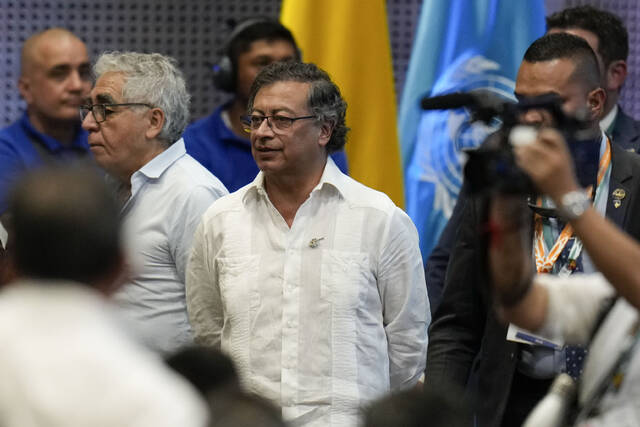
“With this decision, the value of the traditional knowledge of indigenous peoples, Afro-descendants and local communities is recognized, and a 26-year-old historical debt in the Convention on Biological Diversity (CBD) is settled,” Susana Muhamad, Colombia’s environment minister and COP16 president, posted on social media platform X shortly after the announcement.
Who owns nature’s DNA was one of the most contentious and fiercely negotiated topics at the summit as tensions spiked between poorer and developed countries over digital sequence information on genetic resources (DSI).
However, negotiators consented on Saturday morning to bind big companies to share benefits when using resources from animals, plants or microorganisms in biotechnologies.
Delegations agreed on a genetic information fee of 0.1% of companies’ revenues from products derived from such information.
“Many of the life-saving medicines we use today come from the rainforest. It is therefore right that a portion of the income companies generate from this information goes back to protect nature,” said Toerris Jaeger, executive director of Rainforest Foundation Norway. “This is the absolute highlight from COP16.”
Also adopted was an agreement to protect human health from Earth’s increasing biodiversity issues. Ecosystem degradation and loss of ecological integrity directly threaten human and animal health, environmental groups say.
Pledges made by countries during the two weeks were far short of the billions needed to tackle plummeting global biodiversity, with only around $400 million in the fund.
The modest pledges don’t bode well for the next U.N. climate talks, COP29, to take place in Azerbaijan beginning later this month. The focus of COP29 is expected to focus on how to generate trillions of dollars needed for the world to transition to clean energies like solar, wind and geothermal. Raising that money will require major committments by nations, companies and philanthropies.
In Montreal’s biodiversity summit, wealthy nations pledged to raise $20 billion in annual conservation financing for developing nations by 2025, with that number rising to $30 billion annually by 2030.
Global wildlife populations have plunged on average by 73% in 50 years, according to the World Wildlife Fund and the Zoological Society of London biennial Living Planet report in October.