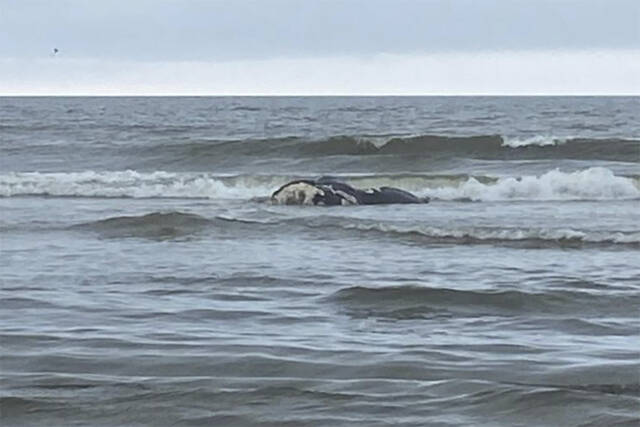
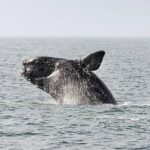
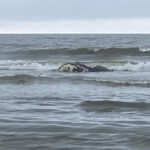
The first confirmed baby right whale of the year has been found dead from a collision with a ship, a devastating blow for the vanishing species.
North Atlantic right whales number less than 360 and they are vulnerable to ship strikes and entanglement in fishing gear. Federal authorities were notified of a dead right whale stranded off Georgia on Sunday, the National Oceanic and Atmospheric Administration said.
Federal and state officials identified the whale as the injured calf of a right whale known as Juno by marine scientists. The calf had first been seen on Jan. 3 with injuries to its head from a vessel strike, NOAA said in a statement.
Right whales, which are in decline, are slow to reproduce and every baby is vitally important to the future of the species, marine scientists have said. Twenty newborns would be considered a relatively productive season, but the giant whales have been having babies at an even slower rate than normal in recent years, and they have not reached that figure since 2021, NOAA data state.
NOAA said it was able to identify the dead calf based on its injuries and markings that were documented when it was alive.
“We will continue to work with our partners to perform a necropsy and evaluate the vessel strike wounds,” NOAA said in a statement.
Right whales migrate from their calving grounds off Florida and Georgia to feeding grounds off New England and Canada. The federal government has been working on new ship speed rules designed to protect the whales from injuries and deaths.
Some scientists have asserted that the whales are in trouble due to the warming of the ocean. The whales feed on tiny organisms in the ocean and appear to be straying from protected areas as the location of their food shifts due to climate change, scientists have said.
The baby whale is at least the third dead right whale this year. The species can’t withstand to lose population at that rate, and new protections to keep them safe are needed to save the species, environmental groups said Tuesday.
“A beacon of hope has turned into a tragedy. Human activity has set this species on a collision course with extinction. With an amended vessel speed rule, this death may never have happened,” said Greg Reilly, southeast marine campaigner for International Fund for Animal Welfare.