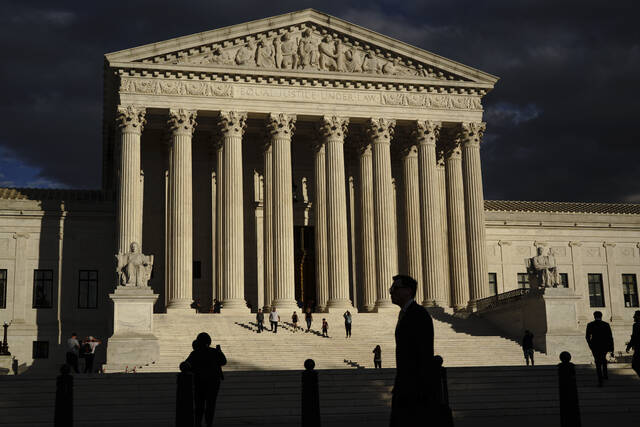
The Supreme Court struggled Monday with whether to allow a lawsuit by Muslim men claiming religious bias by the FBI to go forward despite the government’s objection that doing so could reveal national security secrets.
The case the high court was considering involves a group of three men from Southern California. They filed a class action lawsuit claiming the FBI spied on them and hundreds of others in a surveillance operation that began several years after the Sept. 11, 2001, attacks. The men, represented by lawyers from the American Civil Liberties Union and others, claimed religious discrimination and violations of other rights, saying they were spied on solely because of their faith.
A lower court dismissed almost all their claims after the government said allowing the case to go forward could reveal “state secrets” — whom the government was investigating and why. But an appeals court reversed that decision in 2019, saying the lower court first should have privately examined the evidence the government said was state secrets.
The Biden administration, like the Trump administration before it, told the justices that decision is wrong.
A number of the justices suggested they were inclined to agree with the government but also seemed to favor sending the case back to a lower court for additional proceedings. That could give both sides something of a win because it would allow the lawsuit to continue, as the group that sued wants.
Justice Brett Kavanaugh suggested that sending the case back to a lower court would let issues be “fleshed out and come back” to the Supreme Court later.
Justice Elena Kagan seemed to agree, saying the lower court’s decision was “in some important way premised on an incorrect understanding of when dismissal is appropriate in a state secrets case.”
Justices Stephen Breyer, Sonia Sotomayor and Neil Gorsuch also asked about sending the case back at various points in the arguments, which lasted two hours.
The case involves a confidential informant, Craig Monteilh, the FBI used from 2006 to 2007. Monteilh pretended to be a new convert to Islam as a way to become part of Southern California’s Muslim community.
Monteilh told people he was a fitness consultant, but he was really working as part of a surveillance program known as Operation Flex. Monteilh regularly attended the Islamic Center of Irvine in Orange County and has said that he was told to collect as much information on as many people as possible. He gathered names and phone numbers and secretly recorded thousands of hours of conversations and hundreds of hours of video using a camera concealed in a shirt button.
Ultimately Monteilh’s handlers told him to ask about jihad and express a willingness to engage in violence. Those questions caused members of the community to report him to the FBI and other authorities and seek a restraining order against him.
The FBI has acknowledged Monteilh was an informant, and the story was covered in the news media including on the National Public Radio show “This American Life.”
Three of the men Monteilh allegedly recorded sued, seeking damages and asking the government to destroy or return the information it had gathered.
This is the second case the court has heard involving the state secrets privilege since beginning its new term in October. Last month the court heard a case involving a Guantanamo Bay detainee that also involved the states secrets privilege.