



In October 2017, a yoga instructor emailed Jeffrey Epstein with a delicate question: When might she receive the tens of thousands of dollars she’d been promised by billionaire Leon Black?
She and Black had been in a sexual relationship, and since at least 2009, hundreds of thousands of dollars had flowed to her from Black’s bank accounts. But in 2017, the setup changed. Now Epstein would wire the money — in this case, $100,000.
“He said that now he does it through you,” the woman wrote to Epstein in an email that the Justice Department released this year. Epstein wrote back, confirming the arrangement.
In the later years of Epstein’s life, after he was incarcerated and registered as a sex offender, no one did more to bankroll his opulent lifestyle than Black, 74, a towering figure on Wall Street and a fixture of the global art scene.
Black paid Epstein $170 million over six years for what Black has said were tax and estate-planning services. The sum dwarfed what elite law or accounting firms would have charged for similar work, baffling both his Wall Street peers and investigators on Capitol Hill.
The millions of pages of Epstein-related emails and other documents that the Justice Department released this year offer a potential explanation for the size of the payments: Epstein essentially served as a fixer whose services went beyond modernizing Black’s finances or reducing his taxes, according to a New York Times review of those records.
Epstein suggested ways to obscure millions of dollars that Black paid to women, as well as to Epstein himself. He brainstormed about how to avoid taxes on some of the payments. He took credit for defusing a government audit of a woman to whom Black had paid millions of dollars. He planned ways to surveil, intimidate and silence another woman who was threatening to publicly accuse Black of abuse. He even counseled Black to separate from his wife after she learned of his infidelity.
Black paid about $20 million to a dozen women, at least some of whom he’d had sexual relationships with, according to the recently released files and notes taken by congressional investigators and shared with the Times. Epstein was involved in figuring out ways to dispense a significant portion of that money.
Epstein summed it up to Black in a 2017 email: Epstein’s job, as he saw it, was partly about “saving you from yourself.”
In a statement, Black’s lawyers, Courtney Forrest and Susan Estrich, said the Justice Department documents “make clear that Mr. Epstein embellished, exaggerated and lied about Mr. Black.” They said Black was not aware of Epstein’s sex trafficking or that he paid any women on Black’s behalf.
The recently released documents, which include some of Black’s financial records, have intensified congressional scrutiny of his relationship with Epstein and whether it crossed ethical or legal boundaries.
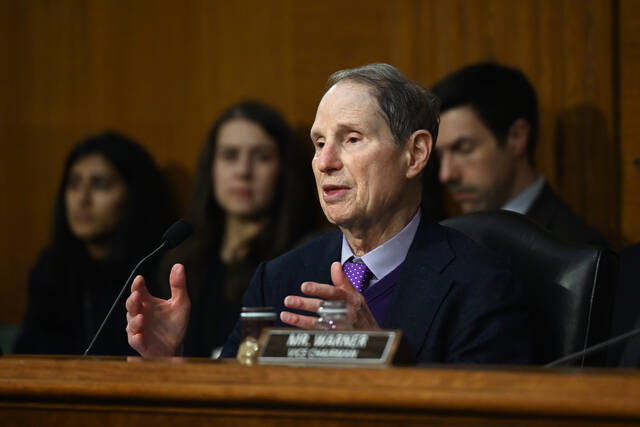
The House Oversight Committee recently asked Black to sit for an interview. Sen. Ron Wyden, D-Ore., who has been investigating Black’s financial ties to Epstein for years, accused him in a letter last week of seemingly using Epstein to hide payments to women. He also questioned whether Black had complied with tax laws.
In an interview, Wyden said that he had never believed that Black paid Epstein $170 million solely for estate and tax advice. “I think this all comes down to hush money,” he said, as well as Epstein doing “the kinds of things that would keep Black ahead of the law.”
Estrich said that Wyden’s claims were “outrageous and false” and were meant to serve “his own selfish political interests.” She accused him of leaking Black’s confidential financial information and of trying to distract from the fact that Wyden’s son, a hedge fund manager, sought an investment from Epstein in 2016.
Wyden said his son’s presence in the Epstein documents would not change the course of his investigation.
‘Happy Days’
Epstein and Black first met in the mid-1990s, not long after Black co-founded the private equity firm Apollo Global Management. The two became friends.
Black and his wife, Debra, named Epstein to the board of their family foundation. In 2003, Leon Black was among the contributors to a book celebrating Epstein’s 50th birthday, signing his entry “Love and Kisses.”
Six years later, when Epstein was released from jail after serving time for soliciting prostitution from a minor, Black was eager to celebrate. An assistant informed Epstein that Black wanted to sing him “Happy Days Are Here Again.”
“If i have to listen i’d rather be in jail,” Epstein replied.
On several occasions, Epstein introduced Black to women, according to emails and investigative records released by the Justice Department, as well as interviews with lawyers involved in Epstein cases. At least three of the women later accused Black of rape or sexual assault, allegations that he has denied. “Mr. Black has never abused, assaulted or raped any girl or woman, and the idea of doing so is repulsive and reprehensible to him,” his lawyers said.
The Manhattan district attorney’s office briefly investigated sexual assault allegations against him; no charges were filed. The U.S. Virgin Islands conducted a civil investigation of Black’s relationships with Epstein and several women. Black paid $62 million in a settlement with the territory before it made any public accusations.
By 2012, the friendship between the two men had also become a business relationship.
Black, who at the time was worth about $3.4 billion, was dealing with some complex tax issues.
That year, Epstein helped devise a way to restructure a trust and save Black hundreds of millions of dollars in taxes. While it is unclear to what degree the idea originated with Epstein or Black’s other advisers, it cemented Epstein’s value in his eyes.
A law firm that Apollo hired to review the Black-Epstein relationship later characterized Epstein’s work on the trust as the most important service that he had provided to Black. (He stepped down from Apollo in 2021.) The law firm, Dechert, concluded that Epstein’s tax and estate-planning services had been legitimate and vetted contemporaneously by well-qualified lawyers.
But other assignments that were not mentioned in Dechert’s 2021 report had been much more sensitive.
For years, Black had been paying women — some of them hundreds of thousands of dollars annually, according to the Justice Department’s Epstein documents, court filings, Wyden’s letter and two of the lawyers involved in Epstein cases.
For tax purposes, Black classified many of the payments as gifts. The recipient of a gift generally does not need to pay taxes on it. The giver does not need to pay taxes, either, until his lifetime giving exceeds a certain amount. The threshold varies by year, but in 2012, the limit was about $5 million — and Black had surpassed it, emails show. That meant that he would have to start paying a 40% tax on any large gifts.
Epstein suggested that because at least some of the gifts had come from a bank account that Black held jointly with his wife, perhaps half could be attributed to her for tax purposes. That would increase Black’s capacity to make tax-free gifts.
One of Black’s accountants shot down the idea, noting that because Debra Black had no involvement in the gifts to the women, it would probably violate federal tax law.
But the question was not only how much Leon Black might owe in taxes. It was also what he and the women would have to disclose to the IRS. If the payments were not gifts, the women would need to report the money as income on their tax returns. If the payments were gifts, Black would have to disclose them on a gift-tax return.
A rule of thumb for the ultrawealthy is to “limit unnecessary paper trails, which create opportunities for misunderstanding, audit risk and reputational exposure,” said Victoria J. Haneman, a professor at the University of Georgia School of Law who specializes in taxes and estates.
In late 2012, Epstein and Black’s other advisers discussed a strategy: Black could donate money to a family trust, and the trust could then make additional gifts. Black would still owe taxes, but payments would no longer come directly from him.
Going forward, his payments to at least some women came from several trusts he controlled, emails and financial documents show.
Black’s lawyers said that all of his payments to women and gift taxes “were vetted and approved by legal and accounting experts.” They added, “Evidence that communications were sent to Mr. Black is not evidence that he read, agreed with or followed advice in those messages.”
Secret lunch recordings
While Epstein kept advising Black on financial matters, he was also branching into less conventional fare.
Black had a long-running affair with a Russian woman, Guzel Ganieva. By 2015, she was threatening to go public with allegations of sexual abuse unless he paid her $100 million, according to the Justice Department’s Epstein documents and interviews with people familiar with her claims. Epstein was there to help.
That July, after the two men met, Epstein drafted a menacing email that was apparently meant for Black to send to Ganieva, who at the time was in her 30s.
“I felt it necessary to contact some friends in FSB,” the message read, referring to the Russian security service. The message warned that her attempts to “blackmail a us businessman” would be viewed in Russia, which was trying to attract Western investments, as a grave threat and would be “dealt with extremely harshly.”
The message suggested that Black could pay her $50,000 a month for two years. “I expect never ever to hear a threat from you again,” Epstein wrote in Black’s voice.
There is no indication that Black read the message, which Epstein sent to himself, or that it was sent to Ganieva. But it became something of a playbook for Epstein in the weeks ahead.
Later that month, he emailed Sergei Belyakov, a well-connected Russian government official, to request a favor. He explained that Ganieva had tried to blackmail “a group of powerful biznessman in New York. It is bad for business for everyone involved.” Epstein asked if he had any suggestions.
Belyakov responded by leveling damaging personal allegations against Ganieva and said that limiting her access to the United States “would be a great threat to her business.”
At the time, Epstein was in regular contact with Brad Karp, chair of the law firm Paul Weiss and one of Black’s most trusted advisers. Epstein and Karp discussed whether they could somehow block Ganieva from the United States, which she had most recently entered on a tourist visa.
Another possibility was to enlist law enforcement. “Your call on fbi or nypd,” Epstein wrote to Karp, proposing that Ganieva be arrested after Black “passes her a large check. Grand larceny etc.” (There is no indication that they went to law enforcement at the time.)
Epstein tracked down information about Ganieva’s whereabouts, her acquaintances and even her young son. He suggested to Karp that Black enlist private investigators from Nardello & Co.
The Nardello investigators soon began running surveillance on Ganieva. And in August, they put in motion a plan to secretly record a series of meetings between Black and Ganieva at posh New York restaurants. The goal was to capture her on tape acknowledging that Black had not abused her. Emails show that Epstein and Karp strategized before and after some of the encounters.
Over meals at the Four Seasons, Le Bernardin and the Modern, Black increased the amount of money he was offering Ganieva — while sprinkling in threats about her ending up in jail if she didn’t stop threatening him, according to transcripts of the recordings.
Epstein suggested raising the offer to $100,000 a month for years into the future — a proposal that appears to have carried the day. The final deal, struck in October 2015, called for Black to pay Ganieva a total of $18 million over the next 15 years. In return, she signed a nondisclosure agreement in which she said that allegations she had made against Black were “not true.”
Epstein appeared to be involved in setting up the payments to Ganieva through a generically named trust, emails show.
His work on the Ganieva matter was not mentioned in the Dechert report.
‘Avoid public disclosure’
The same month as the deal with Ganieva, Black and Epstein worked out an agreement of their own. It involved a payment of $20 million in fees to Epstein.
The plan appeared to be structured at least in part to avoid taxes.
Black would pay $10 million to Epstein’s primary company, Southern Trust. But the other $10 million would be in the form of a donation to one of Epstein’s charitable organizations, Gratitude America, which until then did not have any funds.
Gratitude America soon began dispensing the money in ways that could burnish Epstein’s reputation or strengthen his ties to figures in academia and other fields.
There were benefits for Black, too. Epstein’s accountant, Richard Kahn, noted in an email to one of Black’s advisers that a goal of the arrangement was “to maximize deductions.” Black would be able to write off the $10 million and potentially lower his tax bill.
The catch was that private foundations like Gratitude America have to file public reports disclosing their donors.
“In an effort to avoid public disclosure of Leon name, this charitable donation should be paid from your LLC that owns automobiles,” Kahn wrote to Black’s adviser. Ultimately the money would come from a different entity, BV70 LLC, that had been set up to own Black’s yacht.
While the emails between aides to Epstein and Black describe the donation as part of a fee payment, the Dechert report implied that it was simply an act of charity: Black “felt comfortable making this donation because he understood that Epstein was a strong proponent of scientific innovation.”
Wyden, in his letter to Black, said the emails pointed to possible illegality. “Intentionally disguising payments for professional services as charitable contributions to claim a tax deduction would constitute tax fraud,” he wrote.
Wyden said in the interview that the Dechert report appeared to whitewash some of Black’s actions.
An Apollo spokesperson said Dechert’s review was “thorough and independent.”
An IRS audit
Black’s voluminous gift-giving drew the attention of the IRS. Starting in 2016, the agency began auditing Black and a woman named Anastasiya Siro, with whom he’d been having an affair, according to the Justice Department documents and two people familiar with the relationship.
Epstein worked with Black’s accountants on audits of the billionaire’s taxes, but he appeared to be especially enmeshed in the audit of Siro, a former model from Ukraine. Epstein had known her since at least 2010, when she was in her early 20s. (Representatives for Black and Siro said they did not meet through Epstein.)
Recently released records show that Black was paying her millions of dollars.
The IRS was focused in part on more than $600,000 that Siro had received from one of Black’s trusts. She had not paid taxes on the payments, because she considered them gifts, the emails show.
An IRS auditor wanted to review Black’s gift-tax return to see if he, too, had classified them as gifts. The auditor also sought to interview Siro about her relationship with Black, who had helped set her up as an art dealer, records show.
As Epstein sought to resolve Siro’s audit, he acted as a liaison between her and Black’s advisers. Epstein arranged for Black’s accountant to write a letter to the IRS auditor confirming that the payments had been gifts.
Epstein spent months dealing with the Siro audit, and when it appeared to get resolved, he took credit.
A spokesperson for Siro said Epstein helped with the audit because he was a tax expert. “After the audit was complete, she had nothing more to do with Epstein,” the spokesperson said.
The report that Dechert prepared for Apollo noted that Epstein had helped deal with a number of IRS audits of Black. It did not mention his role in the audit of Siro.
Epstein’s involvement in personal matters was only increasing. After Debra Black learned of one of her husband’s extramarital affairs, Epstein suggested to Leon Black that he separate from her “so he doesnt have a heart attack,” as Epstein put it in an email to Karp.
The Blacks remain married. Leon Black’s lawyers said he never asked Epstein for marital advice.
One of the other women with whom Black had a relationship was the yoga instructor. Epstein was involved in paying her.
The woman, who was originally from Siberia, had known Epstein since at least 2009, when she was in her late 20s. Emails indicate that Epstein tried to connect her to powerful men, including then-Prince Andrew and a senior JPMorgan Chase executive, Jes Staley. (Staley has denied knowing her. A spokesperson for now Andrew Mountbatten-Windsor didn’t respond to a request for comment.)
In 2017, she reached out to Epstein after receiving $28,000 from him, not the $100,000 that Black had told her to expect. “I just wanted to ask if there was any misunderstanding,” she wrote. She added that she previously had been paid directly by Black and didn’t know how the “new system” would work.
After some back-and-forth, Epstein confirmed that the full amount was on its way. “Next week you will receive,” he wrote.
Wyden said in his letter that Black appeared to use Epstein “as a middleman, raising concerns of potential money laundering.”
Cocaine rumors
Despite, or perhaps because of, their close relationship, tension had been building between Epstein and Black. In 2017, it boiled over.
Epstein had received about $170 million by then but complained that he was not getting the money or gratitude he deserved.
That spring, Epstein mentioned to Karp that a rumor was circulating that Black was using cocaine. Black soon learned what Epstein had said. He was furious.
In what Epstein later described as an “ugly meeting,” Black accused him of spreading the cocaine rumor because he was dissatisfied with his compensation. He said Epstein was “out of control.” In their statement to the Times, Black’s lawyers said, “Other than experimenting with drugs early in his life, Black has not used illegal substances in more than 40 years.”
The men continued to meet and do business over the next several months, but signs of a strain persisted. That summer, Epstein complained about incurring a steep financial loss while helping Black save millions of dollars in capital gains taxes on a complicated transaction involving a Giacometti statue and a Cézanne painting.
“Something is wrong,” Epstein wrote in a long, rambling email to Black in August 2017. “Im not sure what it is. But it is clearly not the normal you.” Epstein lamented that despite everything he had done for Black, he had “failed to even buy me lunch.”
Black did not appear to respond to the email.
Two months later, allegations about movie producer Harvey Weinstein’s sexual misconduct were dominating headlines, and Epstein was viewing Black’s situations with women through that lens.
“We live in a world where men in power cannot be seen to be taking advantage of young (20s) women,” Epstein wrote in an email to Karp. He said that some of the ways Black was handling his affairs with women were “frought with danger” and “asking for trouble.”
Black and Epstein kept working together for at least another year. In the fall of 2018, Black asked Epstein to review his latest tax return. He invited Epstein to participate in a planned investment.
Black also pushed Epstein to repay $30 million he had borrowed from Black in connection with the art transaction. Epstein wired $10 million to one of Black’s companies but did not repay the rest.
On Nov. 5, 2018, assistants to Epstein and Black emailed about rescheduling a lunch the two men had planned.
After that, there do not appear to be records of the men communicating with each other, though Epstein on occasion received emails in which acquaintances shared gossip about Black.
Later that November, The Miami Herald began publishing a series of articles about Epstein. In July 2019, Epstein was arrested and charged with sex trafficking.
Black played down their ties. Speaking to investors that month, he described the extent of the work that Epstein had performed for him: “From time to time, Mr. Epstein has provided professional services to my family partnership and related family entities involving tax, estate-planning and philanthropic advice.”