SPRINGFIELD, Ill. — Business advocates now resigned to the likelihood that Illinois will soon adopt a $15-an-hour minimum wage urged legislators Wednesday to make it a tiered approach based on geography, arguing there are vast cost-of-living differences between Chicago and more rural areas downstate.
While Illinois’ statewide minimum wage has remained at $8.25 an hour since 2010, Chicago has jumped ahead, with the minimum wage there going to $13 this year .
Rob Karr, president and CEO of the Illinois Retail Merchants Association, told the Senate Labor Committee that the nation’s third-largest city shouldn’t set the wage floor for everywhere else in the state.
“It’s something we all need to look at when we’re talking about … the economic diversity of this state and the fact that, the suburbs and downstate simply don’t enjoy the same economics” as Chicago, Karr said.
It’s unclear whether the argument will have much impact among Democratic legislative leaders, who have largely embraced some kind of $15-an-hour plan statewide.
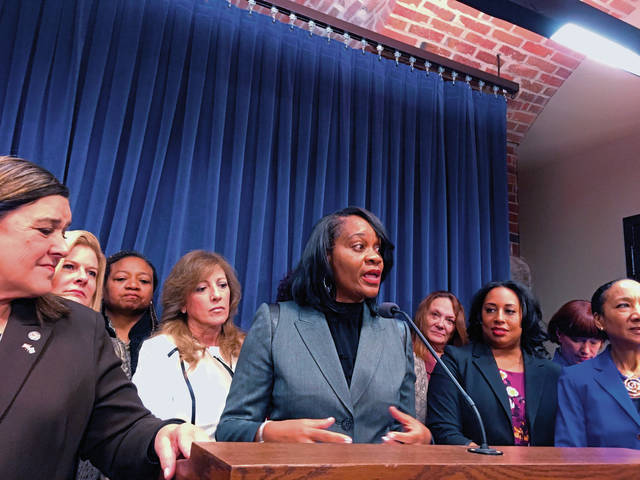
Senate Majority Leader Kimberly Lightford, a Maywood Democrat, has yet to flesh out her plan . During testimony to the committee, she lamented about “workers who deserve to live a better life who are working but remaining in poverty.”
But she said wants to hear more from Karr on the tiered idea, saying “everything’s negotiable” en route to a plan that helps “move workers out of poverty” while giving businesses the best chance to “grow and expand.”
New Democratic Gov. J.B. Pritzker, who campaigned on the issue last fall, wants to sign the proposal into law before he lays out an annual budget to the General Assembly on Feb. 23, Lightford said.
New York and Oregon recently adopted a geographically based approach to minimum wage. On Jan. 1, the minimum wage in New York City went to $15, whereas on Long Island, it increased from $11 to $12, and the rest of the state saw a jump of 70 cents, to $11.10.
Karr asked that a law preclude cities from increasing the wage above the state level in the future. And he pleaded for an extended phase-in, noting that jumping too quickly from $8.25 to $15 would be onerous on employers’ bottom line.
Business groups maintain that the minimum wage is a starting point, used “to pay inexperienced workers who are just learning job skills and just entering the workforce,” said Mark Grant, state director of the small-business advocate NFIB.
But minimum-wage laborers told a different story.
“I go home every day tired,” said Charles Lovett, who makes $8.95 an hour at a chain retail store in Joliet. “I’d like to say that I go to my own home tired, but I can’t because I’m living in Section 8 (government-subsidized housing) with my mom and together, both of our incomes, it’s still not enough to pay things that have to get done.”
It wouldn’t be a requirement just slapped on the private sector. Pritzker senior adviser Nikki Budzinski assured Sugar Grove Sen. Jim Oberweis, the Labor Committee’s ranking Republican, that the administration would be sensitive not only to the impact on private commerce but the state budget.
The committee also heard from a representative of the nursing home industry, who pleaded for state assistance to meet the added payroll because they’re heavily reliant on government-funded Medicaid health care reimbursements. And a park district representative noted that local recreational governments will have to give raises to hundreds of summer workers, from lifeguards to youth-league baseball umpires.