


SEOUL, South Korea — North Korea launched a short-range ballistic missile toward the sea on Sunday, its neighbors said, ramping up testing activities in response to ongoing U.S.-South Korean military drills that it views as an invasion rehearsal.
The North’s continuation of missile tests showed its determination not to back down despite the U.S.-South Korea exercises, which are the biggest of their kind in years. But many experts say the tests are also part of North Korea’s bigger objective to expand its weapons arsenal, win global recognition as a nuclear state and get international sanctions lifted.
The missile launched from the North’s northwestern Tongchangri area flew across the country before it landed in the waters off its east coast, according to South Korean and Japanese assessments. They said the missile traveled a distance of about 800 kilometers (500 miles), a range that suggests the weapon could target South Korea.
The chief nuclear envoys from South Korea, Japan and the U.S. discussed the launch on the phone and strongly condemned it as a provocation that threatens peace on the Korean Peninsula and in the region. They agreed to strengthen their coordination to issue a firm international response to the North’s action, according to Seoul’s Foreign Ministry.
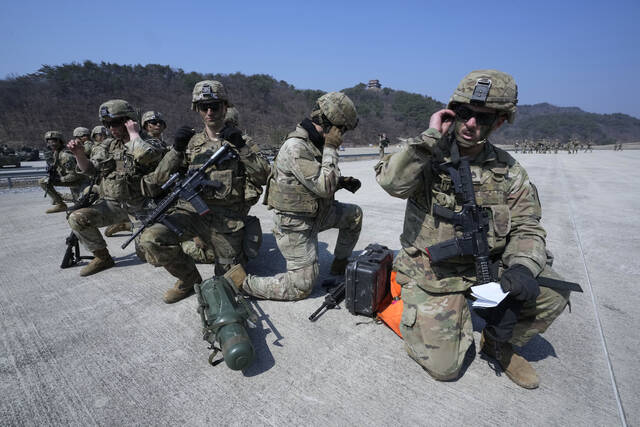
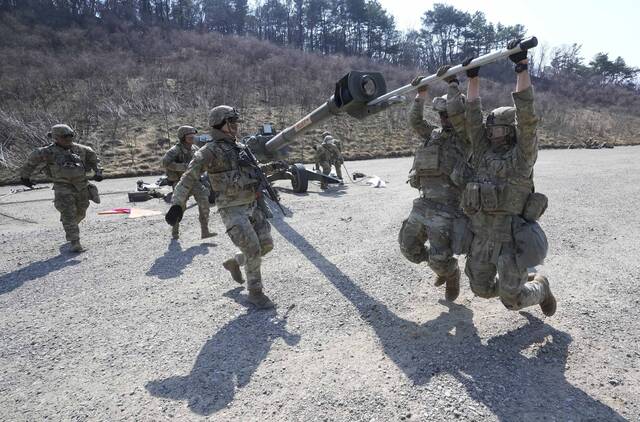
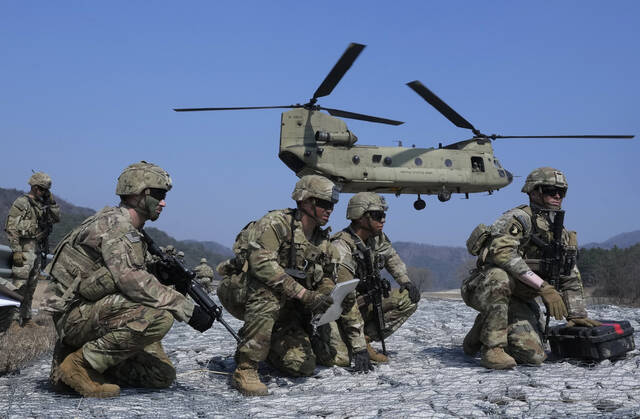
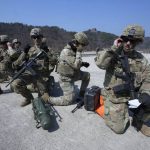
South Korea’s military said it will thoroughly proceed with the rest of the joint drills with the U.S. and maintain a readiness to “overwhelmingly” respond to any provocation by North Korea. As part of the drills, the U.S. on Sunday flew long-range B-1B bombers for joint training with South Korean warplanes, according to South Korea’s Defense Ministry.
North Korea is highly sensitive to the deployment of B-1Bs, which are capable of carrying a huge conventional weapons payload. It responded to the February flights of B-1Bs by test-launching missiles that demonstrated potential ranges to strike some air bases in South Korea.
Japanese Vice Defense Minister Toshiro Ino said the missile landed outside Japan’s exclusive economic zone and there were no reports of damage to vessels or aircraft. He said the missile likely showed an irregular trajectory, a possible reference to North Korea’s highly maneuverable, nuclear-capable KN-23 missile that was modeled on Russia’s Iskander missile.
The U.S. Indo-Pacific Command said the latest launch doesn’t pose an immediate threat to the U.S. territory or its allies. But it said the North’s recent launches highlight “the destabilizing impact of its unlawful” weapons programs and that the U.S. security commitment to South Korea and Japan remains “ironclad.”
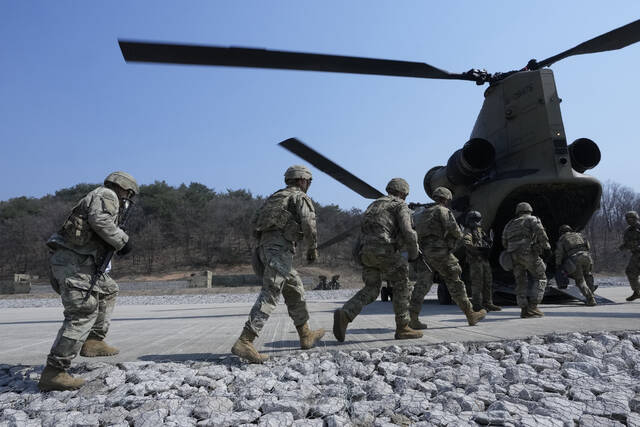
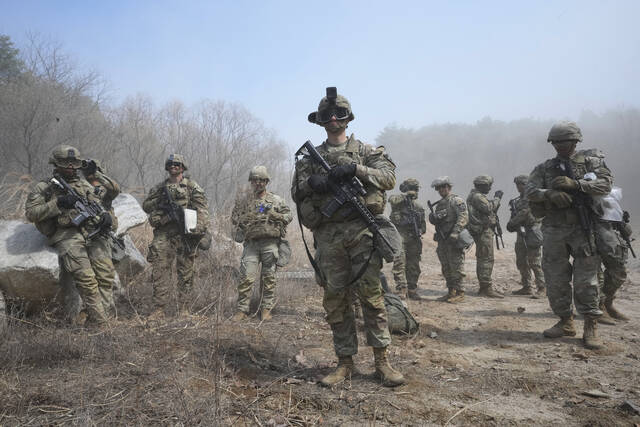
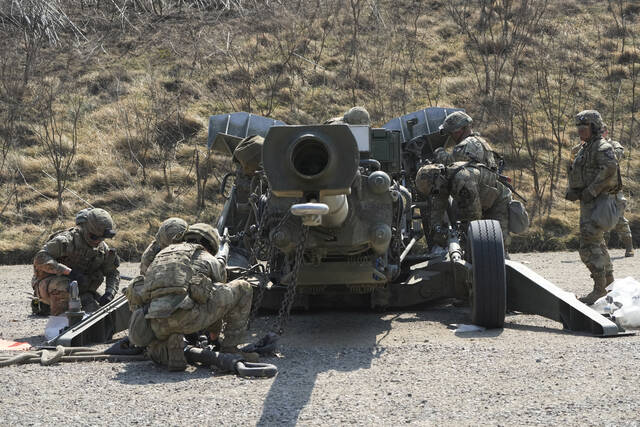
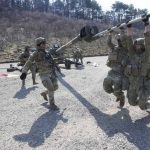
The launch was the North’s third round of weapons tests since the U.S. and South Korean militaries began their joint military drills last Monday. The drills, which include computer simulations and field exercises, are to continue until Thursday. The field exercises are the biggest of their kind since 2018.
The weapons North Korea recently tested include its longest-range Hwasong-17 intercontinental ballistic missile designed to strike the U.S. mainland. The North’s state media quoted leader Kim Jong Un as saying the ICBM launch was meant to “strike fear into the enemies.”
Thursday’s launch, the North’s first ICBM firing in a month, drew strong protests from Seoul, Tokyo and Washington. It was carried out just hours before South Korean President Yoon Suk Yeol flew to Tokyo for a closely watched summit with Japanese Prime Minister Fumio Kishida.
During the summit, Yoon and Kishida agreed to resume their defense dialogue and further strengthen security cooperation with the United States to counter North Korea and address other challenges.
Ties between Seoul and Tokyo suffered a major setback in recent years due to issues stemming from Japan’s 1910-45 colonial rule of the Korean Peninsula.
But North Korea’s record run of missile tests last year — it launched more than 70 missiles in 2022 alone — pushed Seoul and Tokyo to seek stronger trilateral security partnerships involving Washington, which also wants to reinforce its alliances in Asia to better deal with China’s rise and North Korean nuclear threats.
North Korea has missiles that place Japan within striking distance. Last October, North Korea fired an intermediate-range missile over northern Japan, forcing communities there to issue evacuation alerts and halt trains.
After Sunday’s launch, Kishida ordered a prompt response, including working closely with South Korea and the U.S., according to Ino, the Japanese vice defense minister.
A day before the start of the drills, North Korea also fired cruise missiles from a submarine. The North’s state media said the submarine-launched missile was a demonstration of its resolve to respond with “overwhelming powerful” force to the intensifying military maneuvers by “the U.S. imperialists and the South Korean puppet forces.”
According to South Korean media reports, the U.S. and South Korea plan more training involving a U.S. aircraft carrier later this month after their current exercises end. This suggests animosities on the Korean Peninsula could last a few more weeks as North Korea would also likely respond to those drills with weapons tests.