


Some lawmakers are trying to stop 144 U.S. cities from losing their designations as “metropolitan areas” as the federal government updates its standards, doubling the minimum number of residents required in a city’s urban core to 100,000 people.
Sens. John Thune, a Republican from South Dakota, and Mark Kelly, a Democrat from Arizona, introduced legislation on Tuesday that would stop the Office of Budget and Management from making the change.
Under the federal government’s proposal, a metro area would need double the 50,000-person threshold that has been in place for the past 70 years in order to count as a metropolitan statistical area. Cities losing this status, with core populations of 50,000 to 99,000 people, would become “micropolitan” statistical areas instead.
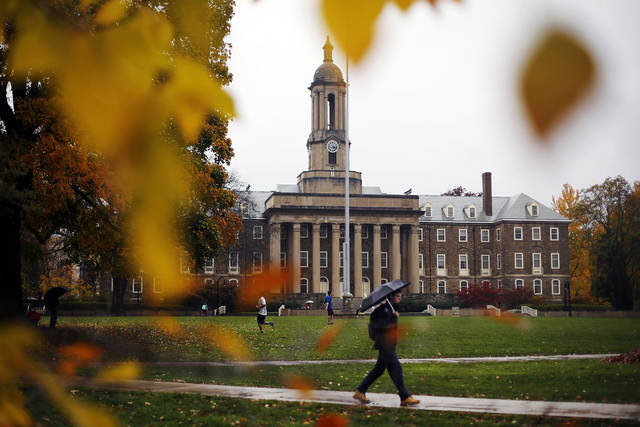
More than a third of the current 392 metro areas would become micro areas, including state capitals such as Bismarck, N.D.; Carson City, Nevada; Cheyenne, Wyoming; and Santa Fe, New Mexico; as well as the college towns of Ames, Iowa; Auburn, Alabama; Charlottesville, Va.; Lawrence, Kansas; and State College, Pennsylvania.
The lawmakers said the downgrade would cause real harm, preventing urban areas from getting designated federal funding and making them less attractive for economic development.
“Increasing the population threshold that is needed to be considered a ‘metropolitan statistical area’ would adversely affect communities in nearly every state, including South Dakota,” Thune said.
Federal statisticians recommending the change say it’s long overdue, given that the U.S. population has more than doubled since the 50,000-person threshold was introduced in 1950. Back then, about half of U.S. residents lived in metros; now, 86% do.
The Office of Budget and Management hasn’t said when it will make a final decision. If approved, it wouldn’t take effect until 2023.
An agency spokesman didn’t return an email or a phone call on Wednesday. The office has said the designation is purely for statistical purposes and not to be used for funding formulas, though as a practical matter, that is how it’s often used.