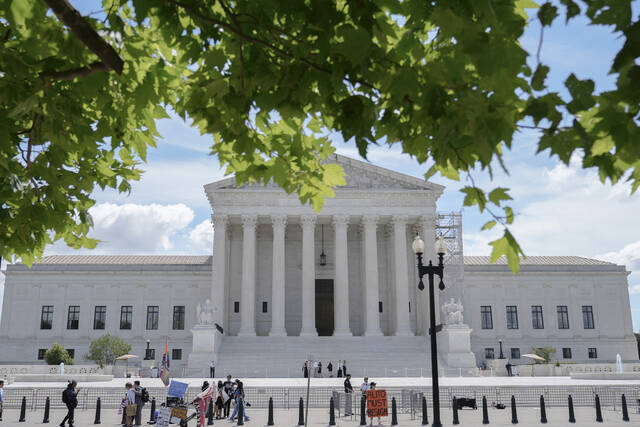
WASHINGTON — The Supreme Court decided on Friday that cities can enforce bans on homeless people sleeping outdoors in West Coast areas where shelter space is lacking.
The case is the most significant to come before the high court in decades on the issue and comes as a rising number of people in the U.S. are without a permanent place to live.
In a 6-3 decision, the high court reversed a ruling by a San Francisco-based appeals court that found outdoor sleeping bans amount to cruel and unusual punishment.
A bipartisan group of leaders had argued the ruling made it harder for them to manage outdoor encampments encroaching on sidewalks and other public spaces in nine Western states. That includes California, which is home to one-third of the country’s homeless population.
Homeless advocates, on the other hand, said that allowing cities to punish people who need a place to sleep would criminalize homelessness and ultimately make the crisis worse. Cities had been allowed to regulate encampments but couldn’t bar people from sleeping outdoors.
The case came from the rural Oregon town of Grants Pass, which appealed a ruling striking down local ordinances that fined people $295 for sleeping outside after tents began crowding public parks. The U.S. 9th Circuit Court of Appeals, which has jurisdiction over the nine Western states, has held since 2018 that such bans violate the Eighth Amendment in areas where there aren’t enough shelter beds.
The ruling comes after homelessness in the U.S. grew a dramatic 12% last year to its highest reported level, as soaring rents and a decline in coronavirus pandemic assistance combined to put housing out of reach for more people.
More than 650,000 people are estimated to be homeless, the most since the country began using a yearly point-in-time survey in 2007. Nearly half of them sleep outside. Older adults, LGBTQ+ people and people of color are disproportionately affected, advocates said. In Oregon, a lack of mental health and addiction resources has also helped fuel the crisis.