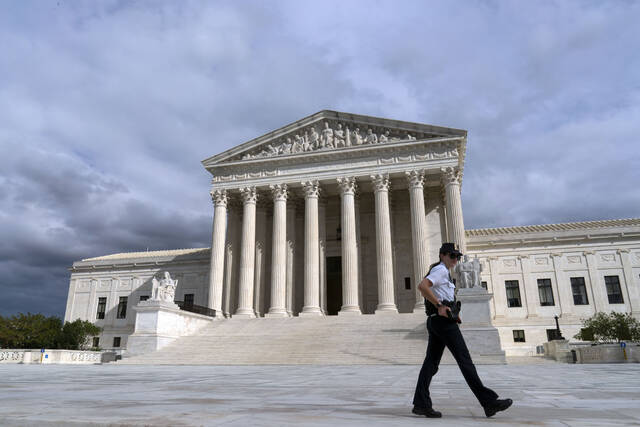
WASHINGTON — The Supreme Court on Monday declined to hear an appeal over whether the public should have access to opinions of the secretive court that reviews bulk email collection, warrantless internet searches and other government surveillance programs.
The justices turned away the appeal filed by civil liberties and media rights groups arguing that the public has a constitutional right to see significant opinions of the Foreign Intelligence Surveillance Court. They also argued that federal courts, not the executive branch, should decide when opinions that potentially affect the privacy of millions of Americans should be made public.
Justice Neil Gorsuch and Justice Sonia Sotomayor said they would have heard the case. Gorsuch wrote that the case “presents questions about the right of public access to … judicial proceedings of grave national importance.”
“If these matters are not worthy of our time,” he wrote, “what is?”
The Biden administration had opposed high-court review, arguing that not even the Supreme Court has the authority to review the case under federal law. In addition, the administration said much of the material sought in this case already has been made public through requests made under the Freedom of Information Act.
The Foreign Intelligence Surveillance Court was established in 1978 to receive applications from the FBI to eavesdrop on people it suspects of being agents of a foreign power, such as potential spies or terrorists. After Sept. 11, 2001, Congress expanded the court’s role to consider broad surveillance programs.
In recent decisions, judges ruled that opinions sought by the groups couldn’t be made public, even in censored form, and that they didn’t even have the authority to consider releasing the opinions.
Legislation adopted in 2015 includes a provision that requires the government to consider releasing significant FISA court opinions. But the law doesn’t apply to opinions written before it was enacted and leaves the review process entirely to the executive branch.
The appeal was filed by Theodore Olson, the American Civil Liberties Union, the Knight First Amendment Institute at Columbia University and Yale Law School’s Media Freedom and Information Access Clinic. Olson is on the Knight institute’s board and was the Bush administration’s top Supreme Court lawyer as the FISA court’s role was expanded after the Sept. 11 terrorist attacks.