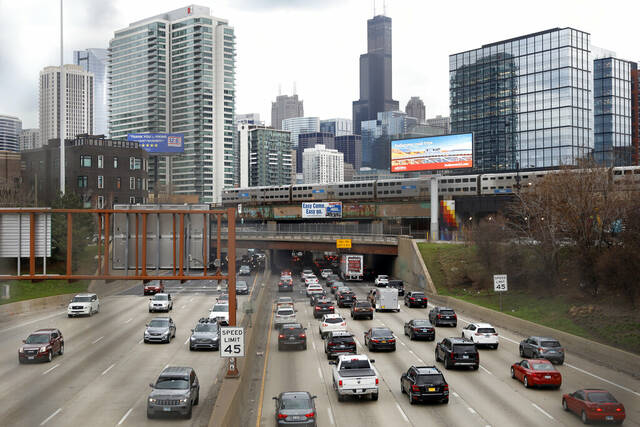
WASHINGTON — Car crash fatality rates increased 21% in 2020, even as total crashes and injuries decreased, according to a final report released Wednesday by the National Highway Traffic Safety Administration.
It’s the most recent crash data, indicating a major uptick in deaths between 2019 and 2020, when many Americans were confined to their homes in the early stages of the coronavirus pandemic. The agency said the driver in almost half of fatal crashes was speeding, driving drunk or not wearing a seat belt.
Total crashes decreased by 22% and injuries decreased by 17%. Drivers also took to the roads less, with the total miles traveled decreasing by 11% between 2019 and 2020.
But those who did drive were increasingly risky. Deaths of passenger car drivers, motorcyclists, bicyclists and pedestrians all rose in 2020.
In total, 38,824 people died in car crashes in 2020, up almost 7% from the 36,355 people who died the same way the year before. It’s the highest number of fatalities in 13 years, according to the agency.
“The tragic loss of life of people represented by these numbers confirms that we have a deadly crisis on our nation’s roads,” said NHTSA Deputy Administration Steven Cliff in a statement. “We cannot allow this to become the status quo.”
Transportation Secretary Pete Buttigieg has called the trend a “crisis” and announced in January a new strategy in which the agency will push for better safety in transportation systems as a whole, including road and vehicle safety but post-crash medical care and system design aimed to protect pedestrians and bicyclists.
“It’s as if we were living through a war,” Buttigieg said at the time. “We cannot accept that these fatalities are somehow an inevitable part of life in America.”
Under the new initiative, DOT will aid state and local transportation departments with road system design, reconsider speed limits, expand reporting and data sharing and more. It will also encourage the use of automatic emergency braking and other auto technology that can decrease crash rates.
The strategy will also use new funding appropriated by the bipartisan infrastructure law, including $6 billion for a “safe streets” program and $4 billion more for the Highway Safety Improvement Program, according to the Department of Transportation.