
https://triblive.com/opinion/bryan-l-kline-religious-freedom-behind-bars-the-unfinished-story-of-kort-noel-eckman/
Bryan L. Kline: Religious freedom behind bars — the unfinished story of Kort Noel Eckman

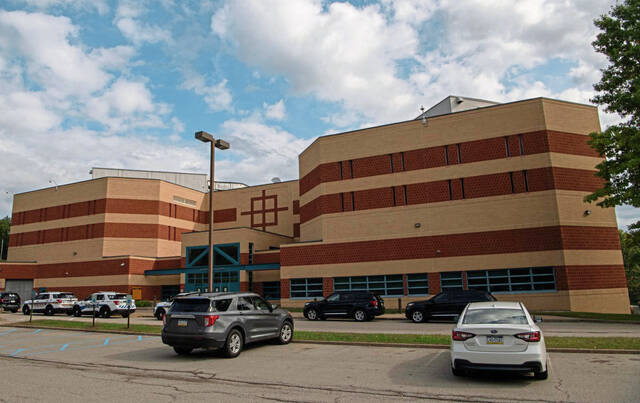
The recent developments at the Westmoreland County Prison granting inmate Kort Noel Eckman limited access to kosher meals and allowing him to wear a yarmulke in court, while a welcome step forward, are but a partial remedy to a deeper, systemic failure.
Eckman’s ordeal lays bare a troubling contradiction in our criminal justice and correctional systems: that constitutional rights, especially the freedom of religion, are too often reduced to optional privileges rather than inviolable protections, even for the incarcerated.
The patchwork response from initially denying his religious accommodations to finally permitting them only under pressure reflects a persistent institutional reluctance to uphold legal and moral duties.
It must be emphasized that simply because someone is incarcerated, they do not lose their religious liberties. The Constitution guarantees that religious freedoms extend to all individuals, regardless of their incarceration status. This fundamental principle is too often overlooked or misunderstood by correctional administrators, who may view rights as conditional or negotiable within jail walls.
Pennsylvania Title 37 clearly mandates reasonable accommodations for inmates’ religious beliefs unless there exists a clear and justified security concern. Yet, in Eckman’s case, the prison initially resorted to vague security worries and bureaucratic gatekeeping, summoning a rabbi to “verify” the authenticity of Eckman’s conversion. This institutional vetting of personal faith is not only intrusive but constitutionally indefensible. Religion is deeply personal and cannot be reduced to a credibility test administered by prison officials or external arbiters.
This points to a broader institutional failure: Jail administration evidently needs extensive training on the rights that incarcerated individuals possess, including their religious freedoms. Staff education is critical to ensure that correctional officers and administrators understand these rights, recognize their legal obligations and implement policies that respect human dignity rather than infringe upon it.
The eventual allowance of kosher meals, though incomplete and inconsistent, was made only after public scrutiny and legal advocacy. Eckman’s reported malnutrition and reliance on commissary food to supplement sporadic kosher meals highlight how rights violations can translate directly into physical harm. Such outcomes underscore how inadequate institutional responses do not simply erode rights in the abstract but risk inmates’ health and dignity.
Moreover, Eckman’s case arrives amid broader concerns over how prisons balance security with human rights. While legitimate safety concerns must be addressed, it is unacceptable to use “security” as a blanket rationale to deny constitutional protections. Across the country, correctional facilities have successfully implemented policies accommodating religious attire and diets without compromising safety.
Beyond the immediate facts, this controversy damages public trust in the justice system. Society demands that even those accused of serious crimes retain their fundamental rights. Arbitrary denial of religious freedoms sows cynicism, suggesting a two-tiered justice system where rights are contingent on circumstance or whim.
Westmoreland County Prison’s partial remediation should not excuse its initial failures. Instead, it must catalyze comprehensive reforms: clear, enforceable policies that respect religious rights; mandatory staff training to ensure compliance and sensitivity; and transparent grievance and oversight mechanisms that hold officials accountable.
The story of Kort Noel Eckman is a microcosm of a larger crisis: the gap between law and practice in corrections concerning human dignity and constitutional protections.
Correctional institutions wield immense power, but that power is never absolute. They are custodians charged not only with confinement but with upholding justice, fairness and respect for all individuals rights that continue behind bars.
The path forward demands more than partial accommodations or reactive fixes. It calls for a fundamental recommitment to the principle that religious freedom is a universal right, one that survives even within prison walls. Without it, the very foundations of justice and humanity are at risk.
Westmoreland County must do more than provide kosher meals and approve yarmulkes. It must lead by example, ensuring that every inmate’s constitutionally guaranteed religious freedoms are recognized, respected and protected fully and without delay. Only then can it begin to restore faith in the values our justice system claims to embody. We must ask the question, Who is being held accountable for the violation of these rights in Westmoreland County?
Bryan L. Kline is former warden of the Westmoreland County Prison and is a subject matter expert in corrections.
Copyright ©2026— Trib Total Media, LLC (TribLIVE.com)