Veteran suicide is a persistent public health crisis in the United States. Though veterans make up just 7% of the adult population, they account for nearly 14% of adult suicides — 20 veterans lost every day.
In Pennsylvania, the crisis is even more severe. The state’s veteran suicide rate is nearly double the national average, and Southwestern Pennsylvania sits at the center of that reality, home to more than 100,000 veterans across Allegheny, Fayette, Greene, Washington and Westmoreland counties.
Moreover, many of the rural areas of our region experience provider shortages, limited access to mental health care and transportation barriers, and veterans writ large are prone to higher rates of chronic illness, anxiety, depression and social isolation than nonveterans. Each of these factors increase suicide risk.
The U.S. Department of Veterans Affairs reports over half of veterans who die by suicide had no recent contact with the department. This gap between crisis screening and effective mental health support continues to leave many veterans without meaningful intervention, particularly in rural and semi-rural communities.
Allegheny County partnered with the Department of Veterans Affairs in search of a solution, and while the VA has demonstrated strong capabilities to alleviate suicide risk in the veterans they do serve, their work alone is not enough to overcome this crisis.
Many veterans struggle with additional ongoing issues such as sleep disruption, hypervigilance, emotional dysregulation, substance abuse and relationship strain, factors the VA identifies as prevalent in veteran suicide cases.
Given the diverse combination of factors leading to increased rates of veteran suicide and the corresponding challenges identifying them, it’s no wonder federal and local governments have struggled to formulate a solution.
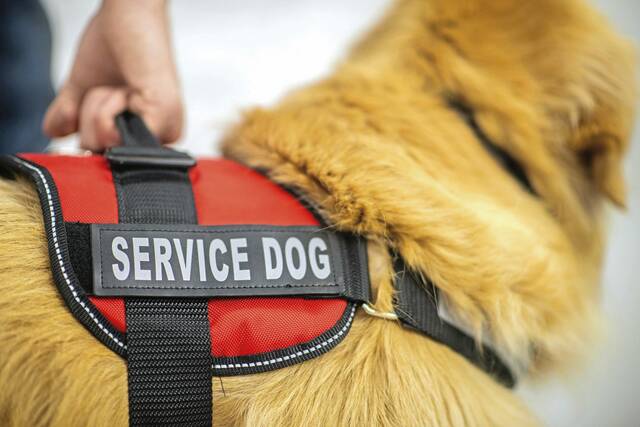
However, I’ve seen firsthand the life-changing benefits of task-trained medical service dogs for veterans and their families. They have emerged as a uniquely effective intervention for addressing these risks.
Service dogs can reduce anxiety and depression, improve sleep, interrupt panic responses, support emotional regulation and decrease social isolation. Unlike episodic clinical care, service dogs provide continuous support that addresses the day-to-day challenges linked to suicide risk.
After 15 years of pairing service dogs with disabled veterans, the pattern has become clear: When support is constant rather than episodic, risk declines.
Through Guardian Angels Medical Service Dogs, we have paired more than 450 recipients without a single suicide, and have documented a 59% reduction in key suicide risk indicators within the first year of pairing.
These highly skilled service dogs help veterans live healthier, more independent lives, and their constant companionship plays a powerful role in easing the effects of severe trauma.
One veteran from Pittsburgh that we’ve already paired with a dog was living in his basement for years, estranged from his friends and even his family — but that changed. After pairing with a guardian angel, he repaired his relationships, gained meaningful employment, joined a band, has his own apartment and makes public appearances to share the importance of service dogs with others in need.
To meet growing need in Southwestern Pennsylvania, efforts are underway to expand access to service dogs and related support for veterans and others living with permanent disabilities. Building this kind of regional capacity is essential if continuous, relationship-based interventions are to reach those most at risk.
Suicide prevention requires more than crisis intervention — it requires daily support, stability, and connection. Service dogs address a critical category of risk that traditional systems are not designed to meet: continuous, non-clinical, relationship-based support that does not end when an appointment does. For veterans living with chronic trauma, this support can be uniquely powerful.
As both the daughter and mother of disabled veterans, this issue is deeply personal to me, as it is to so many of you. When brave men and women risk their health and well-being to protect our nation, we owe them the care they deserve when they return home.
We cannot continue to measure success by screenings completed or calls answered if veterans are still dying alone. Suicide prevention must meet veterans where they live — every day.
Carol Borden is chief executive 0fficer and founder of the Guardian Angels Medical Service Dogs, one of the largest service dog organizations in the U.S.