
https://triblive.com/opinion/colin-mcnickle-passhe-still-facing-systemic-challenges/
Colin McNickle: PASSHE still facing systemic challenges

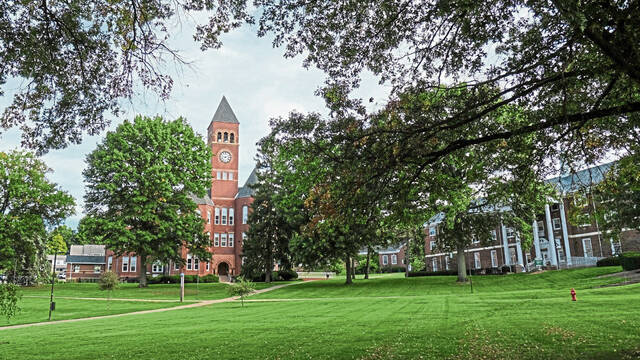
It’s no secret that Pennsylvania State System of Higher Education (PASSHE) schools, now 10 universities with 14 campuses, have undergone a drastic enrollment decline since their peak period in 2015 and 2016.
But even with school consolidations and a minor student-count reversal in recent years, a researcher at the Allegheny Institute for Public Policy says the prospect for future enrollment gains is not very good.
“Most PASSHE schools depend heavily on graduates from Pennsylvania high schools, as they account for a very high percentage of enrollment,” reminds Jake Haulk, president-emeritus of the Pittsburgh think tank.
“But projections for the next few years indicate a moderately steep decline in high school graduates, creating a major problem for many PASSHE schools,” he says.
And, currently, many of these schools already accept 90% to 100% of applicants in an attempt to stem the enrollment decline, Haulk notes, which has re-exposed a cascade of concerns.
With PASSHE acceptance rates at several schools already very high, Haulk says it stands to reason that their academic qualifications cannot be very high.
“Potential students are no longer required to submit SAT or ACT scores while many are admitted with barely a C-plus average. And with no SAT/ACT score guidance as to college readiness, the C-plus average, depending on the rigor of the course material and instructors’ grading practices, provides little guidance about preparedness for college- level work.
The average four-year graduation rate in 2025 across the PASSHE schools was 42%. The six-year rate was 56%. Haulk says that means 58% of students who enrolled four years earlier did not graduate and 44% of students that enrolled six years earlier had yet to graduate.
By comparison, the University of Pennsylvania’s four-year graduation rate was 89%, CMU’s was 81% and Penn State’s was 72%, he says, noting such schools typically have a larger, better prepared pool of high school graduates from which to recruit.
Given the low retention rates at several PASSHE universities — with barely 40% of enrollees graduating after four years and just over 50% graduating after six years — several questions are raised.
First, “How much money is being misused in the sense that large numbers of students are leaving college after five or six semesters (or possibly fewer) without a degree to bolster their employment and income potential?” Haulk asks.
“Could this problem not be alleviated by going back to a minimum SAT/ACT requirement to gauge student readiness for college course work?”
He says better alternatives to four-year colleges should be available to students who are ill-prepared for college- level studies.
“That could begin in high school with special attention to more rigorous course work and accurate grading to help students who want to go to college to be better prepared for that level of work.”
Worse still, Haulk asks, “to what degree have colleges lowered their own education standards to meet the lower levels of preparedness to do college work by students doing only C-level work in high school and not vetted by academic standards?”
Haulk notes there are many options for students who are not rigorously academically inclined when they are 18 or 19 years old. But, “Encouraging them to go to taxpayer-funded colleges anyway is surely not the best public policy.
“It is past time to rethink how education dollars are being spent,” he concludes.
Copyright ©2026— Trib Total Media, LLC (TribLIVE.com)