“Dead on arrival” would be the most apropos way to characterize the chances of Gov. Josh Shapiro’s proposed fiscal 2026-27 Pennsylvania budget being adopted by the General Assembly. For it is far more remarkable for the economic fallacies it promulgates than sound fiscal stewardship, concludes an analysis by the Allegheny Institute for Public Policy.
“Bringing the size and scope of Pennsylvania’s government in line with revenues is a necessary step for fiscal stability,” says think tank research associate Alex Sodini).
But it’s a concept that continues to elude this governor.
Sodini notes general-fund expenditures would climb to a staggering $53.3 billion in Shapiro’s FY 2026-27 spending blueprint, 6% higher than the current budgeted level of $50.1 billion.
“Because the state Constitution requires a balanced budget, the $4.5 billion spending over revenue gap … will need to be filled by ‘specific additional sources of revenue sufficient to pay the deficiency,’ ” he says, quoting budget language.
Last fiscal year’s $3 billion gap was filled with money “sitting in the couch cushions of the bureaucracy” — according to the Senate majority leader — which included lapsed or untapped revenue from various special funds and other state accounts. Sodini says the governor’s recommendation for this budget calls for the $4.5 billion to be taken from the state’s $7.8 billion rainy-day fund.
“Unfortunately, once new spending begins, it is seldom reduced and will likely derail future attempts to balance the budget,” he reminds.
Sodini also reminds Shapiro’s assumption of only $400 million expenditure increases (less than 1%) per year is quite “disingenuous,” considering expenditures rose close to $6 billion since the 2024-25 approved budget to this 2026-27 proposed budget.
“Even with the projected revenue and minimal spending increases, the rainy-day fund would still need to be entirely depleted to balance the 2029-30 budget due to the state’s chronic deficit,” Sodini reckons. “In short, no broad-based tax increase is needed on paper. But this would require levels of austerity unprecedented in recent history.”
Of course, “austerity” seldom is government’s strong suit.
“Shapiro’s FY 2026 budget is also filled with dubious new revenue-raisers, one of which will face a half billion-dollar shortfall in future years due to one-time license and fee revenues from legalizing adult-use cannabis,” Sodini notes.
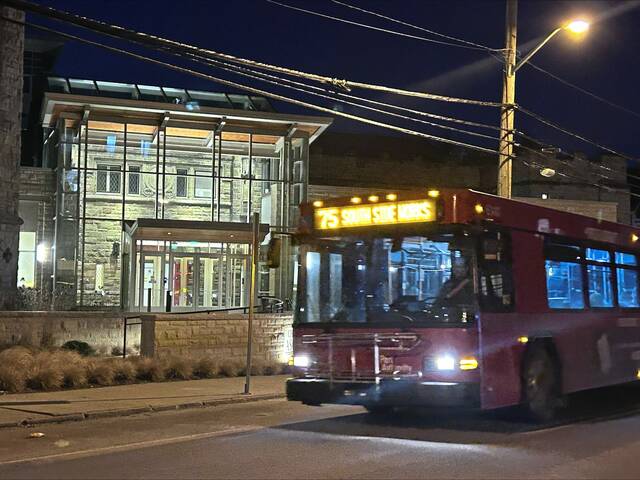
And then there’s that old pol classic of throwing good money after bad. Think of mass-transit funding. Shapiro’s budget proposes a 1.75% shift ($300 million) from general sales- and use-tax dollars (beginning in the 2027-28 fiscal year).
But as the Allegheny Institute recently reminded, “more state subsidies should not be considered for Pittsburgh Regional Transit until its outrageous costs are addressed,” Sodini says.
The budget proposal does contain two positive moves: the effort to continue to streamline the state’s permitting system and continuing to lower the corporate net income tax.
“However, far more could and should be done to help make the state more attractive for businesses and jobs,” Sodini stresses. That would include Right-to-Work legislation, which would bar employees from being forced to join a union or pay union dues as a condition of employment. And it also means dropping repeated proposals to hike the Keystone State’s minimum wage, which is a proven jobs killer.
“Simply put, if Pennsylvania were growing and thriving as the governor claimed in his (annual budget) address, perhaps the commonwealth would not need to add more sin taxes (think skill games) to generate revenue,” Sodini says.
“Likewise, if excessive spending were reined in, the commonwealth would not need to rely on significant revenue increases and/or raiding the rainy-day fund to keep pace,” the think tank scholar concludes.