
https://triblive.com/opinion/donny-hamilton-jr-pittsburghs-transportation-moment-is-here-the-question-is-whether-well-seize-it/
Donny Hamilton Jr.: Pittsburgh’s transportation moment is here. The question is whether we’ll seize it

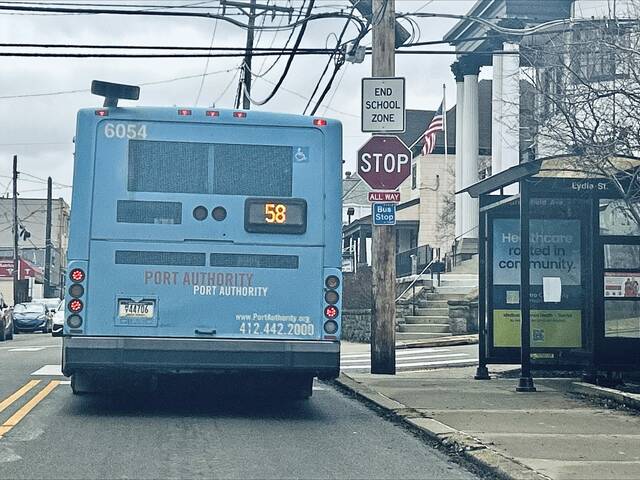
Pittsburgh is at an inflection point.
We are enjoying renewed national attention, preparing to host major events like the NFL Draft and continuing to position ourselves as a center for innovation, technology and advanced industry.
Yet beneath that momentum lies a persistent question that will shape our region for decades: Are we prepared to invest seriously in the transportation system our future requires?
Transportation is not just about getting from point A to point B. It is about access to jobs, affordability, economic competitiveness and quality of life. And in regions that succeed, it is treated as a long-term civic commitment, not a series of disconnected projects.
I’ve spent much of my career working in transportation and infrastructure, most recently serving as deputy city manager in Charlotte, N.C., where I helped lead implementation efforts for the Bipartisan PAVE Act, one of the most significant regional mobility initiatives in the country. What I witnessed there was not flawless execution, but something more consequential: a region deciding, collectively, to act with clarity and courage.
Now, back in Pittsburgh, I see striking parallels and a similar opportunity.
Here is the lesson Charlotte offers: Transformational transportation does not fail because regions lack plans or studies. It fails when leaders hesitate to align around a shared vision, commit to long-term funding and move forward despite uncertainty.
Charlotte began by developing a regional vision, not limited to transit, roads or any single mode, but focused on how an entire system should function over the next 30 years. That vision was shaped collaboratively by business leaders, universities, nonprofits, local governments and state partners. Importantly, it balanced long-term ambition with near-term results, giving the public confidence that progress would be visible and measurable.
Equally important was who led the conversation. While public agencies played a critical role, economic development organizations and business leaders were front and center in explaining why transportation mattered to the region’s future. Mobility was framed as an economic necessity that was essential to workforce access, competitiveness, and growth, not simply a technical or operational issue.
Then came the hardest decision: funding.
Charlotte’s leaders acknowledged a reality familiar to Pittsburgh: State and federal funding alone would never be sufficient to deliver transformational change. Rather than waiting indefinitely or relying on incremental fixes, they made the case directly to voters. They learned from a prior failed referendum, strengthened accountability measures and committed to delivering early results. The public responded by approving a long-term, $20 billion dedicated funding source that will support investment for decades.
What impressed me most was the region’s willingness to move forward without perfect certainty.
Much of the planning and governance work began before a new authority formally existed and before their November 2025 referendum passed. Leaders established decision-making structures early, clarified roles and accepted that uncertainty was not a risk to be avoided, but a condition to be managed.
Pittsburgh is not starting from zero. Our region has a more mature transportation system than many fast-growing cities. We have strong institutions, experienced professionals and a public that understands the connection between mobility and opportunity. Achieving progress at the scale of regions like Charlotte depends on alignment across jurisdictions, sustained urgency and a truly shared commitment to regional thinking.
The cost of delay is not abstract. Every year without decisive action increases construction costs, strains aging infrastructure and limits access to jobs, health care and education, particularly for Pittsburgh residents who rely most on reliable and efficient transportation. Meanwhile, regions that demonstrate commitment position themselves to attract private investment and compete successfully for federal and state resources.
This is a defining moment for Pittsburgh. We can continue to manage transportation incrementally, conducting studies, advancing isolated projects and hoping conditions improve.
Or we can align around a shared regional vision, commit to long-term investment, engage the public honestly and lead with purpose even when the path forward is not fully visible.
Charlotte chose the latter and changed its trajectory for the next three decades. Pittsburgh has everything it needs to do the same (i.e., assets, talent and civic pride), and perhaps even more.
The only remaining question is whether we are willing to act while the moment is still ours to shape.
Donny Hamilton Jr. is former deputy city manager of Charlotte, N.C.
Copyright ©2026— Trib Total Media, LLC (TribLIVE.com)