
https://triblive.com/opinion/editorial-a-child-wasnt-protected-the-law-must-change/
Editorial: A child wasn’t protected. The law must change

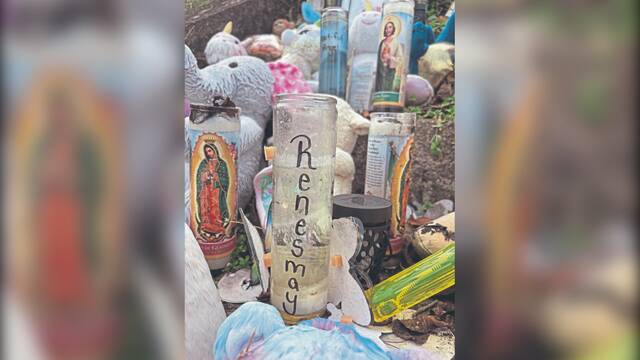
Renesmay Eutsey was supposed to be kept safe.
That is why she was removed from the care of her mother, Christina Benedetto, in 2019 when she was 3. It’s why she was placed with Benedetto’s cousin, Sarah Shipley, and her biological father’s cousin, Kourtney Eutsey, and why she would eventually be joined by three more siblings.
Renesmay, 9, was not safe. She was found dead in a trash bag weighed down with rocks in the Youghiogheny River in August. Those cousin caregivers are facing homicide and assault charges.
There are as many as 15,000 children in foster care in Pennsylvania. Children and Youth Services removes about 4,000 children a year. Fewer are being placed in foster homes in favor of relatives or friends.
On paper, this is a good thing, documents say. The goal for child welfare agencies is almost always reunifying families. Kinship placements — allowing another family member or close friend to take over — can be a safer, less scary way to remove a child from a dangerous environment.
And many times — perhaps even most of the time — a child would be safer with family who steps in to fill the void. But not always.
We are not speaking to the specific facts of Shipley or Kourtney Eutsey’s criminal cases. Those are at the beginning of their journey through the courts, where arguments remain to be made and evidence is still to be produced.
But it is never too soon to look at places where the system has fallen short and where it could be improved.
To become a foster parent in Pennsylvania, you must be 21 and pass extensive background checks. There are home visits and interviews. If there are problems with a particular placement, a child could be relocated.
There may be similar requirements and safeguards if a kinship placement is made via CYS and the relationship formalized officially. But if children are simply sent informally to stay with an available family member, things become murky.
In a situation like Renesmay’s, where she was homeschooled, there weren’t even teachers or bus drivers to notice problems.
The problem is being noticed at the federal and state levels. On Sept. 18, U.S. Sen. John Cornyn, R-Texas, and Sen. Jon Ossof, D-Georgia, introduced the Hidden Foster Care Transparency Act, requiring states to track and report these informal arrangements. It wouldn’t have saved Renesmay, who died two weeks prior.
Perhaps the all-but-identical bill the pair introduced a year earlier might have. It died in January for lack of action.
State Rep. Charity Grimm Krupa, R-Fayette, wants co-sponsors for her plan to create an ombudsman office to provide independent support and oversight. She also wants more codified requirements for kinship and foster placements and penalties for abusive caregivers.
State Rep. Ryan Warner, R-Fayette, is shopping for co-sponsors for “Renesmay’s Law,” to improve the child welfare system by increasing the oversight of county agencies and their accountability.
These proposals cannot suffer the fate of the 2024 federal Senate bill.
If Renesmay was the only child to die and be discarded like trash, that would be one child too many. But we know Renesmay is not alone. We know Bella Seachrist, 3, died in Oakmont in 2020, starving and abused, despite involvement with the Allegheny County Office of Children, Youth and Families.
We know that drug addiction has created situations where many children end up in family placements. That was part of Renesmay’s story. Even if children are not abused or neglected with parents, arrests or rehabilitation can require scrambling to find a guardian.
But simply being family is not enough. These children were already taken away from family once.
If it was, Renesmay would have been safe. She wasn’t.
Copyright ©2026— Trib Total Media, LLC (TribLIVE.com)