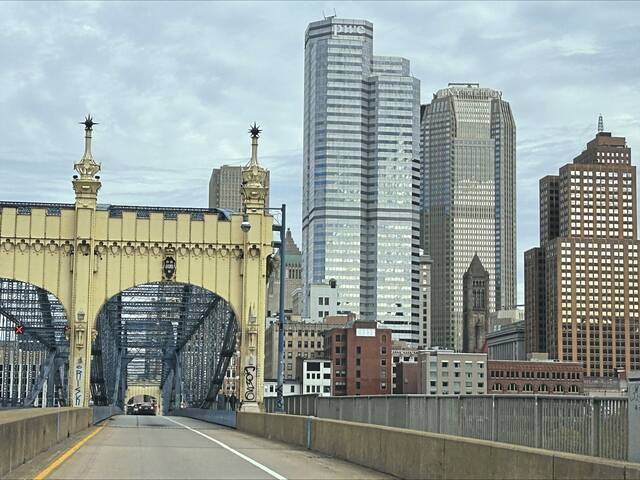
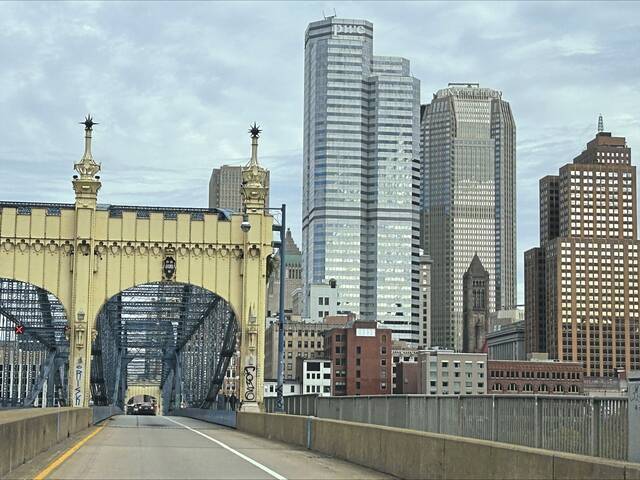
When hundreds of thousands of people descend on Pittsburgh for the NFL Draft in April, they should be greeted by a spruced-up Steel City.
The landmark fountain at Point State Park has recently undergone a $3.4 million upgrade. Market Square is in the midst of a $15 million face-lift. And Acrisure Stadium, home of the Steelers, is getting improvements of its own.
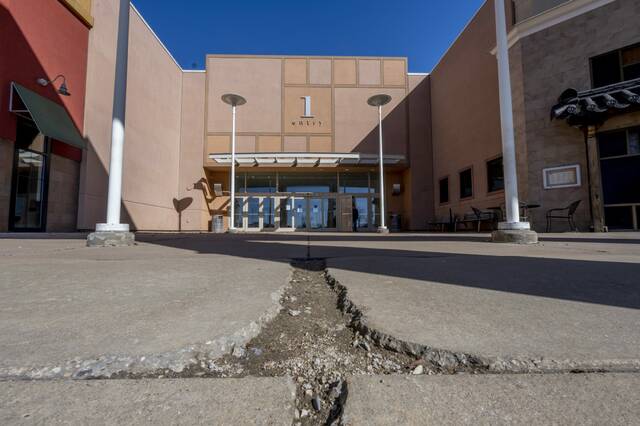
In Downtown Pittsburgh, eyes are turning to empty storefronts.
The Pittsburgh Downtown Partnership, a nonprofit focused on community and economic development, is stepping up efforts to fill vacant retail spaces.
It would be easy to turn vacant shop windows into public art projects painted with Pittsburgh iconography or NFL salutes. But pretending something isn’t empty doesn’t make it full.
Instead, the plan is not pretense. It is proactive. The Pittsburgh Downtown Partnership is reviving a pop-up business program that allows prospective proprietors to get a six- to 12-month test run in a Downtown location — provided property owners of any of the roughly 50 vacant storefronts agree to participate.
Pittsburgh, like many cities, is working to bring people back to its business districts. There is a renewed push for offices to reopen. PNC recently announced a mandated return to a five-day, in-office schedule for all employees by May 4 — just a week after the draft.
But people need more than a desk to get back to work. Those storefronts aren’t just about supporting tourists. They are part of the infrastructure that would support a fully functioning community at pre-pandemic occupancy numbers. People need a place to grab coffee and a bagel on the way to work and a spot to grab a slice of pizza for lunch. They need to be able to pick up a prescription or stop at a bakery on the way home.
Retail is not just form. It is function.
There is one more challenge to acknowledge: Brick-and-mortar locations are not cheap. As with all real estate, cost is a significant hurdle. A pop-up can lower that barrier, offering entrepreneurs a chance to make the leap with less fear of falling — or failing.
Many entrepreneurs have built online followings with the hope that one day they will open a physical storefront.
This is not like building an industrial park with promises of tax breaks for businesses that could later turn around and leave, creating a new round of vacancies when the incentives run dry. This is a resuscitation of an idea used before — pulled back into service to address an existing problem, with a new twist and a specific timeline.
That does not mean it comes with guarantees. New businesses are like college football players. Most dream of Super Bowl rings in the NFL, but few ever reach that level. The lucky ones are hoping for longevity — steady playing time and a career that lasts.
More than 20% of new businesses fold within their first year, according to the U.S. Bureau of Labor Statistics.
That reality is exactly why this approach matters. A pop-up does not promise permanence, but it lowers the risk enough to let good ideas breathe. It creates movement where there has been stagnation and gives both business owners and landlords information they can use going forward.
If Downtown Pittsburgh is going to thrive again, it will not be because of a single weekend or a surge of visitors. It will be because moments like this one are treated as starting points, not finish lines — and because the work of filling spaces continues long after the spotlight moves on.