A fire hydrant is part of the landscape, something your eye may just slide past. Like a light post or mailbox, it is expected to be just off the curb of a street.
That makes them easy to ignore or to forget — unless, of course, you need one.
But fire hydrants aren’t park benches or trash cans. They aren’t a convenience or decoration. They aren’t like phone booths that have been made obsolete by evolving technology. When it comes to fighting fire, the standard response will always be to use water.
That makes fire hydrants a critical piece of infrastructure. That’s a word we normally associate with things like roads and bridges, but it really refers to anything that keeps our society functioning. Keeping society from burning to the ground qualifies.
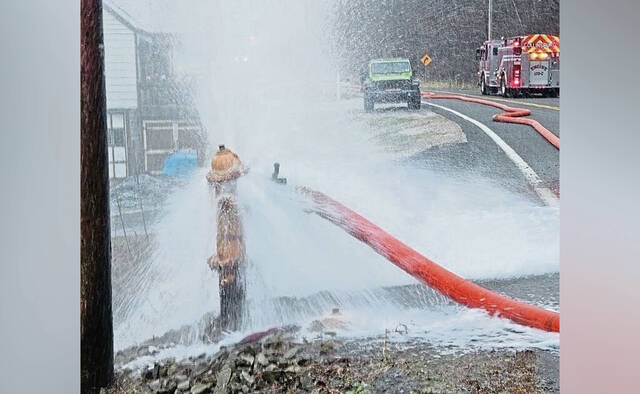
On Friday, Elizabeth Township firefighters needed a hydrant when responding to a Dillon Road fire. What they found was described as a “catastrophic failure.”
The hydrant didn’t just fail. It practically exploded.
It wasn’t the first time the firefighters had dealt with hydrant issues. Fire Chief Adam Janosko said he regularly calls in additional tanker trucks to compensate for problems with hydrants. In this case, he believes the problem was the hydrant’s age and a lack of maintenance.
The location made it impossible for more than one truck to get close to the fire. Additional trucks weren’t an option initially. The hydrant was the lifeline.
Did the Elizabeth Township Fire Department step up? Yes. The firefighters ran hand lines from other trucks, eventually obtained a secondary supply of water and did the job.
But a fire response is measured in seconds. A delay of even a few minutes can be the difference between a total loss or an unfortunate repair. Worse, it could be calculated in lives lost, like the March 2024 fire in Jeannette that claimed the lives of a father and four children when the water from a hydrant wasn’t sufficient.
Nothing is perfect, but some things have to be as close as possible. A fire hydrant needs to function every time. Even the smallest failure can be tragic.
This means they must be well maintained. They must be replaced before they become a liability. They must be tested regularly.
And this is not on the fire departments. Hydrants are owned by municipalities, authorities or private water suppliers. Pennsylvania American Water owns the Elizabeth Township hydrants. Janosko said the township has been pushing for improvements.
It is incumbent upon municipalities to insist on this maintenance and demand consistent performance. When control of something so vital is in the hands of a third party, a municipality’s role may be diminished, but its voice shouldn’t be.
“We need to know the hydrants are going to work,” Janosko said.
That’s an understatement.
Hydrants must work — each and every time.