Government always has to wait for innovation to happen before it can catch up with progress.
There was no need for automobile registration before there were cars to register, for example. As utilities have changed, so have regulations for them. With the spread of computers, government’s use of them for access to services and transparency of data has grown. The needs couldn’t be predicted before the technology.
And so it makes sense that Pennsylvania counties are seeing similar issues with hotel taxes.
The so-called pillow tax is not new. Government is always eager to find a new stream of income and latch onto it, so picking up a piece of a hotel bill was obvious. State code for the tax dates to at least 1935.
But it also is not uniform. The state charges a hotel occupancy tax of 7%. However, individual counties can bulk that up. Many counties add a percent or more. In Philadelphia, for example, there is an additional 8.5% tax for a total of 15.5%.
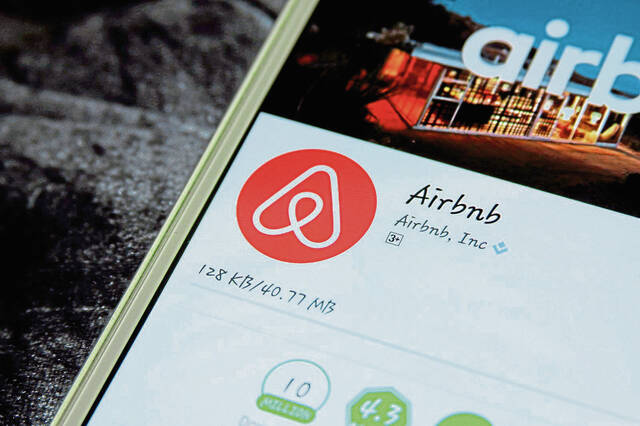
But back in 1935 or even 1974, when other amendments were made to hotel tax law, no one would predict Airbnb or Vrbo or other websites and apps that allow people to rent out a room or an apartment or a whole house to supplement some income. That has meant tax that would be collected at a hotel is not always collected by the Smiths down the street when they lease out their garage apartment for a football weekend.
Does that really matter? How much could it mean?
A lot.
In Allegheny County, hotel tax revenue topped $34 million in 2017, for example. That’s a great deal of money, and as more people utilize third-party booking apps, there is more potential to lose that money. In 2021, the number had fallen to $24.8 million.
Some of that loss is no doubt because of less travel due to the pandemic. But all? Questionable.
In Westmoreland County, there are more than 400 short-term rentals being offered, according to Go Laurel Highlands. It’s hard to know exactly how many, and without knowing, it’s just as hard to know whether all of the money that should be collected and remitted to the counties is being gathered.
This is a hole that needs to be closed.
It’s tempting to say this is government overreach and let people make their money. But this is an instance in which collecting money can actually increase the amount homeowners using the booking services could make.
Hotel taxes are used to increase the number of people who come to an area and use hotels. It’s like putting gas in your car’s tank. Pull back on what goes in the gas tank, and you run the risk of ending up broken down on the side of the road.
Increasing tourism creates a need for more rooms — and some people just prefer the option of a three-bedroom house with a nice kitchen instead of a hotel room with two queen beds.
State and county government need to work with booking services to make sure that paying taxes and registering rooms is part of the process. It benefits everyone in the long run.