
Judges can’t pick and choose when it comes to death penalty cases.
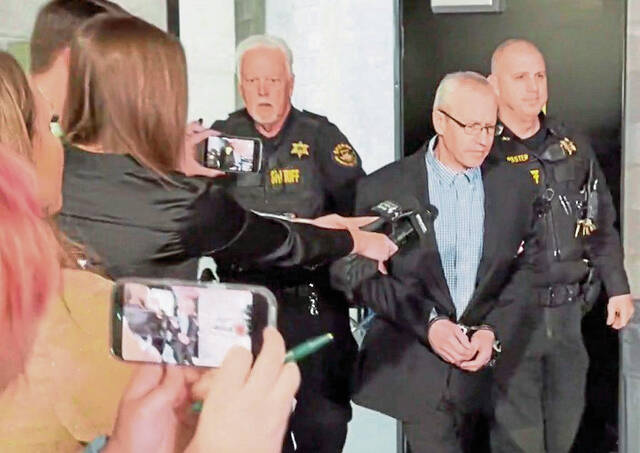
That’s the ruling of the Pennsylvania Superior Court. The case in question started with the Bellevue killing of Rachel Dowden in January 2022. Prosecutors say the crime was committed by her ex-boyfriend, Deangelo Zieglar, 28.
The Allegheny County District Attorney’s Office pursued the death penalty in the case for multiple reasons, including the protection-from-abuse order Dowden received two months earlier to protect herself. Zieglar also had previous convictions for violent crimes.
But while those met the state criteria for capital crimes, that wasn’t enough for Allegheny County Common Pleas Judge Anthony M. Mariani — since retired — who refused to seat a death penalty jury in the case in 2023.
It wasn’t that Mariani was raising moral objections to the death penalty. His argument was on the futility of the process. It was “patently unjust” to the jurors to subject them to the intense jury selection process — because the execution, if decided, wouldn’t be carried out.
History does say Mariani is right about the sentence. There has been no execution in Pennsylvania since serial killer Gary Heidnik in 1999. Gov. Josh Shapiro and several of his predecessors have been clear about their position on the topic.
In Pennsylvania, death row is not a place to await imminent death. It’s a place to stew in the knowledge that at least 12 people believe you should die for your crimes.
But whether it is efficient or not, it isn’t up to Mariani or any other judge to decide that a district attorney following the letter of the law should be thwarted in pursuing his case. Whether it is fair to the prospective jurors is not the question. A capital case is about what is a just punishment for the crimes committed against the victim.
This is an area where the personal convictions of an officer of the court must be set aside. Former Centre County District Attorney Ray Gricar prosecuted multiple death penalty crimes in a courthouse just down the road from the state’s death house at Rockview state prison. He did his job despite his personal opposition to the death penalty — and would step aside if the case reached the second phase, where actually delivering that sentence was argued.
If a judge believes his opinion of the process — morally or bureaucratically — conflicts with the law, he should recuse himself from participation in those cases. He should not stand in the way of the prosecution’s decisions.
If Pennsylvania wants to change that, then Pennsylvania has to change the law.