All over the country, people are pulling their financial information together, assembling receipts and taking everything to a qualified professional who can help make sense of the expenses, the income, the deductions, the taxes paid and the taxes due.
Tax season can be stressful, but it serves an important purpose. It forces a hard look at reality. The numbers either add up or they don’t.
Pittsburgh is facing a similar moment.
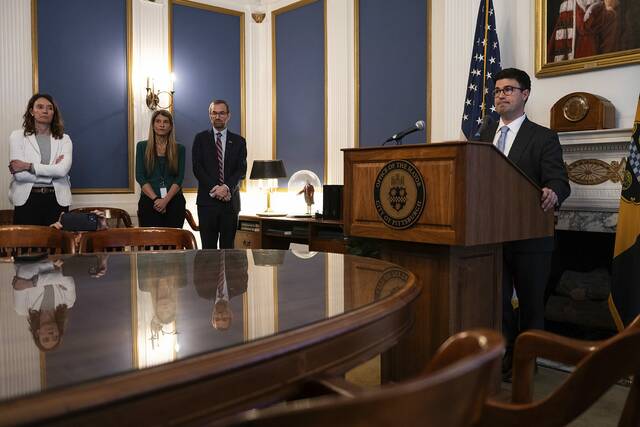
Mayor Corey O’Connor said Thursday the city could face a budget shortfall of $30 million to $40 million this year — even after City Council approved a 20% property tax increase meant to ensure the 2026 budget balanced.
The warning did not come out of nowhere.
In September, Ed Gainey released his final budget as mayor after losing in the primary and entering the closing months of his single term leading the city. It was, to be charitable, optimistic.
Others were more pointed.
Pittsburgh Controller Rachael Heisler called it “not an honest document.”
“The budget looks like it was crafted to spite the next mayor and not crafted with the best interests of Pittsburgh in mind,” Councilman Bob Charland, D-South Side, said.
It was also not the first time the Gainey administration leaned on overly rosy projections. The previous year, he unveiled another budget short on attention to details like overtime expenses.
When critics pointed out problems with the 2026 numbers, Gainey’s budget director, Jake Pawlak, stood by the plan, conceding only that officials might have to “correct a typo.”
Is that a $40 million typo? Or more, given the city already enacted a tax increase?
This is where being charitable isn’t helpful.
There are questions — and they are not all for the Gainey administration.
Is this math to be trusted when previous math has been so questionable? O’Connor came into office as the former Allegheny County controller, so breaking down numbers is his skill set.
But that makes one wonder how Heisler saw problems without seeing this scope. And what about City Council? How did so much fail to rise to its notice?
Does that speak to a lack of action or attention from council members, a failure of the previous administration to provide clear, accurate information — or both?
This sticky knot of hows and whys is exactly why transparency must be demanded every day from every level of government.
Transparency is not just about having the receipts. Their presence makes everyone responsible for sharing information — and for acting on it when necessary.
Being charitable is one thing. Giving government a charitable deduction when the math isn’t working out is quite another.