
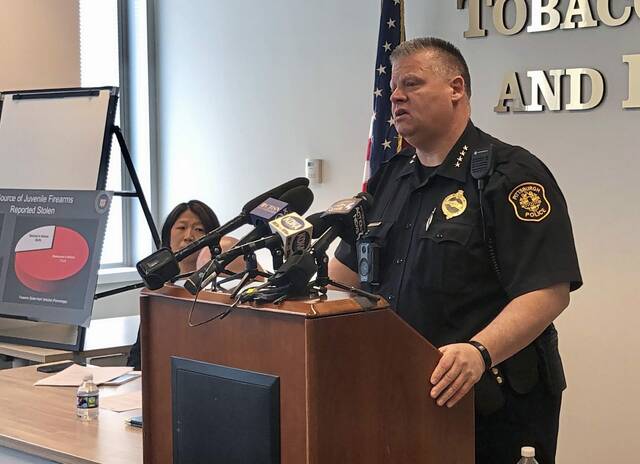
“They didn’t feel they were appreciated.”
That’s what Pittsburgh police Chief Scott Schubert told WESA in July 2021. He was talking about how his officers were retiring, resigning or otherwise leaving their jobs. He attributed it largely to taking other law enforcement jobs.
On May 27, Schubert announced he was leaving the Pittsburgh Bureau of Police after 29 years.
“Following deep reflection and significant discussion with my family, I have come to the decision that it is time to step away from the chief’s position and allow one of my brothers or sisters in blue the opportunity to serve this great city and this storied institution,” he said.
On Monday, a police spokeswoman confirmed the chief is doing what those other officers did: leaving for another position in law enforcement. He will be the FBI section chief overseeing Global Law Enforcement Support in the Criminal Justice Information Services headquarters in Clarksburg, W.Va.
It’s not just a loss being felt in police stations and not just in big cities. The drain of longtime leaders is happening in small towns and elected offices, too.
In 2021, the number of officials leaving the jobs they campaigned to win was spiking after a year of dealing with covid-19 — not to mention an economic crisis, racial tension that spread after the death of George Floyd and one of the most contentious presidential elections in U.S. history.
Over the weekend, Freeport Mayor James Swartz Jr. followed suit, resigning after 38 years of public service. His last year has been marked by problems with the police department, including a chief who left to take a job at another department and another who left his badge and keys on the desk less than a day after being sworn in.
“When your heart’s not into it, it’s time to get out,” Swartz said.
That might be the best single explanation for why people are walking away from jobs they once loved — including nursing and teaching. The trials of the past several years have exhausted many people and left others on a perpetual knife’s blade of anxiety. But that still leaves communities with holes in their leadership that need to be filled.
Schubert’s comment that officers don’t feel appreciated and Swartz’s statement about his heart speak to the same loss of anchor that people are feeling in career and elected public service positions of all stripes.
They also point to a need to fix more than just paychecks and hiring for public servants. It shows the need to find more people to share the burden of elected office.