
https://triblive.com/opinion/editorial-reading-between-the-lines-of-the-first-amendment/
Editorial: Reading between the lines of the First Amendment

There are two ways to read information. One is to look only at the black-and-white letters. You take in the text exactly as written and process it on that basis alone. If you were on the Supreme Court, this would make you an originalist — someone who does not bring outside forces or changing mores into the U.S. Constitution.
The other way is to look at what exists in the space surrounding the words. That space is more than white paper. It is the history that led to the moment the ink was put down. It is the tenor of the time. It is the plan for the future.
When we talk about the First Amendment, we tend to read only what is written.
It protects speech.
It protects assembly.
It protects the right to petition government.
What it does not spell out — but clearly implies — is the responsibility that makes those rights work.
So when it comes to the clash at a Springdale rally Saturday, should we focus only on the lines themselves — or on what exists between them?
The rally was to protest the detention of Randy Cordova-Flores, a Peruvian native with a pending asylum case. He has lived in the U.S. for three years, working as a landscaper and food delivery driver. His family says he has legal, state- and federally issued documentation.
But on Feb. 10, Springdale police pulled over Cordova-Flores in a traffic stop. The department has a cooperation agreement with U.S. Immigration and Customs Enforcement. That agency subsequently took Cordova-Flores into custody. In a statement, ICE said he had “failed to report to his immigration proceedings as ordered by a judge.”
The detention is one of several ICE actions in recent weeks that have left some communities on edge and led to protests, including opposition to Springdale’s cooperation agreement.
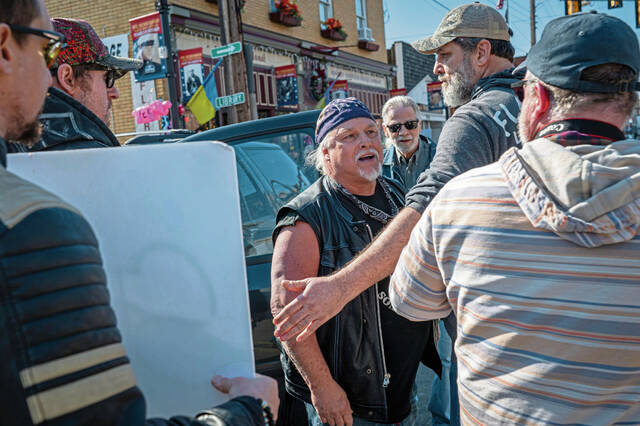
That tension surfaced Saturday when an unidentified man stopped at the “Love Thy Neighbor” protest at Pittsburgh and School streets and engaged with protesters. He said he was exercising his free speech. It turned physical on both sides.
Exercising free speech is important. It is the First Amendment for a reason. But that freedom means little if we do not use it — if we do not speak, assemble and tell government when it falls short.
But let’s read between those lines.
The First Amendment does not specifically mention “responsibility.” It does not say we must listen when others speak. But it is implied. What is the point of speaking if no one hears? Why gather to protest? If government does not have to receive the information, why does a petition matter?
Listening requires space. It requires restraint. It cannot happen when confrontation replaces conversation.
Speaking is the easy part. We do it reflexively when we are hurt or scared or angry. But listening? That is a choice.
That expectation is not written in the black ink of the amendment’s text. It lives in the white space surrounding it.
The First Amendment might give us a voice, but it also expects us to use our ears to hear what others say and our brains to consider their arguments.
Copyright ©2026— Trib Total Media, LLC (TribLIVE.com)