Allegheny County Court of Common Pleas Judge Anthony M. Mariani no longer plans on seating a death-penalty jury for cases brought to trial.
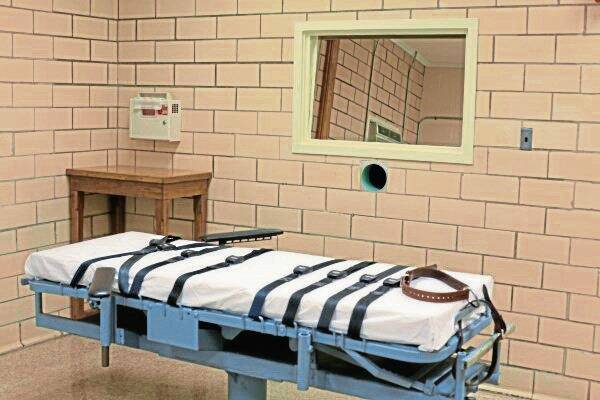
Capital punishment technically is something that could happen in Pennsylvania. It’s a penalty that is on the books. It is used only for first-degree murder but requires special circumstances to attach that extra level of gravity. It is reserved for the most heinous crimes: things that were torturous or involved a felony, or crimes where multiple people were killed or where the victim was a child.
Unfortunately, murder in and of itself is a heinous crime, and meeting that capital punishment threshold is rarely much of a stretch.
Allegheny County District Attorney Stephen Zappala Jr. is seeking it in the case of Johnathan Morris, charged with the Feb. 6 shooting of McKeesport police Officer Sean Sluganski.
It is also being pursued for Ronald Steave, 30, in connection with a triple shooting on New Year’s Eve 2021 in Homewood. Then there’s Isaac Smith, 27, accused of killing his pregnant girlfriend, Karli Short, in McKeesport in 2021. There is also Calvin Crew, 24, accused of shooting Uber driver Christi Spicuzza in 2022 in Monroeville.
It’s a small but significant handful in just one county. It shows that the death penalty is still brought to bear in prominent cases.
But Mariani’s point is that impaneling a jury and asking jurors whether they are prepared to do the emotional and psychological heavy lifting of imposing the death penalty seems “grueling and intrusive” and “patently unjust” for no reason.
Pennsylvania has 101 people awaiting execution. While death warrants are routinely signed, dates come up and are discarded because of stays and appeals. Rahmael Sal Holt, convicted of the 2017 murder of New Kensington police Officer Brian Shaw, was due to be executed April 3. A stay was issued just five days after the warrant was signed.
Gov. Josh Shapiro has called for the death penalty to be abolished by lawmakers. He said in February that he will refuse to sign warrants. His predecessor Tom Wolf did the same.
But whether a governor signs them or not is immaterial. Tom Ridge signed 220 death warrants. Three executions happened since 1978, all during Ridge’s tenure. Serial killer Gary Heidnik was put to death on July 6, 1999. He was the last.
Legal experts have weighed in on Mariani’s position. They make good points. The decision isn’t up to judges. Just because Shapiro won’t sign a warrant doesn’t mean the next governor won’t. Just because it’s been 20 years since Pennsylvania has gone there doesn’t mean it shouldn’t have the ability to do so again.
What it points to is Pennsylvania has a punishment it doesn’t use in fact, but that it can use as a sword of Damocles, dangling over the judicial process by a tenuous thread.
Instead of being used as a penalty, it becomes a political tool that can be wielded by governors, lawmakers, district attorneys — and maybe even a judge.