

The City of Pittsburgh Republican Committee has called for an itemized ledger tracking how $12 million in private donations will be spent.
Coming from a political party, it’s easy to read that as partisan. It very well might be. That doesn’t mean that should be the assumption — or the reaction.
Democrats hold every elected office in the city. That has been the standard for a long time. It makes a lot seem partisan, but the city’s greatest political schisms tend to be between its Democrats rather than between the parties.
The letter, sent to City Controller Rachael Heisler by committee chair Todd McCollum, urged a “clear, itemized ledger” showing how and when money from UPMC and the PNC Foundation is allocated.
The donations in question were defined contributions to address city shortcomings, specifically with its fleet of vehicles.
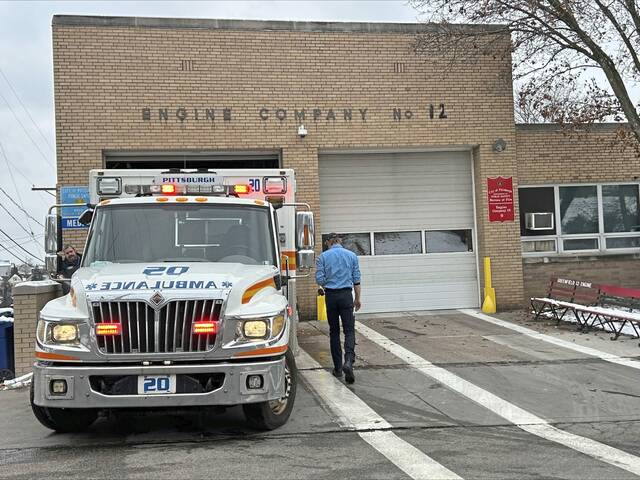
In January, UPMC committed $10 million to help Pittsburgh replace aging ambulances. Days later, the PNC Foundation followed with $2 million for new snowplows.
The gifts are welcome. They address visible, urgent needs. They come at a moment when the city has raised taxes by 20% and is asking residents to shoulder a heavier burden. Having some of the city’s biggest businesses take on weight is appropriate.
The acceptance of such gifts requires more than a thank-you note and a photo op. There’s a duty of transparency.
Private funds used to purchase public safety equipment still require a clear record and a bright spotlight. That isn’t an anticipation of problem. It shouldn’t be because one party distrusts another. It should be the default position on all funding and spending.
Heisler responded that her office plans to conduct an annual audit of the money in addition to a yearly fleet review. That is not just appropriate; it’s literally the controller’s responsibility. And with a new mayor in Corey O’Connor who comes to the job from being county controller, that should be not only understood but encouraged.
However, a system built on annual auditing alone allows a lot of time for things not to be watched. One could argue that’s how problems like the purchasing card scandal and police moonlighting deficits of the previous administration were able to pile up.
This does not require a complicated new bureaucracy. It just needs visibility. A clear accounting posted online would allow residents to follow the process from check presentation to vehicle delivery. It’s a spreadsheet. It’s a Google doc.
The city has already acknowledged the consequences of delayed investment. Snow will fall again. Emergencies will not pause for mechanical repairs. Replacing ambulances and plows is not symbolic spending; it is fundamental infrastructure.
That is precisely why the accounting should be straightforward and in real time.
Calls for transparency should not be dismissed because of who makes them. When political opponents agree that something “should be bipartisan,” it is an opportunity to demonstrate that it is.
Pittsburgh should welcome the donations. It should put them to work quickly and efficiently. And it should make the spending easy for the public to see. Perhaps such pristine transparency could even make more companies eager to donate.
In a city working to rebuild reliability in its fleet and confidence in its finances, sunlight is not an accusation. It is preventive maintenance.


