Hal Brands: Israel has become America’s not-so-secret weapon
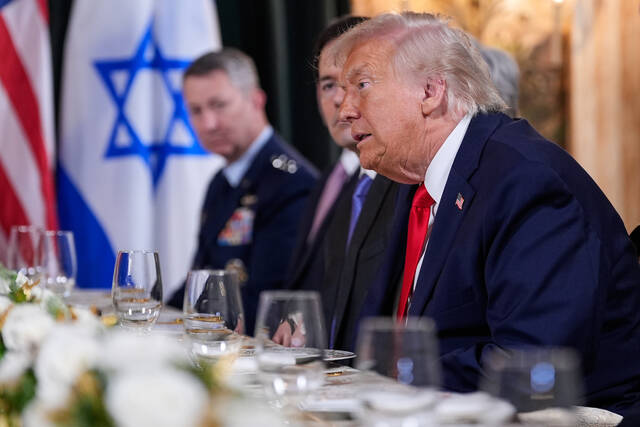
The ongoing war against Iran has raised a number of important issues: the ability of air power alone to achieve regime change, the ethics and effectiveness of targeting Iran’s leaders, the question of how much damage the war will cause in the region, and what its effects will be around...
Lauren Hall: Local governments provide proof that polarization is not inevitable
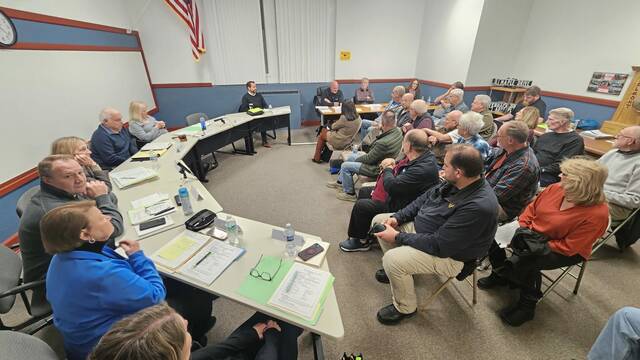
When it comes to national politics, Americans are fiercely divided across a range of issues, including gun control, election security and vaccines. It’s not new for Republicans and Democrats to be at odds over issues, but things have reached a point where even the idea of compromising appears to be...
Noah Feldman: Decades of presidents ignoring the War Powers Act led us here
When you bomb a country and take out its leader, that’s an act of war. Under the Constitution, Congress must declare war or otherwise authorize the use of force before the president may take such action. It doesn’t matter whether it’s Iran, where the joint U.S.-Israeli attacks that killed Supreme...
LZ Granderson: There are 2 Americas. Falling mortgage rates matter only to the wealthy one
There was a McDonald’s in my neighborhood that we would drive by often when I was growing up. Each time, I would read about the weekly sale advertised on the marquee underneath the golden arches. Occasionally, I would ask my folks if we could stop at that McDonald’s on the...
Jessica L. Schleider: If social platforms are harmful, don’t just ban kids. Regulate the harms
As major social media companies head to court this year to defend themselves against claims that their products have harmed young people’s mental health, policymakers are searching for decisive responses. The lawsuits, which focus on whether platforms knowingly designed addictive, psychologically harmful systems for youth, are bringing long-avoided questions into...
Jim Nowlan: Stop the world, I want to step off
At 84, I am an analog guy in a digital world. Sure, I do Zoom meetings and check my smartphone too often. Yet my mental health suffers, I swear, from the almost vertical rate of societal change; political mayhem; transition from a human- to digital-dominated world; and the sense that...
Counterpoint: Make year-long standard time the nationwide standard again
I’m one of the many Americans who hate being forced to time-shift twice a year. After only four months on standard time, daylight saving time returns with a vengeance on Sunday, March 8, when 2 a.m. abruptly becomes 3 a.m. Only residents of Arizona (with the exception of those living...
Point: Time changes have advantages year-round
America’s current daylight saving time system — spring-to-fall DST followed by winter standard time — is an excellent compromise, providing all of DST’s many benefits for the majority of the year and yet avoiding winter DST’s difficulties during the dark, cold months. Evaluating DST is more complex than it might...
Cal Thomas: The Clintons, at it again
How much faith should one put in the veracity of Bill Clinton when he testified last week in a deposition that he did “nothing wrong” in his relationship with convicted sex offender Jeffrey Epstein? I guess it depends on the meaning of “nothing” and “wrong.” How much faith should one...
Joyce M. Davis: Iran’s martyrdom culture means this war could be America’s bloodiest yet
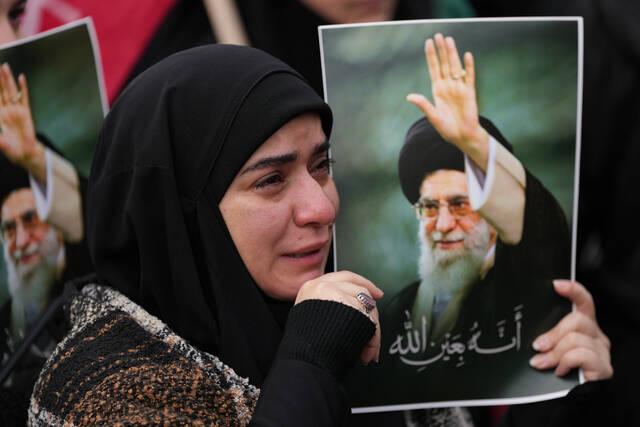
Few places on earth so revere martyrdom as Iran. I came to that conclusion during a visit to the country in 2002, not long after the Sept. 11 attack on the United States. In my book, “Martyrs: Innocence, Vengeance and Despair in the Middle East,” I open the chapter on...
Robert T. Smith: Our planet’s doom is not so imminent
As the means of communicating its administration of the nation’s environmental laws to the public, on Feb. 18, the U.S. Environmental Protection Agency (EPA) published a Final Rule in the Federal Register stating that the prior action by the EPA regarding the control of greenhouse gases, called the Endangerment Finding,...
Justin Callais and Clay Routledge: The economic common ground America isn’t talking about
These days, it can feel like Americans across the political divide cannot agree on much of anything. But there is encouraging news: When it comes to the economic foundations of human progress and flourishing, we are not as divided as we might think. Political polarization has become a defining feature...
Panini Chowdhury: Allegheny County needs regional approach to mobility
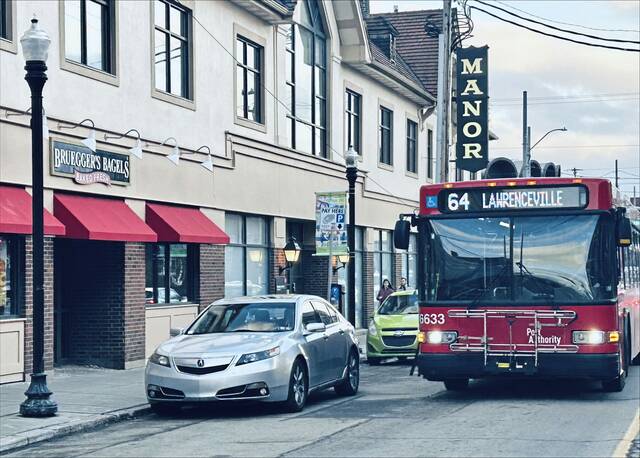
Every weekday morning, thousands of Pittsburghers board a bus to get to work or school. That bus is operated by Pittsburgh Regional Transit (PRT). It travels along a street paved and maintained by the City of Pittsburgh’s Department of Mobility & Infrastructure. It often crosses a bridge maintained by the...
Sheldon H. Jacobson: Crunching the numbers on the affordability crisis
The word that seems to concern many people today is “affordability.” Whether one is purchasing a home, buying food or paying doctors’ bills, everything seems more expensive. And the fact is, everything is more expensive. The consumer price index in December 2021 stood at 278. By December 2025, it had...
Cal Thomas: Trump fulfills his promise
If you wanted to look at it this way, President Trump is keeping his promise to end wars by taking out an Iranian regime that has made war on us and underwritten terrorism throughout the Middle East and the world since its 1979 revolution. In killing Iran’s top leadership, including...
Alfonso Serrano and Donald Heflin: Despite massive U.S. attack and death of ayatollah, regime change in Iran is unlikely
After the largest buildup of U.S. warships and aircraft in the Middle East in decades, American and Israeli military forces launched a massive assault on Iran on Feb. 28 . President Donald Trump has called the attacks “major combat operations” and has urged regime change in Tehran. Iranian media reported...
Sarah Schiffling: Strait of Hormuz — if Iran conflict shuts world’s most important oil chokepoint, global economic chaos could follow
The reported sinking of several Iranian warships by U.S. missiles in the Gulf of Oman serves as a reminder of the maritime aspect of the conflict which began Saturday with a barrage of Israeli and American missiles targeting Iran. Two other vessels, believed to be tankers, have also been reported...
Nina Srinivasan Rathbun: Failure of U.S.‑Iran talks was all too predictable — but turning to military strikes creates dangerous unknowns
Three rounds of nuclear talks between the U.S. and Iran failed to persuade President Donald Trump that a solution to the two countries’ nuclear impasse lay in diplomacy, rather than military action. A perceived lack of progress in the last of those indirect negotiations on Feb. 26 was enough to...
Adam L. Buckalew: Corporate hospital monopolies driving Pa.’s health care crisis
Health care affordability has become an increasingly tough burden for Pennsylvania families. Behind this crisis lies a clear culprit: corporate hospital systems that maximize profits and leave patients footing the bill. These hospital systems have cornered the market, tripled their prices, and buried patients under confusing bills – all while...
Jessica E. Martínez: Worker insecurity raises safety threats
Across the country, people are skipping meals and falling behind on housing payments while layoffs, automation and diminishing labor protections deepen insecurity. The message many workers hear is simple: You are replaceable. In that climate, people take dangerous jobs and stay silent about hazards. They skip water breaks in extreme...
Llewellyn King: The danger of being inured to the status quo
We have all had the experience of staying a few days in a hotel — say on holiday — which becomes home. Quickly, it becomes familiar. Individuals adjust to change. People who come into money get used to being well-off, and people who lose everything get used to that. So,...
Trish Reilly: Why are Pennsylvanians paying higher electric bills?
A new report found that over the last five years, Pennsylvania has been ahead of the national average in electricity rate increases. But honestly, everyone paying an electric bill in the commonwealth is probably already aware of this. For those who like to look on the bright side, among states...
Ryan Dennis: How Trump could earn farmers’ support
Every morning over buckwheat pancakes and sausage, my father and grandfather would decide which fields to work that day and share an update about their cattle. Then, inevitably, the talk would move on to the low price of milk and the government’s part in it. “It’s all a game,” my...
Jim Nowlan: Our way of dying is evolving
Illinois recently joined 11 other states in enacting a law that allows physician-assisted suicide. I propose an additional tweak that would make dying more humane for those who might like to let go a bit prior to the six-month window of legality that seems to be the standard. The American...
Jim Welty: 10 years of U.S. LNG — why Pa. matters more than ever
Ten years ago, few would have predicted that the United States would become the world’s leading exporter of liquified natural gas (LNG). Today, this leadership is not only a reality, but central to global energy security and to the continued expansion of a truly global natural gas market. As energy...