For years, the University of Pittsburgh has quietly shifted a staggering financial burden onto the backs of its students, their families and Pennsylvania taxpayers. Now, thanks to Pitt’s filings with the commonwealth, the truth is finally undeniable: Pitt has been using tuition, mandatory student fees and state appropriations to cover massive athletics department deficits — an act that is explicitly illegal under Pennsylvania law.
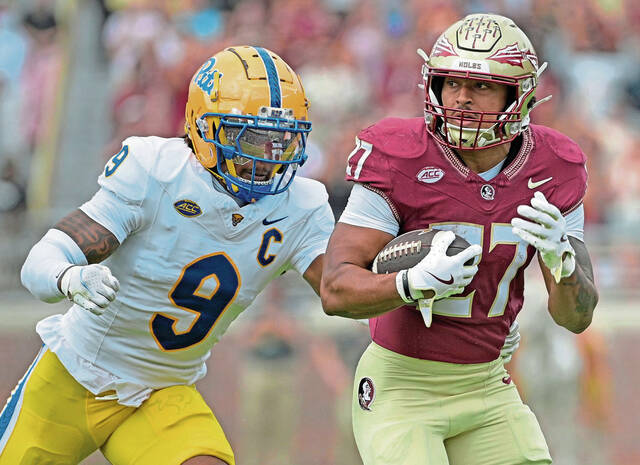
Between 2019 and 2025, Pitt’s athletics department ran deficits totaling $283 million. In 2025 alone, the deficit was a record $47 million. Pitt’s 2024 deficit ranked No. 11 of 120 football subdivision schools reporting nationally. These are not rounding errors. These are not pandemic anomalies. These are structural, recurring losses.
And Pitt admits — in its own Stair Reports filed with the state — that these deficits are funded 100% from “(T)uition, fees and appropriations.” The latter — your taxes.
This is where the story shifts from troubling to unlawful.
Under the State-Aided University Nonpreferred Appropriation Act (Act 11A), the Legislature imposes strict limits on how Pitt may use state funds. The law states Pitt may use appropriations “only for costs directly related to the provision of instruction for graduate and undergraduate students and costs incurred in providing student-related services and community outreach services.”
Athletics deficits are not on that list.
Athletics subsidies are not on that list.
Athletics is not a student- related service.
Athletics is not a community outreach service.
The law is unambiguous. Pitt’s practice is indefensible. The consequences are real.
Students at Pitt already graduate with some of the highest debt loads in the nation. Fifty-five percent leave with loans averaging nearly $40,000. Many come from families who sacrifice, borrow or work multiple jobs to make higher education possible. Yet without their knowledge or consent, a portion of their tuition — and the taxpayer dollars that help subsidize it — has been diverted to cover enormous athletics losses.
Taxpayers, too, have been misled. When the Legislature appropriates more than $150 million annually to Pitt, no one imagines nearly a third of that amount is effectively being used to backfill athletics deficits. That is not what the law authorizes. That is not what the public expects. And that is not what Pitt has disclosed.
This is not about being for or against college sports. Athletics can enrich campus life and bring pride to a community. But they cannot be funded illegally. They cannot be funded on the backs of students already drowning in debt. And they cannot be funded with taxpayer dollars that the Legislature has expressly restricted.
This month, I filed a formal demand with the auditor general and attorney general of Pennsylvania to investigate Pitt’s misuse of state funds and to recover the money that was diverted unlawfully. The law requires the auditor general to “disallow expenditures made for purposes not permitted by this act” and to “recover the sums from the State-aided university.”
Pitt is a world-class institution with world-class researchers, faculty and students. It deserves to thrive. But no institution — no matter how storied — gets to operate outside the law.
It is time for Pitt to stop using students and taxpayers as a piggy bank for athletics. And it is time for the commonwealth to enforce the law.
Attorney J. Byron Fleck is a 1976 University of Pittsburgh graduate and a donor to Pitt academics and athletics.