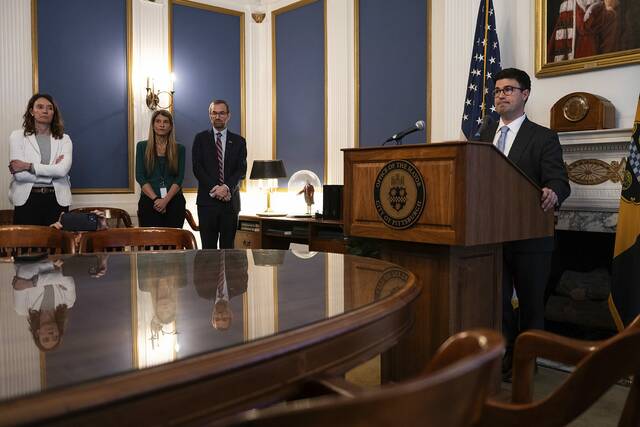
Laurel: To correcting mistakes. Greensburg’s police pension commission this week approved the forfeiture of pension benefits paid to a retired officer, Regina McAtee, convicted in federal court of drug conspiracy charges.
That includes repayment of $75,400 already received.
The process was deliberate, with a public hearing and submitted briefs. A hearing officer reviewed the facts and issued findings. There is a 30-day window for appeal.
McAtee doesn’t lose the money she contributed over her career. That’s about $74,000, excluding interest. She loses the public-funded benefits added to that.
Despite what McAtee attorney Lawrence Kerr argued, this is not a matter of piling on. It is a matter of public stewardship.
Pension funds are promises backed by taxpayers. They are designed to reward honorable service. Federal drug conviction does not reflect such service.
The commission’s action reflects that responsibility. It followed the law. It preserved due process. And it reinforced a principle that matters: Public office carries obligations that do not disappear when the badge comes off.
Accountability is not punishment. It is the maintenance of public trust.
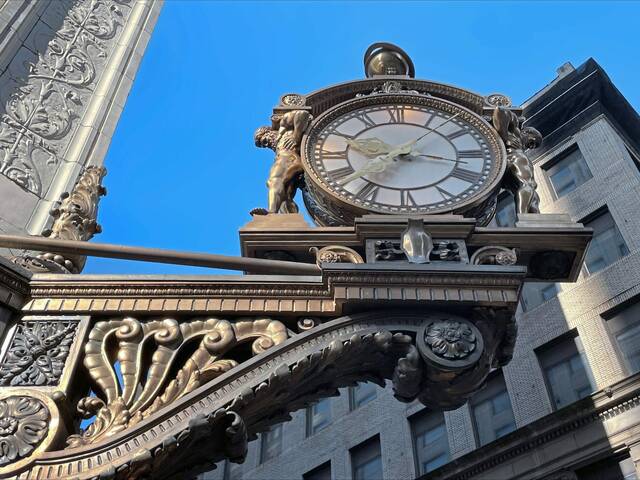
Lance: To betraying a landmark. There are places in a city that belong to everyone. In Pittsburgh, one of those places is the Kaufmann’s clock.
“Meet me under the Kaufmann’s clock” is not just a direction. It is shorthand for first dates, friendly reunions and downtown rituals that span generations. It is the yinzer version of Tom Hanks and Meg Ryan meeting at the Empire State Building in “Sleepless in Seattle.”
That is why it lands differently when police describe a man beaten near that spot — punched dozens of times, kicked while on the ground, a gun allegedly drawn.
The criminal case against three of the four suspects already has begun. Guilt or innocence will be determined in court.
But the larger question remains: Is nothing sacred?
Public space functions only when people feel safe occupying it. Downtown is not just office towers and event venues. It is shared ground — where strangers intersect and everyone feels ownership.
When violence intrudes on a place woven into civic memory, it does more than injure one person. It chips at collective confidence.
Landmarks matter because they hold meaning. Protecting the safety of those spaces is not just nostalgia. It is collective care.
Leave the clock — and the space beneath it — alone.