It has been a very eventful 12 months for American workers since last Labor Day. At that point in time, the “Great Resignation” was well underway. Spurred by covid, millions of American workers had quit their jobs in the months before Labor Day and millions more would resign in the months after.
In October, in the face of a growing labor shortage, years of insufficient pay increases, and widespread dissatisfaction with employers’ reaction to covid, the U.S. saw a significant strike wave across a variety of industries. The media labeled the strike wave “Striketober,” although it continued through November.
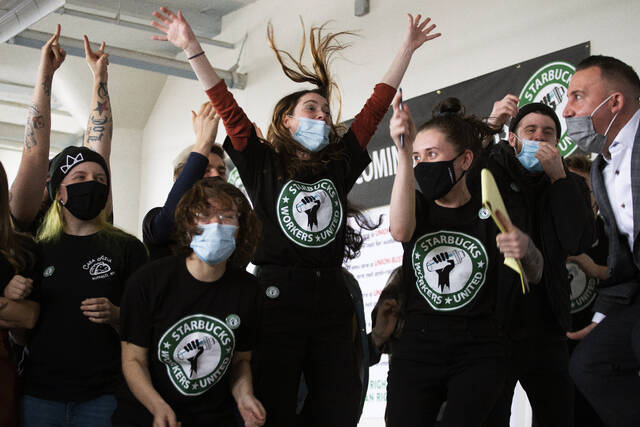
In December, 15 workers at a Starbucks store in Buffalo voted for union representation. The win spurred employees at other Starbucks stores to organize. Since that first victory, baristas at over 200 stores have voted in a union and more than 300 stores in 36 states have filed to have a union election. The union drives at Starbucks have spurred other workers in retail to undertake their own campaigns.
In March, 600 tech workers at The New York Times overwhelmingly voted for a union and REI employees in a New York City store organized the first union in company history. In April, employees on Staten Island overcame aggressive opposition by their employer to organize the first Amazon warehouse in the nation. And in June, unions were established for the first time at Apple and Trader Joe’s stores.
Why are so many workers quitting their jobs, going on strike or trying to form a union? The answer is clear. They are unhappy with their current employment situation, and they want a greater voice at work.
In a recent study, MIT professor Tom Kochan and associates asked a national sample of workers about their views of their workplace. The key finding from the study was the existence of a “voice gap.” The “voice gap” is the difference between the influence workers expect at work and what they actually experience. The research found that between 52% and 62% of workers reported a voice gap in the areas of compensation and benefits, job security, respect and the introduction of new technology.
In a democratic society, it is not surprising that a significant portion of the workforce do not want to be treated like robots or automatons. Rather, they want to have some “say” about their work and their workplace. This is certainly the case when it comes to pay and benefits. But it extends to other aspects of life at work.
For example, an IT specialist might want a more flexible schedule to attend her daughter’s soccer games after school. An administrative assistant might want to work from home part of the week because of the cost and time involved in commuting. Or a nurse might have come up with an alternative to a treatment protocol mandated by her hospital that is causing unnecessary pain to patients, but no one in administration will listen to her idea.
This desire for voice in the workplace is not new. Workers have always wanted a say in their work lives, but they have often suppressed this desire in return for good jobs that provided security and a middle-class lifestyle. Today’s employees recognize that while they have been working hard and keeping their part of the deal (worker productivity increased 62% between 1979 and 2020), many employers have not (over that same period hourly compensation rose just 17.5%).
And they are more willing to act on their dissatisfaction because today we have a relatively advantageous environment for workers to do so. One factor is that the Biden administration is a friend of labor. His appointees to the government agency regulating labor-management relationships, the National Labor Relations Board, have been issuing decisions strengthening protections for workers who try to organize.
There are also many employees who, during the covid crisis, decided they had enough of an unsatisfactory work life and left their jobs. This, combined with the desire of Gen Z and millennials for meaningful work, greater work life balance and increased voice, means that the status quo at work is no longer acceptable to a significant part of the workforce.
The mostly young workers at Starbucks are a case in point. While advocating for a union, they acknowledge that Starbucks’ pay and benefits are better than many similar employers. And they make clear that they believe in Starbucks’ stated mission — “to inspire and nurture the human spirit.” But they contend that the company has not lived up to that ideal in its dealings with its employees. They also say they do not feel valued, something that was particularly the case when managers ignored employee concerns about health and safety during covid. Ultimately, many of the employees fighting for a union say they love Starbucks, and they think they can make the company better, if it will engage and listen to them as true “partners.”
The efforts of Starbucks employees, and other service workers, to win a greater voice in their workplaces has gained traction in part because of a labor market that has put workers in the strongest position they have been in for years. The labor shortage has emboldened disillusioned workers to take action to improve their life at work. They are doing so by organizing unions and using their collective strength to negotiate better terms and conditions of employment and gain a greater voice at work. And they are doing this without fear of losing their jobs, because they know they can easily find employment elsewhere.
Whether the events of the last year represent a resurgence of worker power and unions that will fundamentally change relationships between employers and employees in the U.S., or just a temporary shift that will dissipate when unemployment rises, is not yet clear. But it is very likely that the efforts of workers to gain a greater voice in their workplace that we have seen since last Labor Day, will continue in the year ahead.
Paul F. Clark is a professor of labor and employment relations at Penn State.