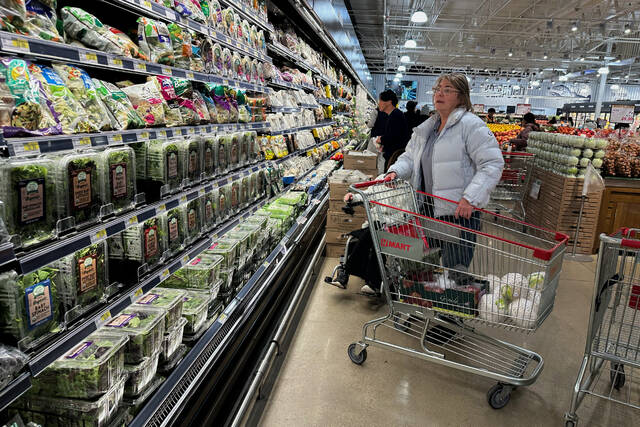
The word that seems to concern many people today is “affordability.” Whether one is purchasing a home, buying food or paying doctors’ bills, everything seems more expensive. And the fact is, everything is more expensive.
The consumer price index in December 2021 stood at 278. By December 2025, it had reached 324 — an increase of 16.5%.
When wages do not keep up with price increases, the buying power of the money people earn erodes, effectively creating the affordability crisis many are experiencing. This is pushing more people to live paycheck to paycheck, with lower income earners most affected.
What is the root cause of this situation? Politicians from both sides of the aisle will quickly shift the blame toward their opponents. Yet the affordability issue finds its roots in long-term fiscal irresponsibility that has ballooned our national debt to nearly $39 trillion, or 39 followed by 12 zeroes.
This debt has grown over time because the government spends more than it collects in revenue. The national debt reached 124% of gross domestic product in fiscal 2025. This means the debt has grown to be 24% more than the value of all goods and services produced in our nation in a year.
To make matters worse, interest payments are now one of the largest cost categories in the federal budget. As the national debt continues to grow, interest payments will increasingly squeeze the federal budget, absorbing a greater share. Eliminating the debt directly is not an option, since this would demand either a default or severe cutbacks. The only feasible path forward is to allow inflation to erode its value.
The Federal Reserve’s target inflation rate is 2%. The current inflation rate is 2.7%. This difference may seem small on the surface, but interest rates paid on savings is drifting down. And with wages barely keeping up with price increases, dollars gradually come to buy fewer goods and services over time — an erosion of buying power.
How is this affecting consumers? At 2% inflation, prices double every 36 years. But at 3% inflation, they double every 24 years. If we look over a five-year period, prices will be nearly 16 percentage points higher with 3% inflation, versus 10.4% higher at 2%.
Since one-quarter of households already live paycheck to paycheck, higher inflation means that a larger group of people will struggle or fail to afford basic necessities.
President Donald Trump has been feuding with Jerome Powell, chairman of the Federal Reserve Board of Governors, over interest rates. Trump wants lower rates to reduce interest payments on the national debt and to fuel economic growth. But low rates come with a risk of higher inflation. Powell wants to set interest rates to balance inflation risk against unemployment risk.
The Federal Reserve has been lowering interest rates over the last year. With a new chairman set to be installed in the spring, it remains to be seen whether this trend will continue.
Of greater concern is how the consumer price index is calculated. The Bureau of Labor Statistics has made changes to this index over time, working to provide an accurate picture of prices being paid by consumers for goods and services. If modifications to how the consumer price index are made that underestimate what people are paying, this could provide ammunition for the Federal Reserve to lower interest rates, even if true inflation may be higher than what is being reported. Given the president’s affinity for putting people in positions of power to manipulate statistics, such a possibility cannot be dismissed.
If the data being reported underestimates inflation, the resulting gap between the actual rate and the reported rate will slowly erode the value of money as buying power is reduced. This means that Americans’ standard of living will drop.
Trump keeps saying prices are coming down, but this is not what consumers are seeing in grocery stores and other commercial outlets. Indeed, even if the data reported by the Bureau of Labor Statistics says inflation has been tamed, a growing number of people cannot afford basic necessities. Affordability will, unfortunately, continue to be an issue.
Sheldon H. Jacobson is a computer science professor at the University of Illinois Urbana-Champaign. This piece was originally published by The Hill.