
https://triblive.com/opinion/sheldon-h-jacobson-getting-air-travel-back-on-track-is-easier-than-it-once-was/
Sheldon H. Jacobson: Getting air travel back on track is easier than it once was

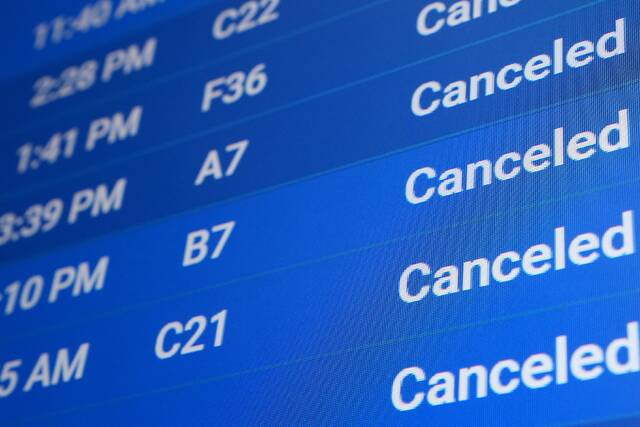
The recent winter storm impacted over 245 million people spanning 2,000 miles as it crossed the country. Cities in the Midwest and the Northeast were blanketed with a foot or more of snow. Areas in the south were not spared, with Atlanta hit with ice and below-freezing temperatures and Dallas experiencing several inches of sleet.
Air travel was impacted across the nation, with hub airports in Dallas, Atlanta, Chicago, Newark, Charlotte and Boston all experiencing delays and cancellations. Around 11,000 flights were cancelled on Jan. 25 alone, representing around one-quarter of all flights handled by air traffic control. Even the treacherous conditions on roadways made getting to airports near impossible.
On the surface, restarting flights after an extreme weather event seems straightforward — get crew and passengers back onto planes and the problem is solved. Yet the problem is far more complex, which is why it will take some time for the system to get back in order.
The national airspace system is a complex network of airports and airplanes overseen by air traffic control, all working together to facilitate safe and efficient air travel. Extreme weather events like what just occurred create safety risks that force flights to be delayed and canceled. Flight crews and air traffic controllers always work together to ensure everyone’s safety.
When an expansive extreme weather event hits multiple cities across the nation, reaching your final destination becomes more difficult due to the hub-and-spoke system used by the major airlines. The hub-and-spoke system allows people who live in smaller and mid-sized markets to get almost anywhere in the nation with a single stopover at a hub airport. The system works well, until it does not, when an extreme weather event disrupts travel at hub airports. The recent storm impacted numerous hub airports, affecting all airlines.
Connecting flights through hub airports have become the rule, not the exception. Charlotte-Douglas, a hub for American Airlines, has around 70 percent of travelers connecting, the most among all hub airports. Dallas-Fort Worth and Chicago O’Hare, also hubs for American Airlines, together have around 50% of their travelers connecting. Atlanta Hartsfield, the nation’s busiest airport and a hub for Delta Airlines, has around 60% of travelers connecting.
When flights are canceled at hub airports, the ripple effect across the nation gets amplified.
Yet not only did passengers get stranded, but crew and airplanes all get out of position once the weather system passes. This is why airlines have become adept at proactively adjusting their schedules (aka canceling flights) before weather systems roll into an area. Having a surplus of crew and airplanes stuck at one airport means that airlines will eventually need to get such people and equipment where they better align with their schedules.
Airlines typically set their schedules months in advance. Without such schedules in place, people would be unable to purchase tickets and plan travel for the future. Schedules do change, so anyone who plans six months in advance may find their schedule gets adjusted one or more times before their eventual departure.
In extreme situations, airlines have added flights after major weather events to reposition their crews and airplanes, as well as get people to their final destination after their flights were cancelled. Given the large proportion of connecting passengers passing through Dallas Fort-Worth, Charlotte and Chicago, it is not surprising that American Airlines recently did this at and between these airports, a win-win for everyone.
Weather events have unpredictable consequences on air travel. Yet after sufficient experience, as well as advanced analytical tools using operations research models and algorithms, recovery can take a few days, rather than weeks.
So what can travelers do when the next weather storm impacts their travel plans? Call the airline or better yet, use the airline app to see what kind of travel waivers they have in place. Waiting until the last minute once the weather has already affected air travel is too late. Remember that airlines want you to get to your final destination as much as you want to. And they will help you as much as you allow them to. Being an informed passenger can go a long way to achieve this.
Sheldon H. Jacobson is a computer science professor at the University of Illinois.
Copyright ©2026— Trib Total Media, LLC (TribLIVE.com)