As the Los Angeles Dodgers made splashy signings with Shohei Ohtani and Yoshinobu Yamamoto this offseason, other teams focused on modern baseball’s stark reality: pricey payrolls often don’t translate into titles.
Baseball’s biggest spender has won the World Series just three times in the last 23 seasons: the 2009 New York Yankees, 2018 Boston Red Sox and 2020 Los Angeles Dodgers. Going back to the start of the Wild Card Era in 1995, the highest roller has just six championships, with the Yankees also winning in 1996, 1999 and 2000.
“Clearly having a very high payroll is correlated with winning more games in the regular season,” baseball commissioner Rob Manfred said this spring. “The saving grace for us has been that our playoffs are unpredictable enough that the 110-win team doesn’t automatically march through the playoffs. That’s why I reacted probably too negatively to the criticism that the playoffs were unpredictable and the best teams weren’t coming through. The fact of the matter is that’s a good thing for us over the long haul.”
Just 12 of the last 29 World Series winners had the top regular-season record in their league. Steve Cohen’s New York Mets became the most expensive failure in baseball history last year, boosting payroll to a record $355 million on opening day, then finishing fourth in the NL East at 75-87 and incurring a record luxury tax of nearly $101 million.
“Some of the best teams in baseball that we’ve seen over the last 10 years have a hard time winning the World Series,” Cohen said.
Since Texas won its first title after finishing second in the AL West at 90-72, the Dodgers made the most ostentatious additions by reaching a record $700 million, 10-year contract with two-way star Ohtani and a $325 million, 12-year deal with right-hander Yamamoto.
Teams open Thursday in hopes of preventing the Rangers from becoming the first repeat champions since the 1998-2000 Yankees.
Changing places
Other free agents who wound up with new teams included St. Louis right-hander Sonny Gray, Giants third baseman Matt Chapman and Houston closer Josh Hader.
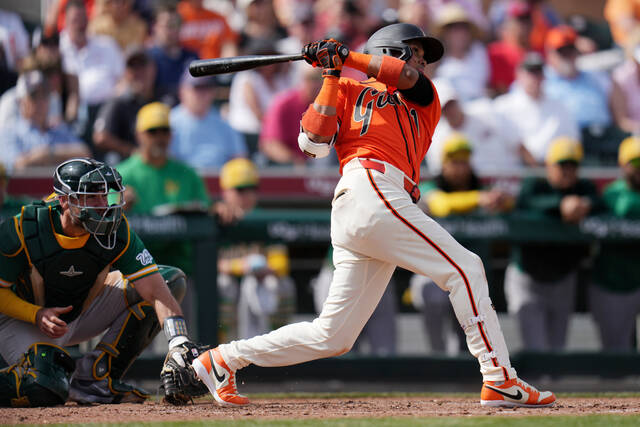
San Francisco also brought in an Asian star, giving South Korean outfielder Jung Hoo Lee a $113 million, six-year contract.
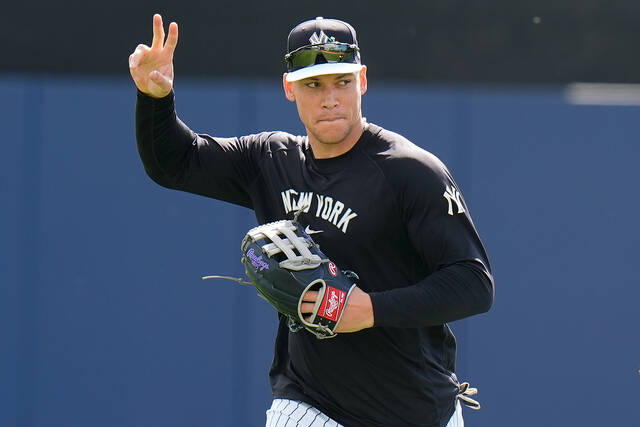
Juan Soto was the most-prominent player traded, dealt from San Diego to the New York Yankees for his final season before free agency.
NL Cy Young Award winner Blake Snell struck a $62 million, two-year agreement with San Francisco late in spring training.
Some teams appear to have reduced payroll because of local broadcast revenue uncertainty. MLB took over broadcasts of Padres and Arizona games last year after Diamond Sports Group filed for bankruptcy protection.
New seats, hot seats
Among the winter’s biggest acquisitions was the Chicago Cubs poaching manager Craig Counsell from rival Milwaukee. The Brewers replaced Counsell with bench coach Pat Murphy.
Ron Washington is getting another chance to manage at 71 years old with the Los Angeles Angels, and Bob Melvin left San Diego for San Francisco, returning to the Bay Area after previously leading Oakland. Mike Shildt got Melvin’s previous job with the Padres, Joe Espada replaced retired Dusty Baker in Houston, Stephen Vogt got Terry Francona’s old gig in Cleveland and Carlos Mendoza took over the New York Mets.
Boston’s Alex Cora and the Yankees’ Aaron Boone are lame-duck managers in the final seasons of contracts. The Yankees are coming off an 82-80 record, missing the playoffs for the first time since 2016.
Not-so-new rules
After instituting a pitch clock last year that cut the average time of nine-inning games by 24 minutes to 2:40, its fastest since 1985, MLB shortened it with runners on base by two seconds to 18. MLB also widened the runner’s lane approaching first base to include 18-to-24 inches of fair territory until the edge of the grass, changing a more than century-old rule that caused World Series controversy over interference calls.
Helped by a swifter pace and a return to normalcy following the coronavirus pandemic, MLB last year drew 70 million fans for the first time since 2017 at 70.75 million, and revenue rose to a record $11.6 billion.
However, broadcast revenue is 25% of the total, according to Manfred, and while Amazon’s investment in Bally has created a more positive outlook, the future of media rights is unclear.
“The media landscape is uncertain. It’s changing really fast,” Manfred said. “Even the smartest people in the business, and I don’t necessarily count myself in that group, but even the smartest people in the business don’t know exactly where this is shaking out.”