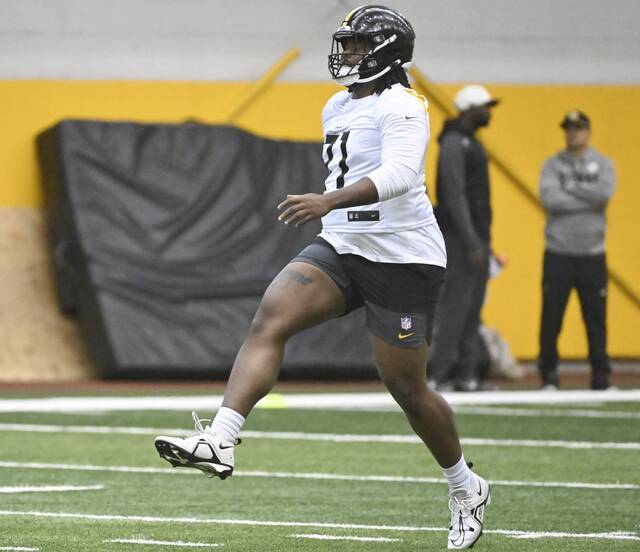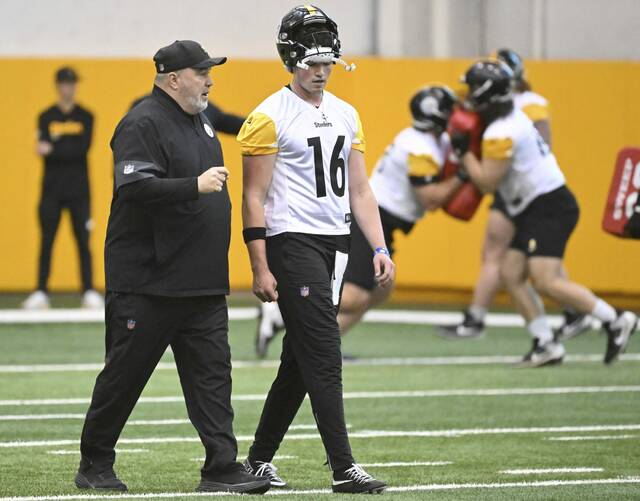

The human behavior and decision-making aspects behind a person’s dating life doesn’t stray too differently from the choices that coaches and general managers make when selecting a player in the NFL Draft.
“You date someone and you make a choice to commit to this person, or keep looking,” said Cleotilde Gonzalez, a cognitive decision science professor at Carnegie Mellon University. “That is precisely the exploration-exploitation dilemma. The problem is we don’t know when to stop.”
The NFL Draft — to be held April 23 to 25 in Pittsburgh — highlights that multimillion-dollar decisions, made in just a span of minutes, can shape the future of a team franchise for years.
Those high-stakes, intense decisions on the NFL Draft stage are a glimpse into how people make choices in day-to-day life, CMU professors say.
“Decisions under uncertainty are sequential — once you pick one option, you can’t go back,” Gonzalez said. “It’s a very pervasive decision problem in the world.”
The exploration-explotation tradeoff is a concept where people weigh a safe option — like a player believed to be a solid pick for a team — against a risky option, Gonzalez said.
To the everyday person, it’s similar to choosing to rent an apartment or buy a house. People can either select that option of where to live or wait to see if something comes up better on the market.
“The question is when to stop. Should you take the player now, or wait for a better one later?” she said.
Complicating matters is that teams, and fans, will have to wait before realizing if a player was a smart pick.
“Feedback is delayed,” Gonzalez said. “You don’t really know whether a player is good or not until probably many years after the draft.”
Teams must rely on experience, information and predictions of potential success to make a good pick, she said.
Choking under pressure?
Carnegie Mellon biomedical engineering professor Steven Chase studies what happens when people choke under pressure and how their brain functions under high-stakes environments.
His research has found that, as the rewards increase, so does people’s performance, but only up to a certain point. He calls it the “jackpot reward” effect.
“With the smallest rewards, subjects don’t care. If they get it, it’s OK, and if they don’t, that’s fine, too,” Chase said. “With larger rewards that you care about, the motivation and preparation is better. With jackpot rewards, movements are too slow. You’re worried about missing the target.”
In the draft, NFL teams have 10 minutes to make their selection in the first round. The time per pick decreases as the draft progresses.
Even something as simple as knowing other people are watching and observing can negatively impact a person’s decision-making.
“The NFL Draft is so publicized, that rattles up the pressure much more,” Chase said. “Collaborating with others, and talking things over with others, is helpful and makes the decision easier.”
‘Fluidity of the draft’
Tim Derdenger, a marketing and strategy professor, says planning is key when scouts and analysts determine their moves in the NFL Draft. But that also comes with planning for the unplanned, he said.
“You have to have a plan in place to adapt to the fluidity of the draft,” Derdinger said. “That plan comes to light when you have the right culture in place.”
Prep work includes a list of candidates and their availability, understanding team and player needs, and the preferences of the team, Derdenger said.
“The ones that make the best decisions plan for all possibilities,” Derdenger said. “They call it the war room, and in a war room, things change and you have to have people and processes in place to make clear and decisive decisions.”
Surprise picks can impact the public perception of a franchise, Derdenger said, and there can be more downsides to upsides with those decisions.
It’s important for teams to articulate why they made the picks they did, Derdenger said.
Derdenger predicts the first two picks in the draft will be the easiest, “but from there, game on.”
“The analysis of what they do on the field is probably the easiest part,” Derdenger said. “There’s vast amounts of data and how they might perform with the others on the field. The intangibles are harder to measure, but also play an important role in the success of the team or the pick.”