
https://triblive.com/sports/steelers/mums-the-word-nfl-visit-pittsburgh-host-private-town-hall-to-talk-draft-plans-with-public/
Mum’s the word: NFL, Visit Pittsburgh host private town hall on draft plans

As a Pittsburgh councilman, Anthony Coghill chairs City Council’s public safety committee and serves on the Sports & Exhibition Authority’s board.
But even those credentials could not score him an invitation to a closed-door “town hall” Monday with NFL officials about the 2026 NFL Draft coming to Pittsburgh in April.
“You’d think one of those elements might get me in the door,” Coghill quipped.
That wasn’t the case.
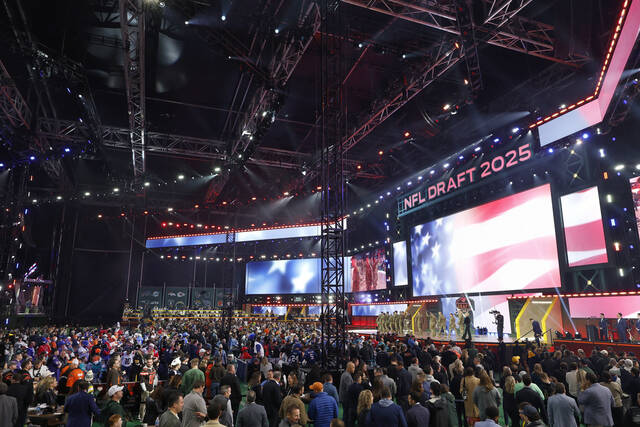
Coghill wasn’t invited. And neither was the media, despite the city playing host to what planners say might be the largest gathering in Pittsburgh’s history, with hundreds of thousands of fans — maybe even 1 million — expected to swarm Downtown and the North Shore over three days.
In fact, Coghill didn’t even know about the evening meeting Downtown at Point Park University’s Pittsburgh Playhouse until told by a TribLive reporter.
Hosting the meeting with select residents and business owners were NFL officials, the Pittsburgh Steelers and Visit Pittsburgh, the city’s tourism arm. They said the town hall would provide a planning update and a question-and-answer session.
Officials provided no specifics about the town hall, such as who was invited, how many and how they were selected.
“I would love to be more in the know, I will tell you,” Coghill said. “I know they obviously do things their own way, the NFL. Maybe they plan to bring us in at a later date, but it’s getting to be crunch time.”
During a brief media appearance, Jerad Bachar, who heads Visit Pittsburgh, said the meeting was closed to reporters because some people may be too “shy” to ask questions in front of the press.
“We want to make sure everybody has the opportunity to ask questions,” Bachar said.
He anticipated questions on topics like how businesses can get involved with the draft or how people will be able to move through the area during the event.
“We want it to be an authentic space where people can ask questions,” said Belynda Gardner, senior director of development inclusion with the NFL.
She also said plans could change based on the closed-doors conversations.
Nicki Ewell, the NFL’s senior director of events, said the league will roll out a broader communications strategy in March. That will include an app that includes information on road closures, programming, the NFL’s bag policy and a list of attractions.
Gardner said plans for the draft already have been in the works for about a year.
“We want to open the curtain, share a little about those plans,” she said of the town hall meeting.
It seems many details are still being finalized.
The draft will span the North Shore, occupying several parking lots near Acrisure Stadium, and Point State Park.
Steve Farago, the NFL’s director of event operations, said nearby roads and parking lots will be closed “a few weeks” before the event while crews build up the stage and other elements.
The NFL will try to reduce closures “as much as possible,” Farago said, without offering specifics.
Fans will largely move between the two sites on foot, he said, though officials are “working through the final details” regarding how people will get from point to point.
Ewell said the league plans to include a variety of attractions throughout the event in hopes of enticing fans to come every day.
She said there’s a chance the first day — when the top draft picks are selected — will reach capacity and some people may not be able to enter if they arrive too late.
Some events, Ewell said, will take place within Acrisure Stadium, which is owned and leased by the Sports & Exhibition Authority of which Coghill is a member.
The stadium’s concession stands and bathrooms will be open.
Officials said it was too early to offer precise attendance predictions, economic impact estimates or guesses on how much it will cost the city to pay for public safety overtime.
Bachar said a $10 million allocation in Pennsylvania’s 2026 budget to support the draft could help cover some public safety expenses, acknowledging it will be a “huge lift” for Pittsburgh to staff police, fire and EMS personnel.
The city already is struggling to pay its first responders for overtime, with officials eyeing a tax hike to stay afloat next year. Pittsburgh has spent millions over its budget for overtime this year.
The city also is putting up $1 million to support the event. Allegheny County chipped in $3 million.
Bachar said the expenses will be worth it.
“This is the largest event that Pittsburgh’s ever hosted,” he said.
Copyright ©2026— Trib Total Media, LLC (TribLIVE.com)