
In the NFL this offseason, we heard a lot of wailing on behalf of Le’Veon Bell because he was a victim of that mean ol’ franchise tag. And some even praised Antonio Brown for forcing his way out of a valid contract in Pittsburgh.
Because, you know, those nasty owners “have all the power.”
Even though the NFL Players Association signed off on the current collective bargaining agreement.
In baseball this offseason, owners were chastised for not stepping up with enough money for free agents such as Manny Machado, Bryce Harper, Dallas Keuchel and Craig Kimbrell in a timely enough fashion for some in the bleeding-heart section of the media.
Because, you know, it’s the responsibility of the owners to pay all the players what they want, whenever they want it.
Now the latest movement is a cry to abolish the NBA Draft.
Don’t run away screaming, Pittsburgh. This isn’t just a story about that pro basketball league you love to hate because it doesn’t exist here. This stupid idea is just as applicable to football, baseball and hockey.
The premise was advanced by ESPN’s Kevin Arnovitz. He wants to ditch the NBA draft because it’s unfair to ask young players to enter the league with a franchise they didn’t choose.
First of all, I wonder if this opinion would be as widely considered if the New York Knicks or the Los Angeles Lakers had the first pick.
Second, cry me a river!
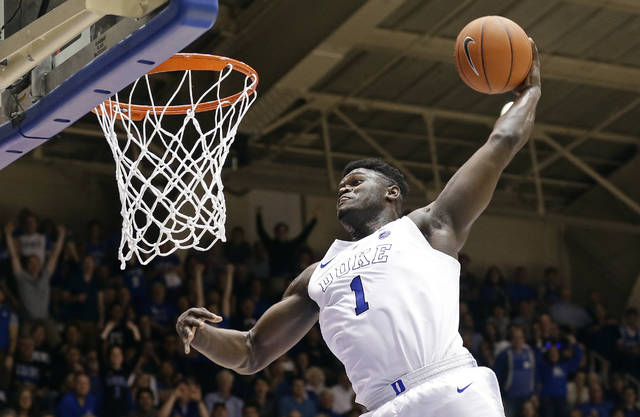
Oh, these mistreated NBA rookies. So beleaguered. Poor Zion Williamson. How will a 19-year-old making millions of dollars ever enjoy life in a backwater, sleepy, no-fun town like … uh … New Orleans?
It’s the latest example of the national media pandering to athletes by somehow trying to make them out to be multimillionaire indentured servants of billionaire oppression.
Sorry, but I’m not buying that.
When you read ideas such as erasing pro sports drafts, mandating employment rates of high-priced free agents and stripping any restrictions on player retention for the franchises, understand that it’s being done for one reason.
It’s political virtue-signaling wrapped up in a sports-media package.
Articles like the one above — and they’ve increased astronomically since the invention of Twitter — make some sort of long-reach, emotional connection with $50,000 “Working Class Joes” by advocating for $50 million athletes.
Few things in the world are easier to do than hit “like” or “retweet” at the suggestion that “somebody is getting screwed over by the man!”
Even if the man allegedly getting “screwed over” is getting paid at least seven or eight figures.
At their core, opinions like these are attempting to play on your good, down-home, democratic American values. It’s a flimsy attempt to equate everyday fair labor principles to professional sports.
That’s dumb. Not all avenues of employment operate in the same ways. Suggesting that they should just to benefit whims of the employees (players) is naive.
Pro sports are unique in the sense that athletes, owners and the teams themselves can be highly capitalistic within the structure of their leagues. But the leagues themselves have to be a little communistic to survive, don’t they?
If pro sports drafts were eliminated, it’d be chaos. The biggest market teams would pay the most money to the most talented entry-level players, year after year. Rookies would run screaming to glitzy cities, with the highest paychecks and the best revenue streams outside of the sport.
How many 20-something NFL rookies would willingly sign in Cincinnati? Or baseball players in Pittsburgh? Or NBA players in Milwaukee?
Franchises like those would collapse. There would be fewer employment opportunities because leagues would have fewer competitive teams in their top divisions.
That’s not good for anyone.
Leagues need to set up rules and structures with which all of their franchises have a chance to compete. Draft systems are the only way to do that. Free agency is going more and more the way of the players every year, in every sport. The only way small-market teams have a prayer of surviving is to draft and develop young talent well enough in hopes that they’ll want to stay beyond their first contract.
The author’s solution is to make some sort of convoluted comparison to the post-medical school matching system.
I’ll leave the irony of that plan to you to figure out on your own — equating athletes leaving school after one year to make millions to people in their 20s looking for the best possible option to work so they can erase a mountain of school debt.
Since we’re making “real-life” parallels here and all.
The fatal flaw to that dreadful idea is — at some point — someone has to “want” a match with, say, the Sacramento Kings. And how many “matches” do the Knicks and Lakers get every year? If they get a bunch of rookie matches in a given year, can they get out from under more expensive veteran contracts?
I’m sure the players association would love that idea.
Conflating real-world issues and sports is a common theme these days. And sometimes those issues are worth investigating.
Destroying entry draft structures is not one of those issues.
Even if the idea gets you lots of thumbs-up emojis from people who don’t think before they hit send on Twitter.