BOSTON — Efforts to unionize college athletes will continue, advocates said Friday, even with the NCAA’s landmark agreement to allow players to be paid from a limited revenue-sharing pool.
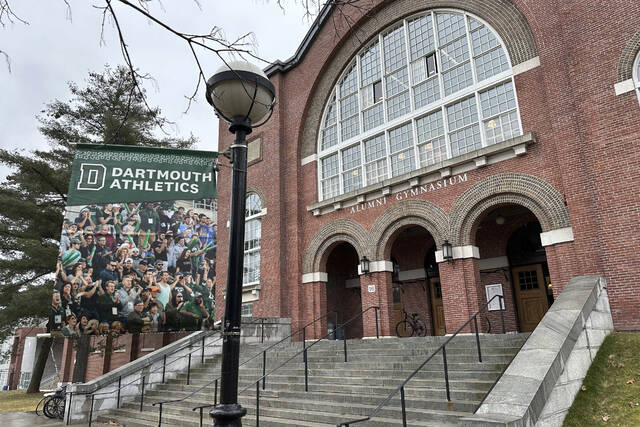
“With this settlement, the NCAA continues to do everything it can to avoid free market competition, which is most appropriate in this case,” said Chris Peck, the president of the local that won the right to represent Dartmouth men’s basketball players — a first for a college sports team. “The attempt at a revenue sharing workaround only supports our case that the NCAA and Dartmouth continue to perpetrate a form of disguised employment.”
The NCAA and the Power Five conferences agreed this week to an antitrust settlement that will pay $2.77 billion to a class of current and former players who were unable to profit from their skills because of longstanding amateurism rules in college sports. The settlement also permits — but does not require — schools to set aside about $21 million per year to share with players.
What the agreement didn’t do was address whether players are employees — and thus entitled to bargain over their working conditions — or “student-athletes” participating in extracurricular activities just like members of the glee club or Model United Nations. In the Dartmouth case, the National Labor Relations Board ruled that schools exerted so much control over the men’s basketball players that they met the legal definition of employees.
The players then voted 13-2 to join Local 560 of the Service Employees International Union, which represents some other Dartmouth workers, and asked the school to begin negotiations on a collective bargaining agreement; the school refused, setting up further court battles. The NCAA also is lobbying Congress to step in and declare players are not employees.
The NCAA and conference leaders in a joint statement called for Congress to pass legislation that would shield them from future legal challenges.
“The settlement, though undesirable in many respects and promising only temporary stability, is necessary to avoid what would be the bankruptcy of college athletics,” said Notre Dame’s president, the Rev. John Jenkins. “To save the great American institution of college sports, Congress must pass legislation that will preempt the current patchwork of state laws; establish that our athletes are not employees, but students seeking college degrees; and provide protection from further anti-trust lawsuits that will allow colleges to make and enforce rules that will protect our student-athletes and help ensure competitive equity among our teams.”
The Dartmouth union said the best way for college sports’ leaders to avoid continued instability and antitrust liability is to collectively bargain with players.
“The solution is not a special exemption or more congressional regulation that further undermines labor standards, but instead, NCAA member universities must follow the same antitrust and labor laws as everyone else,” Peck said. “Only through collective bargaining should NCAA members get the antitrust exemption they seek.”