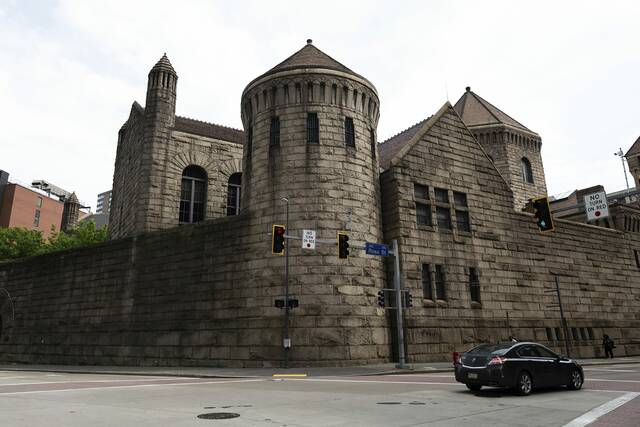


For just three hours each month, the doors of the Old Allegheny County Jail Museum swing open.
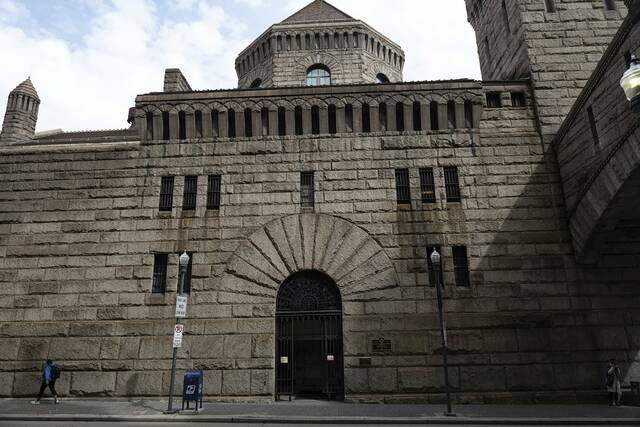
Every first and third Monday, visitors can pass under a granite archway on Ross Street — part of the original 1880s prison complex — then through security at Allegheny County’s family court building. Renovated in 2001 into the Court of Common Pleas’ Family Division, the courthouse still contains remnants of its former life as a jail, preserved today as a museum. Walking in, you can still see the contours of its original five-story rotunda, designed for maximum surveillance, where the radiating steel cell blocks once converged.
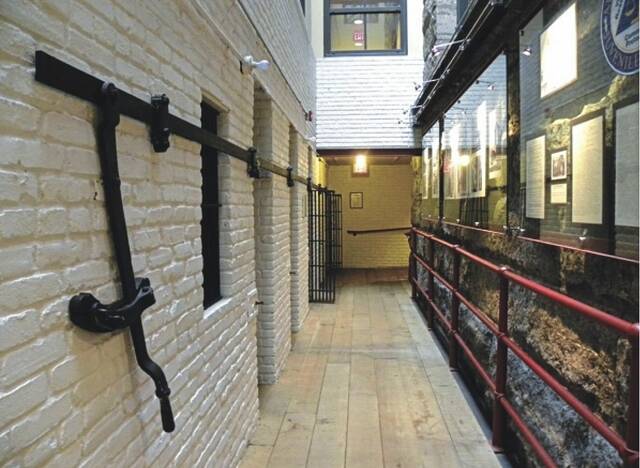
On a recent Monday morning, a group of nearly 40 people lined up along a row of rust-colored prison cells and waited for the museum’s doors to let them in.
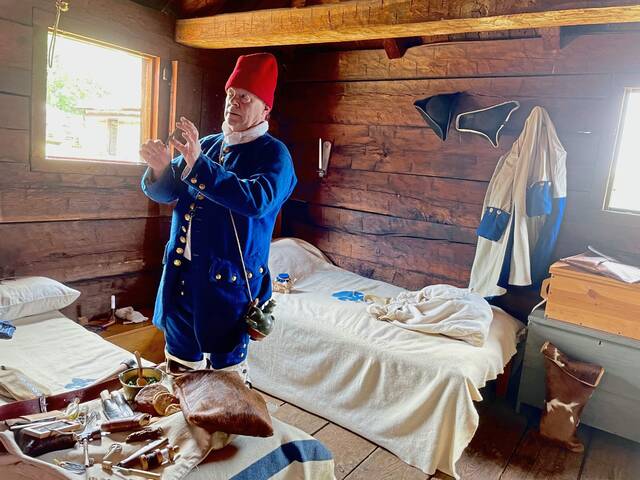
“I’m just fascinated that people are fascinated with this,” said Jail Museum docent Mace Porac. “I didn’t know anything about it until I became a docent, so this is pretty incredible. And people want to know about history now.”
When it comes to a jail museum, the draws are many: historical curiosity, tales of famous inmates and escapes — with the Biddle Brothers and Kate Soffel topping the list — interest in architecture, and the museum’s immersive element, the chance to step inside full-scale prison cells.
According to Porac, the museum brings local tourists and visitors from as far away as Asia. Groups of seniors (partly a function of the museum’s limited hours) are frequent, and the largest crowd comes during Allegheny County’s Take Our Kids to Work Day. Earlier this month, hundreds of children streamed in to explore the old jail cells with the same eagerness as fire engines and public works trucks, reminiscent of the “Scared Straight” programs of the 1980s.
“It’s unusual, is what it is. It’s novelty,” said Bette Landish, a docent of 14 years.
But the museum’s novelty intersects something more complex, Landish said, balancing educational storytelling with the reality of incarceration.
“Incarceration is a dreadful human situation. All kinds of enslavement are,” she said. “And it’s hard to tell happy stories about it, considering that people here suffered. I want to tell that story, too.”
Opened in 2005, the museum might be best described as an exercise in multivocality — the anthropological idea that a single historical site can contain multiple signifiers and voices.
One exhibit highlights Allegheny County’s history of juvenile justice, where, until 1901, children were imprisoned alongside adults at the Old Allegheny County Jail. In penal history, Pittsburgh claims both the shame of helping to develop a system of solitary confinement and hard labor (aka “the Pittsburgh method”) invented by Quakers, and the reformer Alice Ballard Montgomery, Pittsburgh’s first juvenile probation officer who separated juveniles from adults and focused on rehabilitation.
The museum places the social progress and cruelty side by side without trying to resolve any contradiction.
Aside from rows featuring two types of jail cells — the first of which, at 8 feet by 5 feet, imprisoned up to seven people at a time — the museum also displays artifacts collected by former deputy jail warden Ed Urban. Objects include handcuffs, leg irons, a riot baton, an electric magnetometer used for searches, escapee and “murder” logs written in cursive handwriting, and one of the few humanizing items — a drinking cup and pitcher.
Urban worked at the jail from 1971 to 2006, and witnessed a “dramatic transformation of the philosophy of the jail from the time I started until the time I retired,” he said, galvanized by the 1971 Attica prison uprising in upstate New York. “There were so many things that happened in that jail, it was like living history for me.”
Urban had always been a history buff and began saving objects.
“I figured someday someone was going to wonder where this stuff is,” he said. “(Back then), people had no care for it.” He remembered watching renovations at the jail warden’s home, formerly located on Ross Street. “They would cut these antique, beautiful light fixtures off, throw them in the garbage can, and put in a $29 ceiling fan in their place.”
When the jail moved in 1995, “it was always my goal to have an exhibit inside that old jail,” Urban said. “It affected so many people in our local community — not just the prisoners, but their families, the people who worked there. I thought it would be a shame if that just vanished.”
Approaching retirement, he worked with Pittsburgh History & Landmarks Foundation to secure a grant from the Drue Heinz Trust and develop the museum.
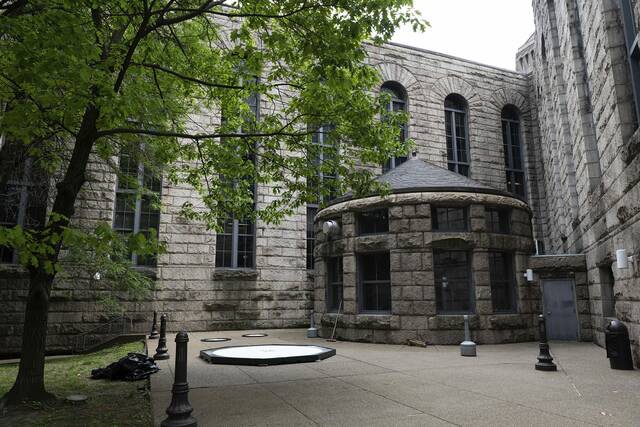
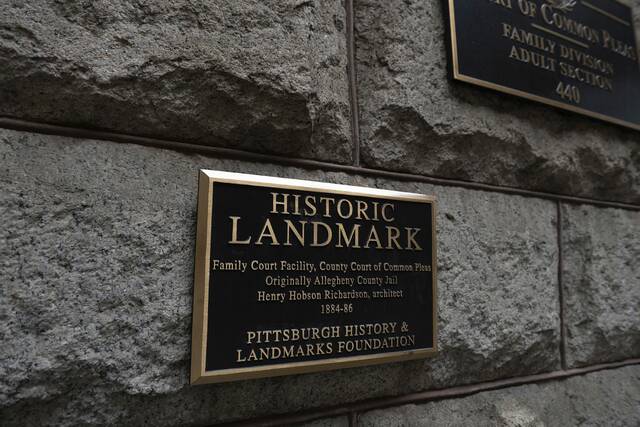
For its part, PHLF hoped to preserve the jail’s historic architecture, designed by Boston architect Henry Hobson Richardson. In the late 19th century, the “Richardsonian Romanesque” style came to dominate institutional buildings across the country, with the old jail serving as a key example.
Today, the Old Allegheny County Jail Museum is the only museum PHLF helps to coordinate, believing it to be a one-of-a-kind example of adaptive reuse.
“It’s meant to be a museum that shows you a place in time,” said Karamagi Rujumba, PHLF’s director of education, development and advocacy. “We thought of preservation of that space as a sociocultural experiment. It enriches the life of people in this area who experience what it must have been like to be in a jail that most people celebrate because of its architect. We want to give you the other side of what this great Richardsonian building was.”
Like other former prisons turned attractions, 21 years later, the Old Allegheny County Jail may now face questions that extend beyond preservation, situated in an ethical debate around “dark tourism” — destinations associated with death and tragedy.
In response, Eastern State Penitentiary in Philadelphia, known for its Terror Behind the Walls haunted attraction, changed the event in 2021 based on community feedback. Alcatraz, the former prison on an island in the San Francisco Bay, introduced new exhibits last year covering the prison’s 1969 Native American occupation and mass incarceration. It also bears mention that, 140 years after its initial construction, the Allegheny County Jail isn’t a distant historical relic, but stands less than a half mile away, where an incarcerated man was fatally stabbed earlier this month.
But Rujumba rejected the “dark tourism” label, reiterating that the museum aims to preserve the jail’s atmosphere without reinterpreting it.
“It might not be a pleasant experience, but it happened,” he said. “(The museum) definitely gives you the space and the room to imagine. We want people to step in and feel the metal door clink behind you, and you can feel how you feel in that moment.”
Between the three displays and peppering docents with questions, it takes the tour group the full 90 minutes to see the museum. The group politely shuffles out after and walks out.