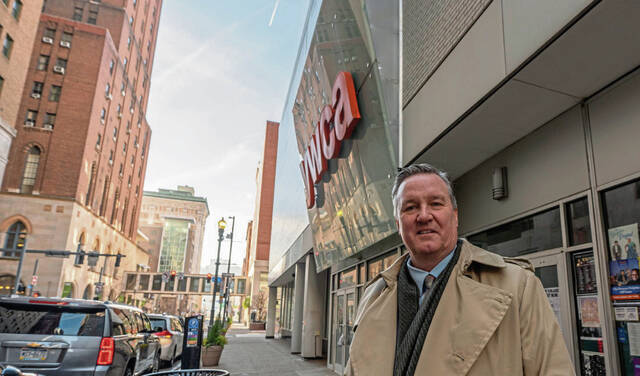
The old YWCA building on Downtown Pittsburgh’s Wood Street is not the kind of property that inspires civic pride.
It is what Point Park University’s Ted Black described as “quite frankly a bit of an eyesore.” Few people walking through Downtown would disagree. Vacant buildings rarely improve with age.
But Point Park’s plan to acquire the property points to a broader reality about Pittsburgh’s economy.
For decades, the city has wrestled with a paradox. Nonprofit institutions like universities and hospitals often are praised as the engines that helped Pittsburgh reinvent itself after the collapse of steel. At the same time, they are sometimes criticized for the same reason: Unlike the mills and factories they replaced, most of their property is exempt from taxes.
Both things can be true. The difference between a medicine and a poison is the dose.
Colleges and hospitals draw students, research investment, jobs and visitors. But as their campuses grow, the inventory of taxable property shrinks. Cities still have to pay for police, fire protection, infrastructure and all the other services that make those institutions viable.
That tension does not have to be a stalemate. It can be a catalyst.
Partnerships like Duquesne University’s with Lumina Housing point toward a practical balance. Colleges and hospitals fuel Pittsburgh’s economy and identity, but every tax-exempt building also reduces the pool of property supporting city services.
Creative partnerships that keep some projects on the tax rolls acknowledge a simple reality: The institutions that anchor a city also depend on the services that city must fund.
That idea matters as universities continue expanding across Pittsburgh.
Point Park’s planned reuse of the former YWCA building is one example. Duquesne University has added housing and health sciences facilities along Forbes Avenue. The University of Pittsburgh continues to acquire and develop properties in Oakland and elsewhere. Carnegie Mellon University is constructing the Richard King Mellon Hall of Sciences along Forbes Avenue as part of its long-term campus plans.
Each project fills space that might otherwise remain empty or underused.
Occupied buildings bring students, employees and visitors. They support restaurants, retail and cultural venues. They add life to streets that struggled after the pandemic shifted daily in-office work to remote. All of that pumps money into the economy that supports the city.
Universities also appear to be bucking a national trend. Demographers warn of an approaching decline in the number of high school graduates. Yet institutions in Pittsburgh report continued growth in enrollment and demand for housing.
Urban campuses connected to culture, nightlife and professional opportunities can be in demand. Downtown Pittsburgh and Oakland offer that environment.
Turning vacant buildings into classrooms, housing or labs does more than improve the appearance of a block. It reinforces the role universities play as anchors in Pittsburgh’s economy.
Partnerships that keep some of those developments on the tax rolls show how cities and institutions can grow together instead of competing for resources.
The model is something students can learn. Creativity and cooperation are the best solutions.