When you are talking about energy, war is always local.
It isn’t about a line in the sand or a point on a map. No matter who you are or where you live, the energy affects you.
That is clear in the way the price of gas has ballooned since the U.S. attack on Iran.
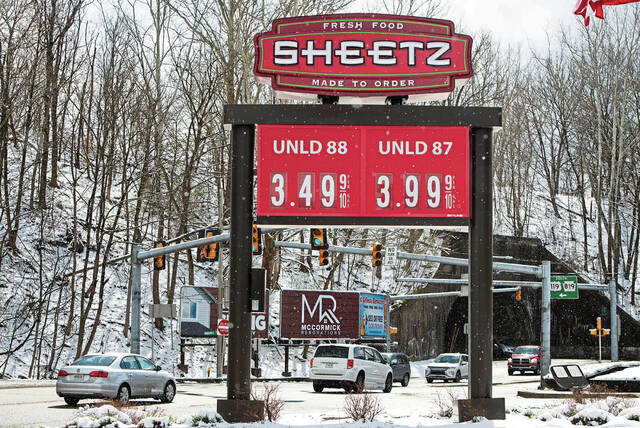
Prices at the pump had fallen to under $3 in many parts of the U.S. It was a welcome relief in a climate where other costs were high. That ended on Feb. 28. Today, the AAA national average is $3.88.
It isn’t that the gas at Sheetz costs more to pump into your car than it did on Valentine’s Day. Most Americans don’t buy gas that originated in Iran. The majority of oil used in the United States was pumped from our own wells. The other 40% is largely Canadian or Mexican oil.
That can lead to thinking we are more separate from the conflict than we are.
The problem is that we live in a global marketplace. You cannot unravel the bonds in one part of the map without affecting the stitches holding the whole thing together.
The planet has finite resources. Making some of them inaccessible — as the stranglehold on the Strait of Hormuz has done — increases the value of what is still available. That means oil that does not have to go through that Middle East chokepoint is suddenly higher in price because more people need it.
It is unlikely to improve. The attacks in the region have now expanded to natural gas production. That means two of the three most used fossil fuels in the world are suddenly feeling the hot breath of war.
That web of connectivity does not exist on its own. It is part of more strings weaving across the world and back to our own neighborhoods.
As was made plain during the Biden-era fuel spikes, the cost of gas affects the cost of everything. It affects the way we raise, manufacture and transport food. It impacts anything made out of plastic — which is almost everything. High energy prices increase the cost of every product we buy at every step along the global supply chain and right up to our front doors.
And that is why steps like war must be considered with an unprecedented global understanding.
Napoleon went to war with Russia not understanding the impact of his supply chain on his ability to press on militarily. It was not a loss by the French army but a loss of the French army when starvation and disease killed more soldiers than battle.
Today the consequences are different. We do not fear that a scorched earth campaign will leave our soldiers starving. We must worry that the impacts of war half a world away will affect our dinner tables at home.
Because when you are talking about energy, war is always local.